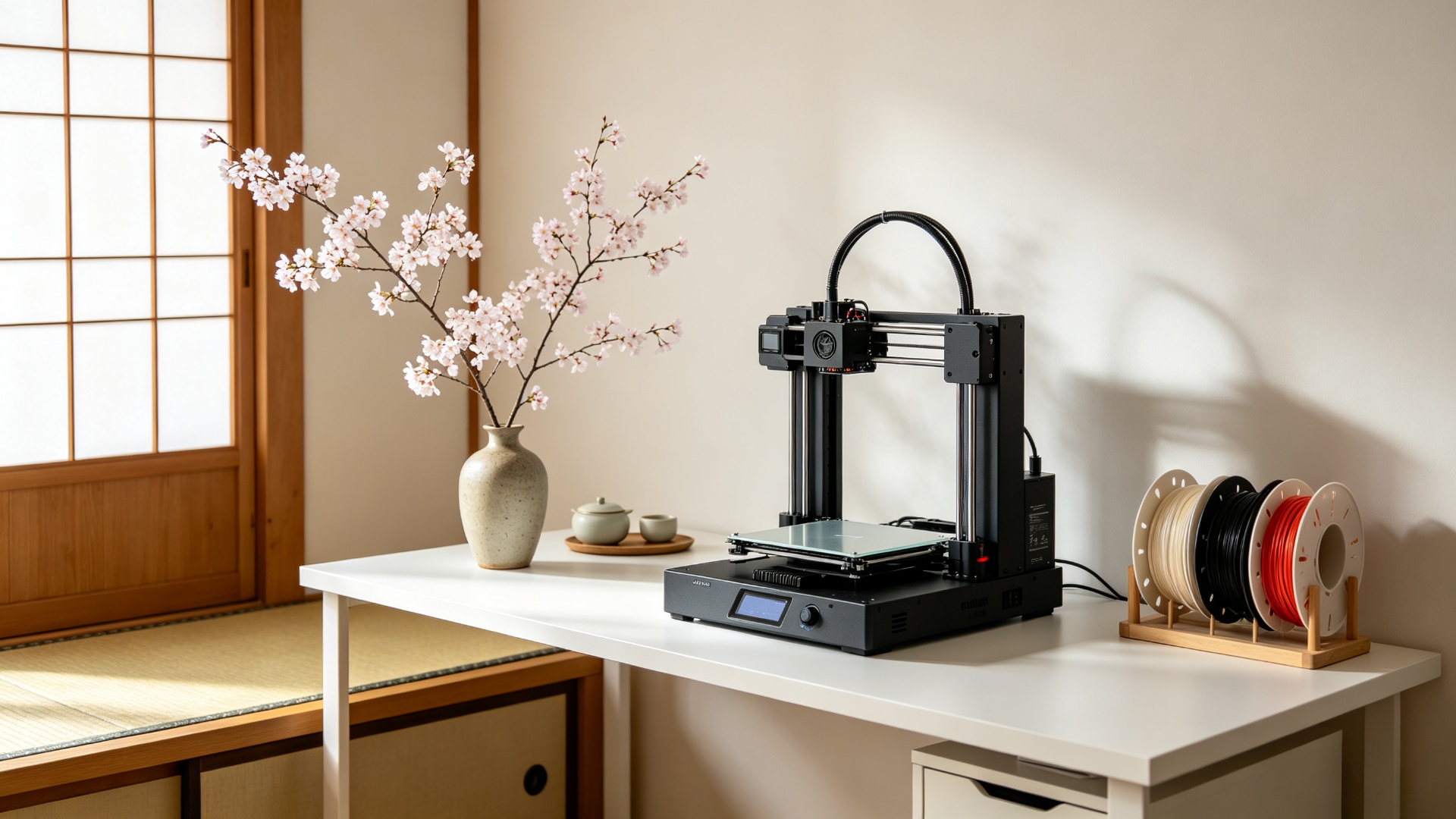
Japan and South Korea offer premium prices and unique cultural niches — but customers demand near-perfect quality. A single visible layer defect or stringing mark can lead to returns and damaging reviews. If you are willing to invest in calibration and post-processing, these markets reward quality with high margins and loyal customers. This guide covers startup budgets in JPY and KRW, monthly costs, income potential, the best local niches, and how to meet Japanese and Korean quality expectations.
Table of Contents
- 1. Market Overview
- 2. Side-Hustle Startup Budget
- 3. Monthly Operating Costs
- 4. Realistic Income Potential
- 5. Top Local Niches
- 6. Key Tips for Local Makers
- 7. Frequently Asked Questions
- 8. Final Thoughts
1. Market Overview
Japan ($0.59-2.02B, CAGR 17.6-18%) and South Korea ($646M-906M, CAGR 17.6-19.1%) are advanced manufacturing economies with high barriers but also high price tolerance. Japan's precision manufacturing culture (monozukuri) and aging population drive dental/medical demand. Korea's electronics (Samsung, LG), automotive (Hyundai), and shipbuilding industries create strong B2B demand. The Korean dental 3D printing market alone is $97.4M (2025), growing to $210M by 2035.
(Market data sourced from additive manufacturing industry reports, 2025–2026.)
| Metric | Japan | South Korea |
|---|---|---|
| Market size (2025) | $0.59B-$2.02B | $646M-$906M |
| CAGR | 17.6-18% | 17.6-19.1% |
| Key industries | Electronics, automotive, precision, medical | Electronics, automotive, shipbuilding, semiconductor |
| Dental market | Strong (aging population) | $97.4M -> $210M (2035) |
| Electricity (commercial) | JPY 20-30/kWh (~$0.13-0.20) | KRW 120-180/kWh (~$0.09-0.13) |
2. Side-Hustle Startup Budget
| Item | JPY | KRW | Notes |
|---|---|---|---|
| 3D Printer (Bambu A1) | 70,000 | 850,000 | Popular in both markets; China-direct saves 30% |
| Alternative (Creality K1) | 45,000 | 550,000 | |
| Alternative (Elegoo Neptune 4) | 35,000 | 430,000 | Budget option |
| PLA Filament (10 rolls x JPY 2,000) | 20,000 | 250,000 | Local filament expensive; AliExpress saves 50%+ |
| Basic tools | 6,000 | 75,000 | |
| Spare parts + PEI sheet | 5,000 | 60,000 | |
| Filament dry box | 3,000 | 40,000 | |
| Platform fees (Mercari/Rakuten/Coupang) | 5,000 | 60,000 | Mercari (JP), Coupang (KR) dominate |
| Shipping supplies | 6,000 | 70,000 | |
| TOTAL (minimum) | 155,000 | 1,985,000 | ~$1,000 USD |
| TOTAL (recommended) | 300,000-500,000 | 3,500,000-6,000,000 |
3. Monthly Operating Costs
| Expense | JPY/month | KRW/month | Notes |
|---|---|---|---|
| Electricity | 800-2,000 | 10,000-25,000 | Korea cheaper |
| Filament | 4,000-12,000 | 50,000-150,000 | |
| Platform fees | 2,000-7,000 | 25,000-80,000 | |
| Shipping | 2,000-6,000 | 25,000-70,000 | |
| TOTAL | 8,800-27,000 | 110,000-325,000 |
4. Income Potential
Japanese and Korean customers will pay premium prices for quality and reliability. Side-hustle income: JPY 80,000-400,000/month (Japan) or KRW 1,000,000-5,000,000/month (Korea) with 1-2 printers. However, quality expectations are extremely high — even minor layer defects or stringing can lead to returns and bad reviews. The key is positioning: "China-direct prices with Japanese/Korean quality assurance."
5. Top Japan & Korea Niches
- 1. Anime/character merchandise (Japan — huge market for custom figures, cosplay props, display bases)2. K-pop merchandise (Korea — custom light stick accessories, photo card holders, display stands)3. Dental/medical (both — aging populations, strong dental markets)4. Electronics/semiconductor tooling (both — Samsung, LG, Sony supply chains)5. Custom food molds (Japan — unique market for chocolate, wagashi, and cake molds)6. Architectural models (both — high-end real estate and construction)7. Replacement parts for vintage electronics (Japan — retro gaming, vintage cameras, audio equipment)
6. Key Tips
- QUALITY IS NON-NEGOTIABLE. Japanese/Korean customers expect perfection. Invest time in calibration, post-processing (sanding, painting), and quality control. A single bad review on Mercari/Coupang can hurt sales.• Use local platforms: Mercari and Rakuten (Japan), Coupang and Joonggonara (Korea). Etsy is less dominant in these markets.• Language: Local language product descriptions are essential. Use DeepL or native speakers for translations.• Japan: The "made in Japan" label commands a premium — emphasize local production even if equipment is imported.• Korea: The market is more price-sensitive and tech-savvy; Bambu and Creality are well-known and accepted.• Both markets: Fast shipping is expected. Japan Post / Kuroneko (JP), CJ Logistics (KR) offer next-day delivery options.• Japan food molds: A unique and underserved niche — custom chocolate/plastic molds for wagashi and confectionery.
7. Frequently Asked Questions
Q: How much does it cost to start in Japan or Korea?
A: Minimum setup: JPY 155,000 (Japan) or KRW 1,985,000 (Korea) — about $1,000 USD. Recommended: JPY 300,000–500,000 or KRW 3,500,000–6,000,000. Budget extra for post-processing supplies (sandpaper, primer, paint).
Q: How strict are quality expectations?
A: Very strict. Japanese and Korean customers expect near-perfect prints with no visible layer lines, stringing, or defects. Invest in calibration, post-processing (sanding, priming, painting), and rigorous quality control. A single bad review on Mercari or Coupang can significantly hurt your sales.
Q: Which platforms should I use?
A: Japan: Mercari and Rakuten are dominant. Korea: Coupang and Joonggonara (중고나라). Etsy is less dominant in these markets — local platforms drive the vast majority of sales. Fast shipping (next-day where possible) is expected by customers.
Q: Do I need local language listings?
A: Yes. Local language product descriptions are essential for both markets. Use DeepL for a first draft but have a native speaker review — machine translation alone can come across as unprofessional and hurt conversions.
Q: What are the best niches in Japan/Korea?
A: Anime/character merchandise and cosplay props (Japan), K-pop merchandise like light stick accessories and photo card holders (Korea), dental/medical, electronics/semiconductor tooling, custom food molds (Japan — wagashi, chocolate, cake), architectural models, and vintage electronics replacement parts (retro gaming, cameras, audio).
8. Final Thoughts
Japan and Korea reward quality with premium prices, but the quality bar is higher than anywhere else. Start with a reliable, well-calibrated printer, invest serious time in post-processing and quality control, and sell on local platforms with native-language listings. Unique cultural niches — anime merch in Japan, K-pop accessories in Korea, custom wagashi molds — have little competition and high margins. Expect JPY 80,000–400,000/month or KRW 1,000,000–5,000,000/month with 1–2 printers once you have built a reputation for quality.