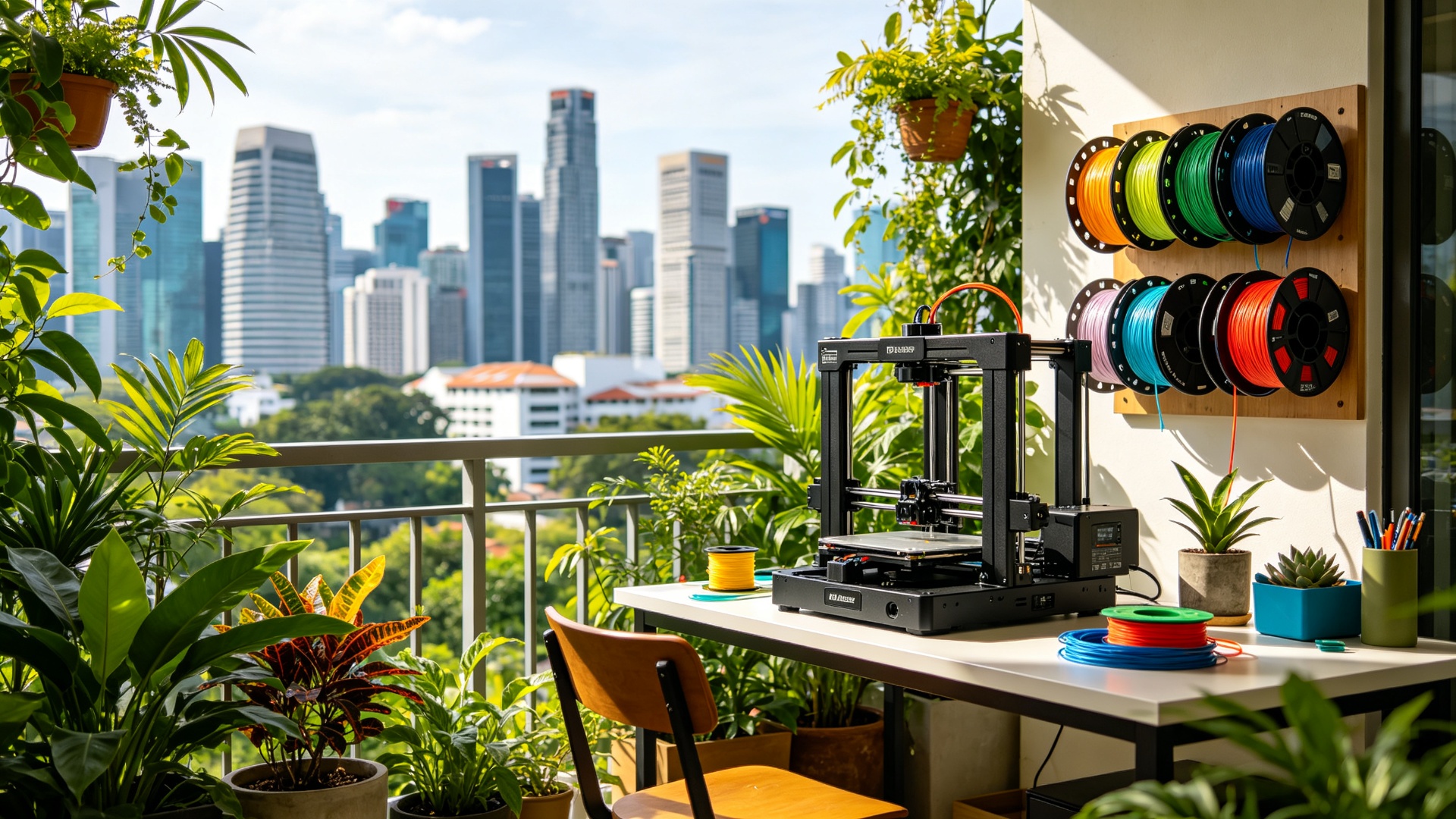
Singapore and Malaysia offer a unique advantage for 3D-printing side-hustlers: geographic proximity to China, the world's manufacturing hub, means the fastest and cheapest equipment sourcing anywhere outside China itself. But there is a catch — tropical humidity of 70–90% RH is your #1 enemy. This guide covers startup budgets in SGD and MYR, monthly costs, income potential, the best local niches, and how to beat the humidity challenge from day one.
Table of Contents
- 1. Market Overview
- 2. Side-Hustle Startup Budget
- 3. Monthly Operating Costs
- 4. Realistic Income Potential
- 5. Top Local Niches
- 6. Key Tips for Local Makers
- 7. Frequently Asked Questions
- 8. Final Thoughts
1. Market Overview
Southeast Asia's industrial 3D printing market is $6.51B (2025), growing to $20.11B by 2030 (CAGR 18.7%). Singapore is the innovation/finance hub (NAMIC, strong aerospace MRO and electronics), while Malaysia offers low-cost manufacturing (Penang "Silicon Valley of the East", medical devices). The region has far fewer local service bureaus than North America/Europe, and those that exist charge premium prices.
(Market data sourced from additive manufacturing industry reports, 2025–2026.)
| Metric | Singapore | Malaysia |
|---|---|---|
| Role | Innovation hub, HQ, high-value | Manufacturing base, cost-effective production |
| Key industries | Electronics, semiconductor, aerospace MRO | Electronics, automotive, medical |
| Startup cost | SGD 1,200-3,500 | MYR 4,000-12,000 |
| Electricity (commercial) | SGD 0.28-0.35/kWh | MYR 0.25-0.38/kWh |
2. Side-Hustle Startup Budget
| Item | SGD | MYR | Notes |
|---|---|---|---|
| 3D Printer (Bambu A1) | 750 | 2,500 | Ships from China in 3-5 days |
| Alternative (Creality K1) | 450 | 1,500 | |
| PLA Filament (10 rolls x SGD 15) | 150 | 500 | China-direct is 60% cheaper than local |
| Basic tools | 60 | 200 | |
| Spare parts + PEI sheet | 50 | 170 | |
| Filament dry box (ESSENTIAL) | 40 | 130 | Tropical humidity 70-90% RH — MUST have |
| Dehumidifier for room | 80 | 270 | Critical in tropical climate |
| Etsy / Shopee / Lazada shop | 30 | 100 | Shopee/Lazada dominate local e-commerce |
| Shipping supplies | 50 | 170 | |
| TOTAL (minimum) | 1,660 | 5,540 | |
| TOTAL (recommended) | 2,500-4,000 | 8,000-13,000 |
3. Monthly Operating Costs
| Expense | SGD/month | MYR/month | Notes |
|---|---|---|---|
| Electricity | 10-25 | 30-80 | Singapore higher; dehumidifier adds load |
| Filament | 50-150 | 170-500 | |
| Platform fees | 20-60 | 70-200 | Shopee/Lazada/Etsy |
| Shipping | 25-60 | 80-200 | |
| TOTAL | 105-295 | 350-980 |
4. Income Potential
A Singapore-based maker reported starting with just USD 1,000 in equipment and reaching break-even within 6 months. Side-hustle income: SGD 600-2,500/month (Singapore) or MYR 2,000-8,000/month (Malaysia). The China-direct advantage is strongest here — you are geographically closest to the world's 3D printing manufacturing hub, giving you the lowest equipment and material costs anywhere outside China itself.
5. Top SG/MY Niches
- 1. Custom corporate gifts / event door gifts (Singapore — D&D events, conferences; bulk orders of 100 keychains = SGD 500-1,000)2. Electronics/semiconductor tooling (Penang, Singapore — jigs, fixtures, test sockets)3. Medical/dental (Malaysia medical tourism + Singapore healthcare)4. Anime/merchandise (strong Southeast Asian fan culture — cosplay props, figurines)5. Home decor / lifestyle products (Etsy + Shopee dual-channel)6. Education support (schools, polytechnics, universities need equipment and curriculum help)
6. Key Tips
- HUMIDITY IS YOUR ENEMY. 70-90% RH causes filament moisture absorption -> stringing, popping, weak prints. Invest in a dry box AND a room dehumidifier. Dry filament before every print.• Use Shopee and Lazada for local sales — they dominate Southeast Asian e-commerce far more than Etsy.• Singapore HQ + Malaysia production model: register company in Singapore, run printers in Johor (across the causeway) for 50% lower costs.• China shipping is fast (3-7 days by air) — you can restock filament/parts quickly, reducing inventory needs.• Malaysia's Penang has the densest electronics manufacturing cluster — B2B tooling opportunities are enormous.
7. Frequently Asked Questions
Q: How much does it cost to start in Singapore or Malaysia?
A: Minimum setup: SGD 1,660 (Singapore) or MYR 5,540 (Malaysia). Recommended: SGD 2,500–4,000 or MYR 8,000–13,000. A dehumidifier and filament dry box are essential investments, not optional extras in this climate.
Q: Is humidity really that big a problem?
A: Yes. 70–90% RH causes filament moisture absorption, leading to stringing, popping, layer separation, and weak prints. You need both a sealed filament dry box and a room dehumidifier. Dry filament before every print job — this is non-negotiable in the tropics.
Q: Which platforms should I sell on?
A: Shopee and Lazada dominate Southeast Asian e-commerce — use them as your primary local channels. Etsy works for international sales but has significantly less local traffic. Singapore corporate clients often prefer direct invoicing rather than marketplace purchases.
Q: What are the best niches in SG/MY?
A: Custom corporate gifts and event door gifts (Singapore — D&D events, conferences), electronics/semiconductor tooling (Penang, Singapore), medical/dental, anime/merchandise and cosplay props, home decor/lifestyle products, and education support for schools and polytechnics.
Q: How much can I earn per month?
A: Singapore: SGD 600–2,500/month. Malaysia: MYR 2,000–8,000/month. The Singapore HQ + Malaysia production model (register company in SG, run printers in Johor across the causeway) can cut operating costs by 50% while accessing Singapore's high-value clients.
8. Final Thoughts
Southeast Asia is a fast-growing, under-served market for 3D-printing services. Your biggest advantage is proximity to China — fast, cheap restocking of equipment and filament in 3–7 days by air. Your biggest challenge is humidity — invest in a dry box and dehumidifier from day one, no exceptions. Use Shopee/Lazada for local sales, target corporate gift and electronics tooling niches, and consider the Singapore HQ + Johor production model for maximum margin.