15 Free Christmas 3D Prints You Can Sell (2026 STL Guide)
Here's the part most "free STL" lists skip: free to download doesn't mean free to sell. Most MakerWorld files sit under the standard digital license, which covers your own prints but not a table at a holiday market. If you start selling those, you're the one who gets the takedown notice, not the person who wrote the list.
So for this guide, every model below has a real commercial right written into its own page. We're talking about the designer spelling it out — "free to sell," "free commercial use," or public domain. A few of the models that look tempting elsewhere actually require a paid Patreon tier, and one popular wreath had its commercial permission expire at the start of the year. Those are out. The 15 here are the ones you can list today.
One ground rule that applies to all of them: you can sell the physical print, never the digital file. Reselling or re-uploading the STL itself is off-limits even on the most permissive licenses. Keep the files, sell the plastic.
1. Organic Christmas Tree
If you want a clean, modern tree that doesn't look like a generic freebie, this is the one. The branches curve and flow instead of stacking in hard triangles, and it reads more like a home goods store piece than a beginner print. It comes in two tested sizes — 10 cm at about 1.9 hours and 15 cm at about 3.7 hours, both on a single plate with no supports.
The license is direct: you're welcome to sell physical prints with no commercial subscription needed. The small size is a perfect add-on at the checkout, and the 15 cm version holds its own as a shelf piece. Print a few in different colors and sell them as a set rather than singles — the margin on a single tiny tree is thin, but a pair or trio feels like a gift.
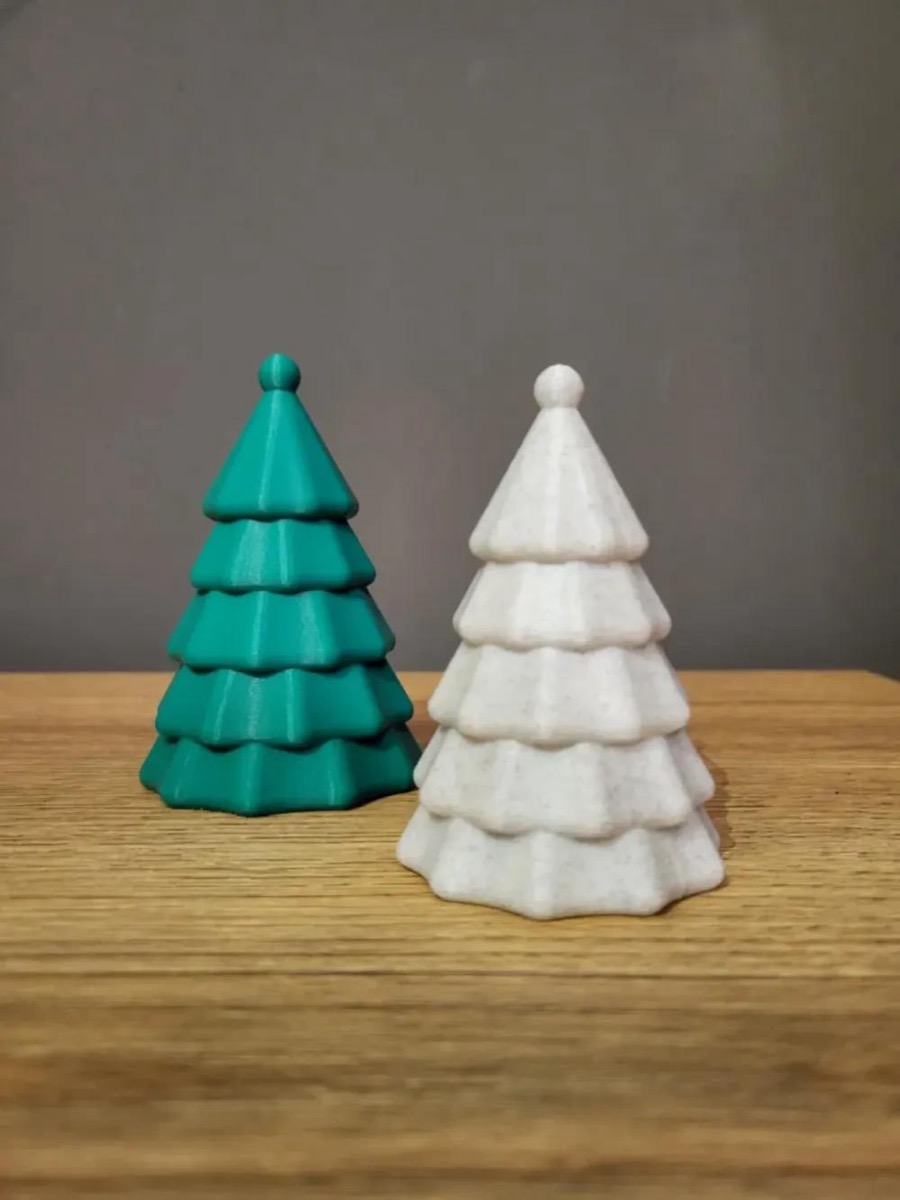
The organic tree in two colors. The curved layers give it a softer look than the usual cone-shaped prints.
2. Bauble Christmas Trees
This one is built from stacked round baubles, and it catches light in a way flat layers don't. The full set of plates runs around 4.8 hours across seven plates, and there's a bigger version at 23.3 hours if you want a centerpiece. The title says it all: free to sell, no AMS. You don't need a multi-material setup, because the colors come from separate printed pieces rather than a single multi-color job.
The rainbow version is the attention-grabber, but don't sleep on seasonal colorways — red and gold, all-white, or a monochrome green. It's the kind of piece people photograph and post, which does your marketing for you. Price the standard size as a mid-tier item and reserve the large one for made-to-order so you're not sitting on a day of print time.
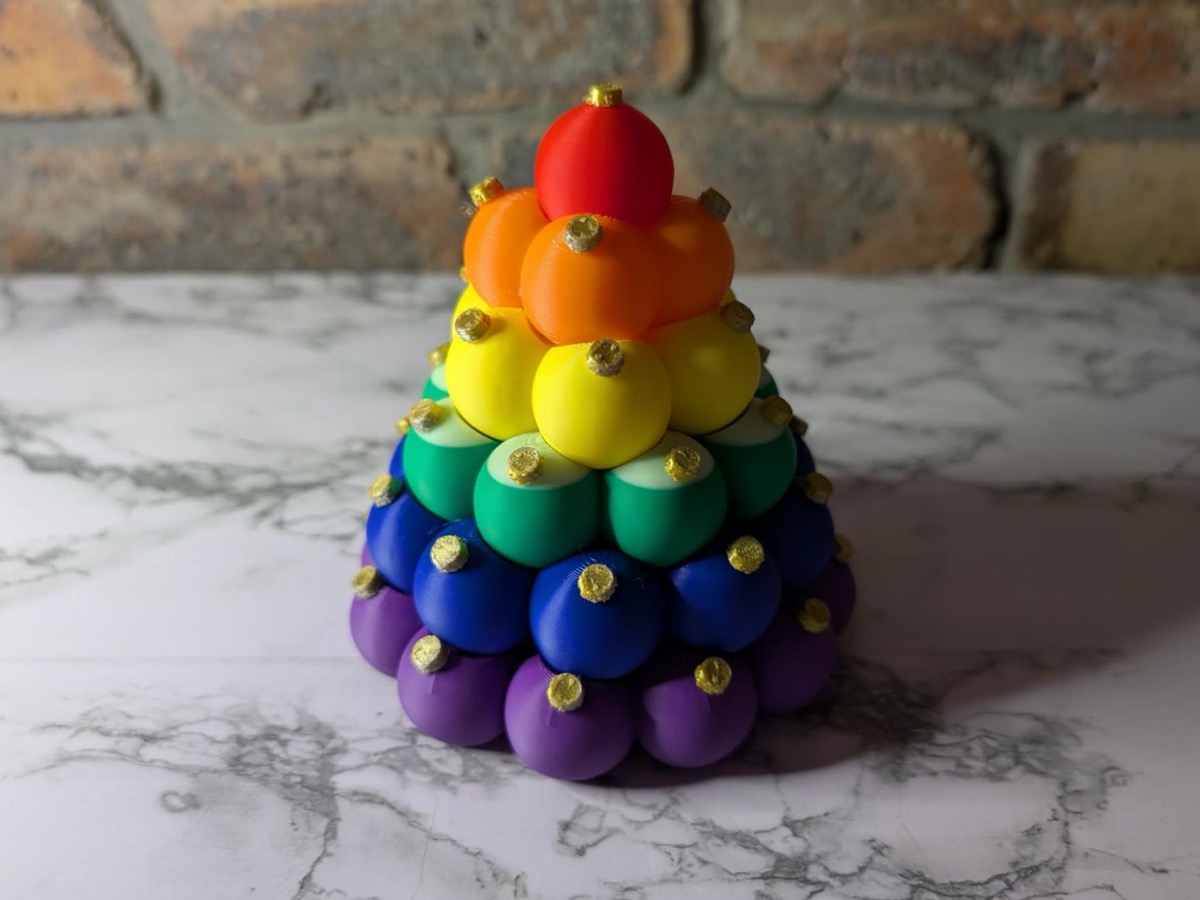
The bauble tree in rainbow colors. Each sphere is a separate print, so no AMS is required.
3. Brick Santa Figurine and Ornament
The blocky, brick-style figure is a proven seller because it doubles as a toy and a decoration. This file gives you three options: the tree ornament at about 9.2 hours, a small figurine at 9 hours, and a big one at 30.1 hours. The designer makes the model free to print and free to sell, no strings attached.
The ornament version is the volume play — light to ship, easy to batch, and buyers collect them year after year. The big figurine is slow and eats machine time, so treat it as a pre-order item rather than stocking it. Brick-style figures also photograph well against plain backgrounds, which keeps your Etsy or Shopify listings looking clean.
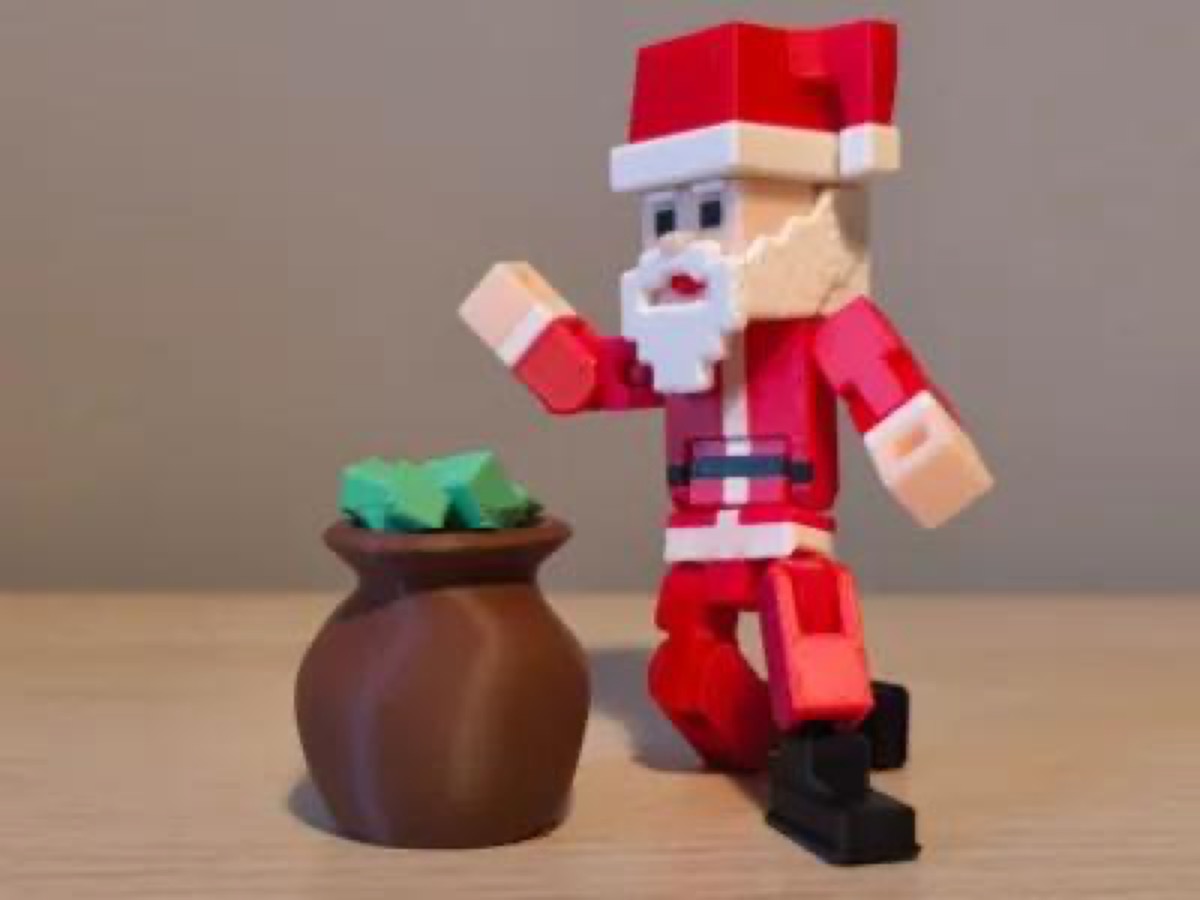
The brick Santa in classic red and white. The same model works as a standing figure or a hanging ornament.
4. Muscular Santa Claus
This is the novelty pick that gets shared around. A jacked, flexing Santa is funny, and funny gets attention at a market stall. The 5.6-inch version runs about 24.7 hours at a low 2% infill, and there's a smaller 3.2-inch option if you want faster turnover. It's free to print and free to sell.
Be honest about the tradeoff: it's a long print for a gag gift, so don't make it your main product. Run one or two big ones as display pieces to draw people in, then sell the smaller version as the actual purchase. The people who buy it are looking for a white elephant or office gift, so lean into that in your listing rather than treating it as a serious decoration.
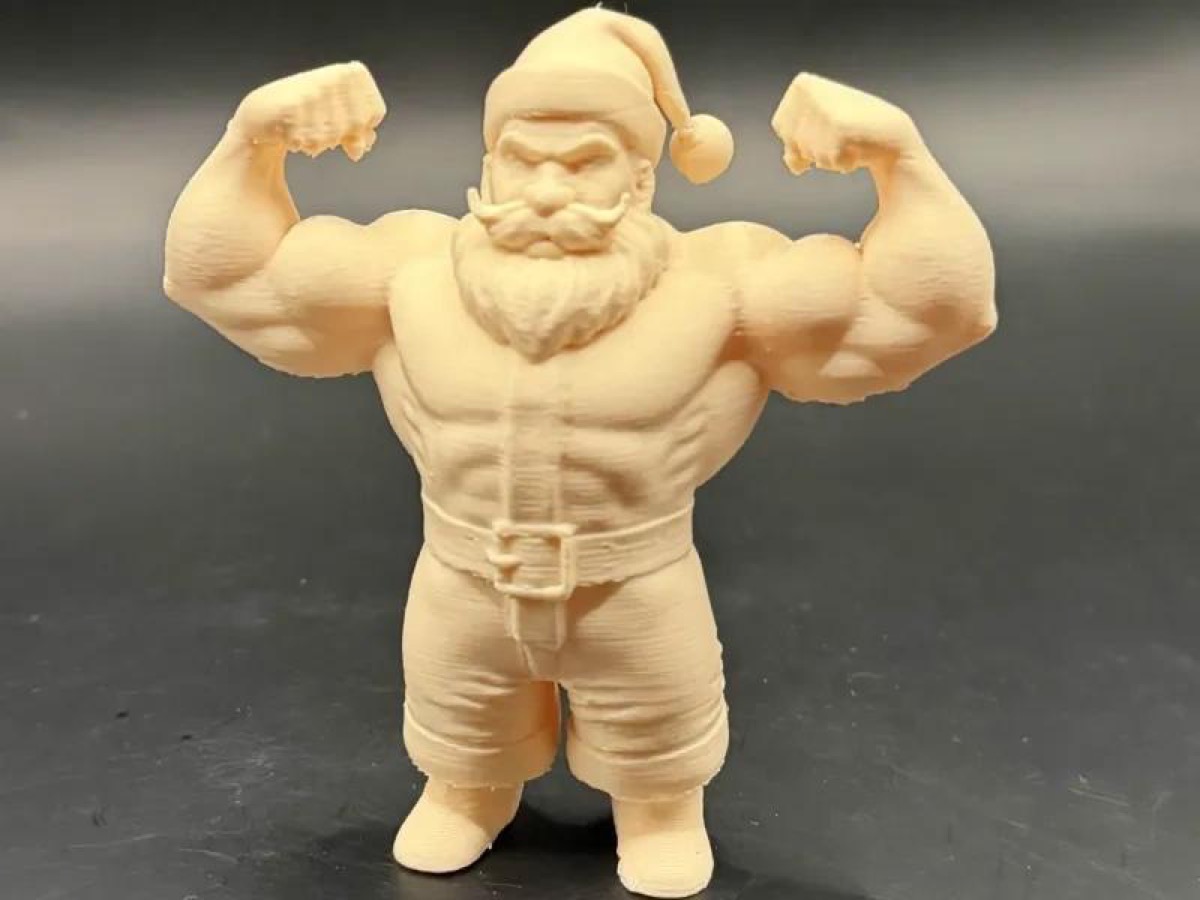
The muscular Santa in a natural print. The low infill keeps the larger size from burning too much filament.
5. Brick Nutcracker Figurine and Ornament
Nutcrackers are a December staple, and the brick style makes this one feel playful rather than formal. The standard figure takes about 12.6 hours on one plate, the large version 27.2 hours, and the ornament option keeps the same footprint at a smaller size. The designer put it under the same free-to-print, free-to-sell terms as the brick Santa.
Sell the Santa and the nutcracker together as a brick-figure bundle. Bundles lift your average order value and move a slow-moving piece alongside a popular one. The nutcracker also has a slightly longer shelf life than Santa-specific items, since winter decor stays up through New Year's.
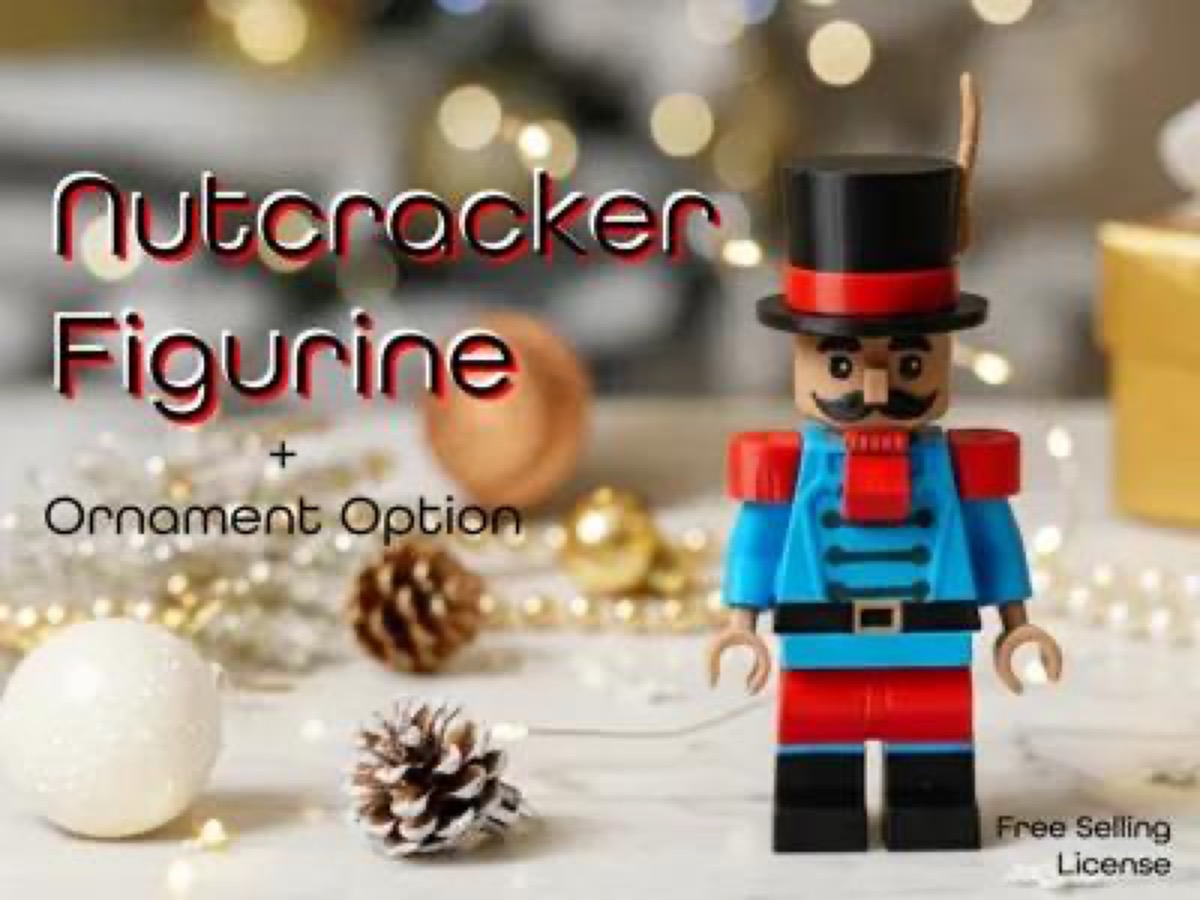
The brick nutcracker with its tall hat and blocky shoulders. The ornament option hangs from the same model.
6. Brick Gingerbread Man
The gingerbread figure rounds out the brick collection with a warmer, cookie-toned look. There are two face treatments — a lined version at about 6 hours and a cleaner unlined one at 4.1 hours, plus a tree ornament at 6 hours. It's free to print and free to sell.
The unlined version is the faster print and the better default for batching, since fewer details mean fewer things can go wrong. Print it in a brown filament with a matte finish so it actually reads as a cookie. Gingerbread decor sells earlier in the season than Santa does, so start listing this one in November rather than waiting.
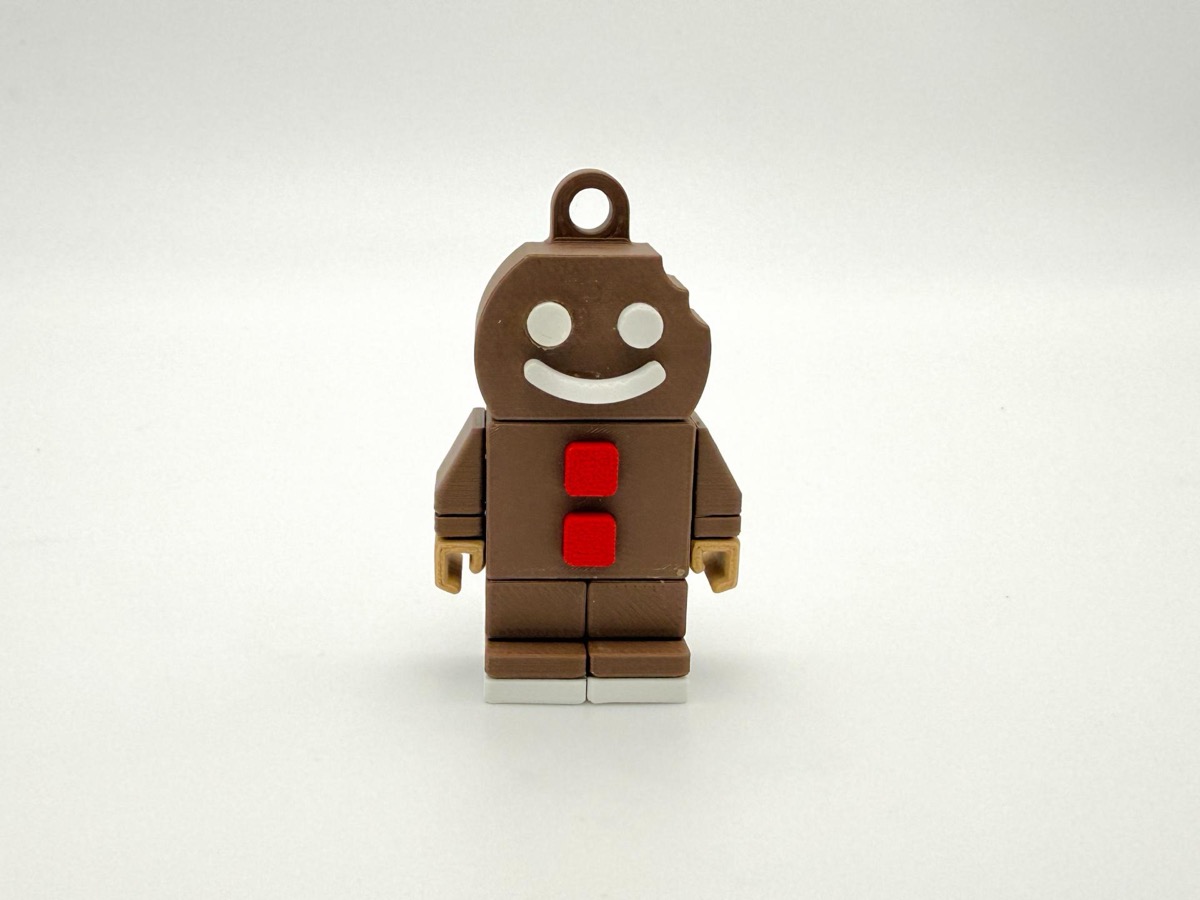
The brick gingerbread man in cookie brown. The unlined face trims about two hours off the print.
7. Gingerbread Ornaments and Garland
This is a set of flat gingerbread figures you can hang individually or string into a garland. The full profile runs about 5.9 hours across four plates, and an A1 Mini version squeezes it to 3.5 hours on three. The designer states these have free commercial use, so use them how you like.
A note from the page: they aren't flat-backed, so don't print them face down. Without an AMS, print in one color and paint the details, or pause and swap filament for the white icing. The garland is the higher-value product here — a string of figures sells for more than the same pieces sold apart, and it's light enough to ship cheaply.
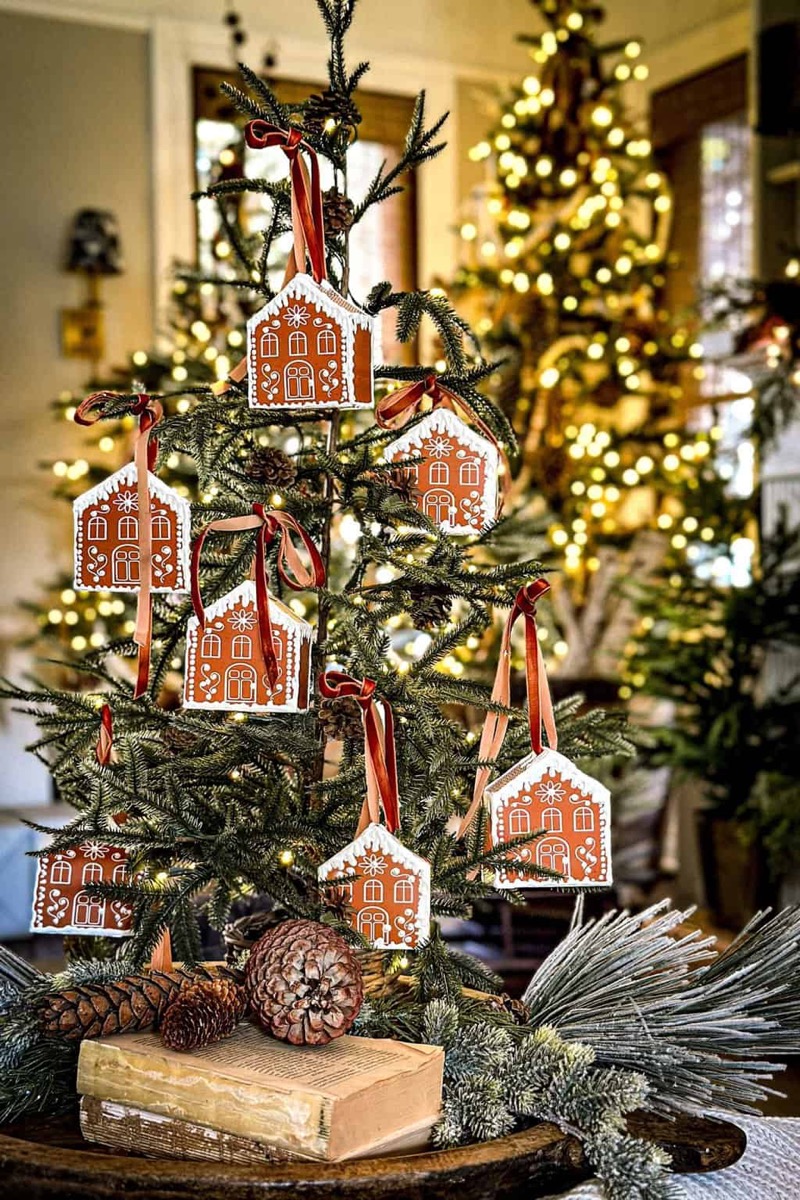
Gingerbread ornaments hung as a set. Stringing the figures together turns a cheap print into a fuller product.
8. Christmas Ornament
This is the fastest, cheapest print on the list — about 53 minutes on one plate, using roughly 25 grams of filament. It was made with the MakerLab ornament maker, and you can fit four of them on a 256 mm plate. The designer says you can sell these however you want.
This is your batch workhorse. Four per plate, under an hour, almost no filament means you can run dozens without tying up the printer. They're ideal as low-price impulse buys, gift tags, or freebies that sweeten a bigger order. Customize them with a name or a year and the same cheap print becomes a personalized item you can charge more for.
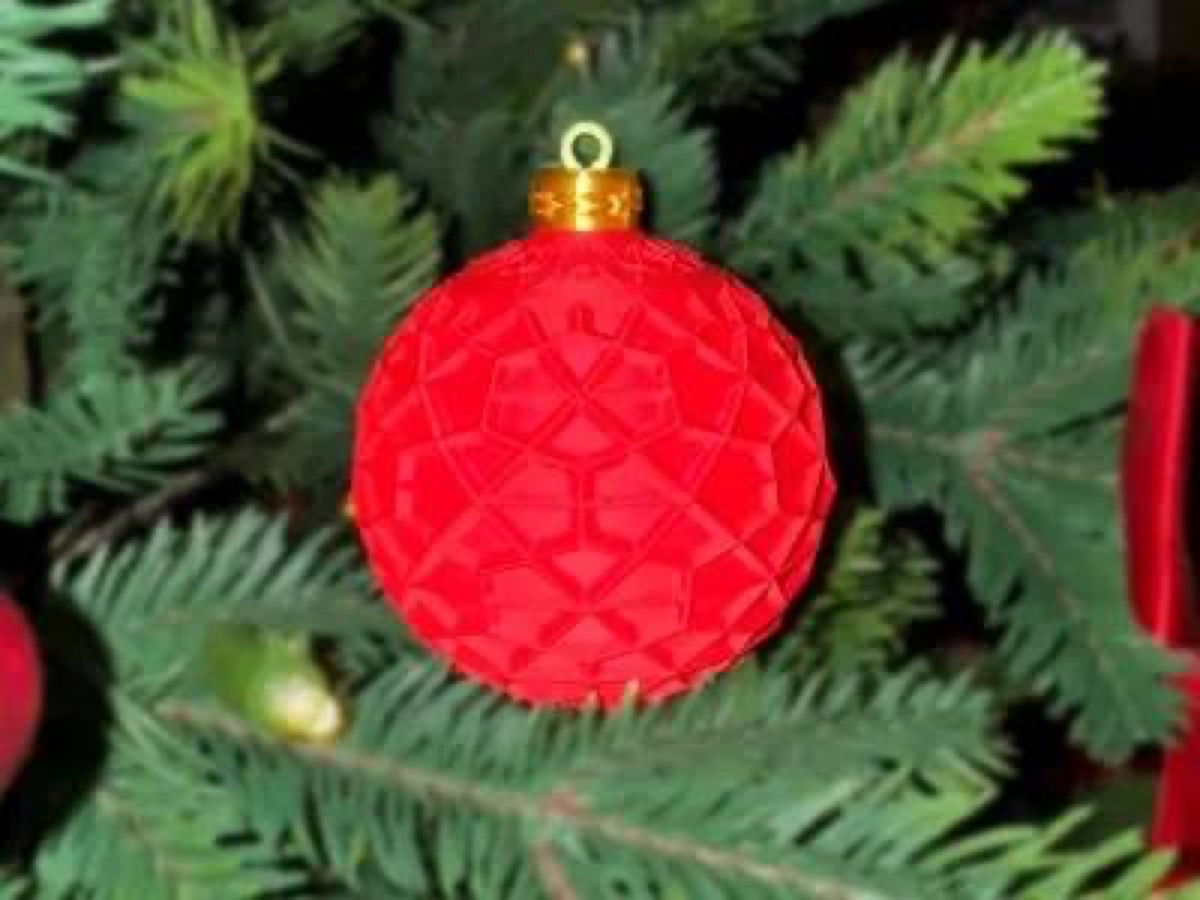
A simple round bauble. Four fit on a plate, so this is the easiest model to run in bulk.
9. Elf on the Shelf Door to the North Pole
A tiny fairy door with a back panel that reads "elf access only," aimed at families doing the elf tradition. The print takes about 4.3 hours across four plates. The designer is explicit that you're free to sell the printed product with no memberships or subscriptions, and you can make and sell as many as you like.
This sells to parents, not collectors, so frame it around the December 1 tradition of the elf arriving. Pair it with a little fake snow or a footprint stencil and it becomes a kit rather than a single door. Families buy this kind of thing for the photo moment, so show it set up in a real corner rather than on a plain white background.
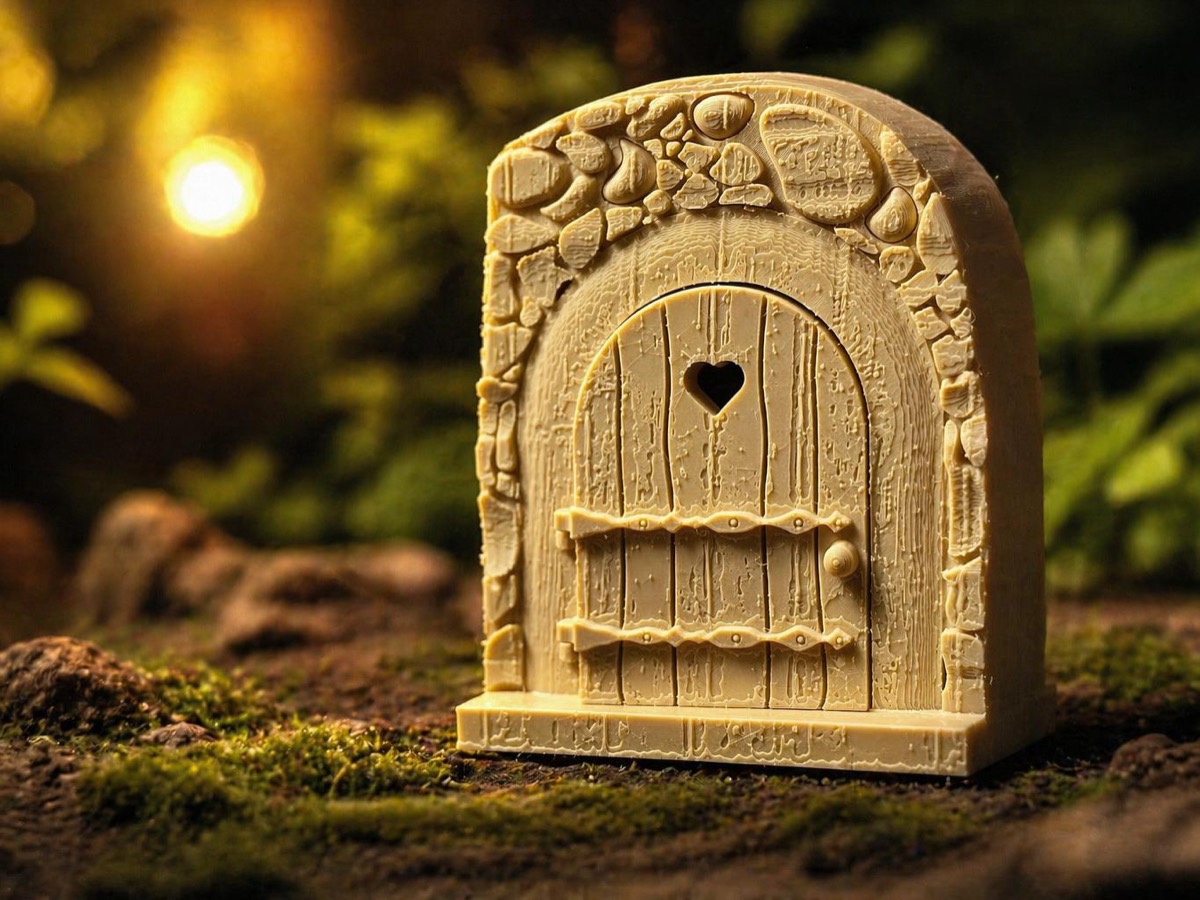
The magic elf door. The back panel keeps kids from peeking at the "North Pole" behind it.
10. Two Cats Building a Snowman Wall Art
A small rectangular wall piece, 80 by 120 mm, showing two cats putting together a snowman. It prints in just over an hour at about 1.1 hours and uses only around 15 grams of filament. It's free to sell.
Cat content is its own marketing channel, and this one hits two audiences at once — Christmas buyers and cat owners. The small size and tiny filament cost make it a low-risk item to stock. It also works as a shelf or desk piece leaning against a wall, so don't limit the listing to wall art only.
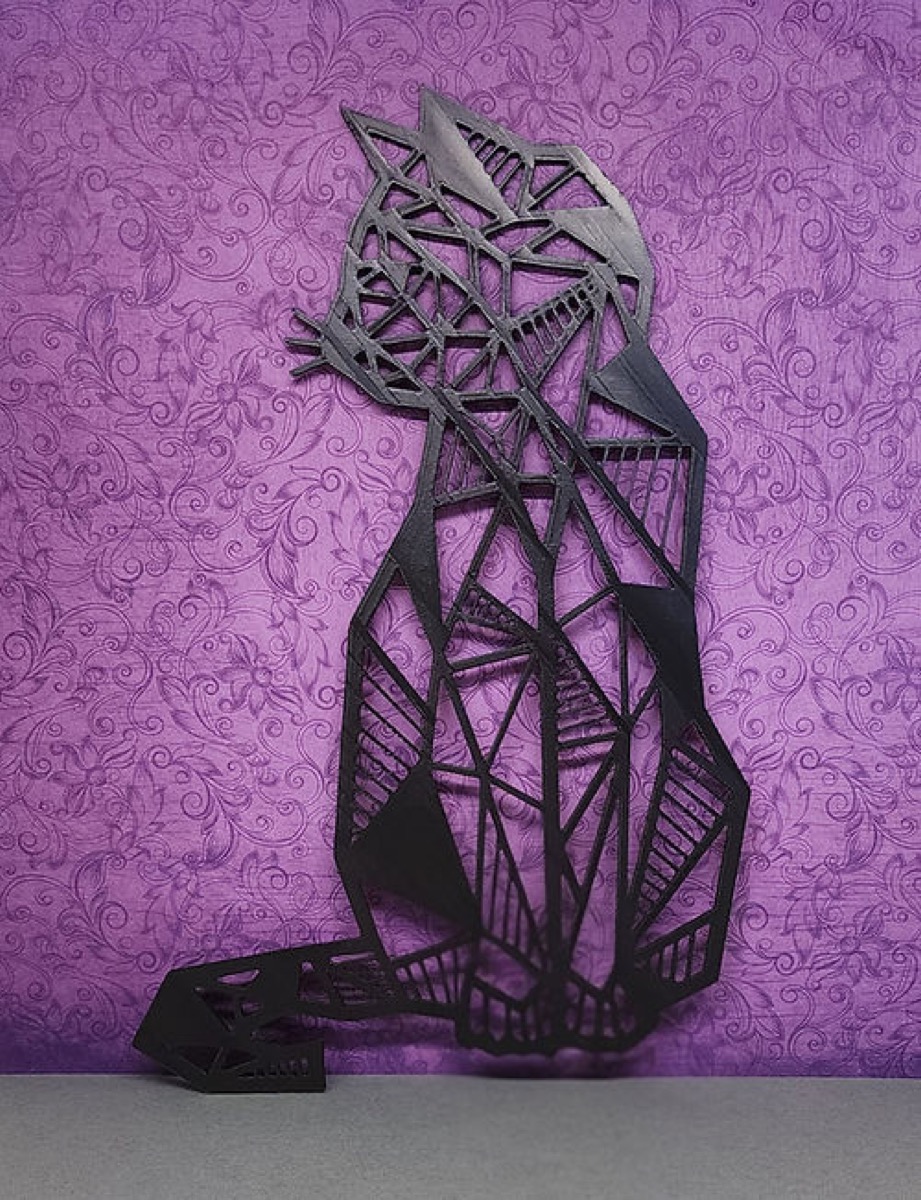
A 3D printed cat wall piece. The compact size and low filament cost make it cheap to produce in batches.
11. Articulated Flexy Deer
A small, fully articulated deer that moves at every joint and prints as a single piece. It takes about an hour on one plate and uses around 26 grams of filament. The designer released it as public domain, which means free commercial use with no conditions.
Public domain is the cleanest license you can get — no attribution headache, no risk of the terms changing. The flexy deer is a good stocking stuffer and a popular desk toy, and it's durable enough for kids because there are no separate parts to break. Silk or color-shifting filament makes the moving joints look far more expensive than the print actually costs.
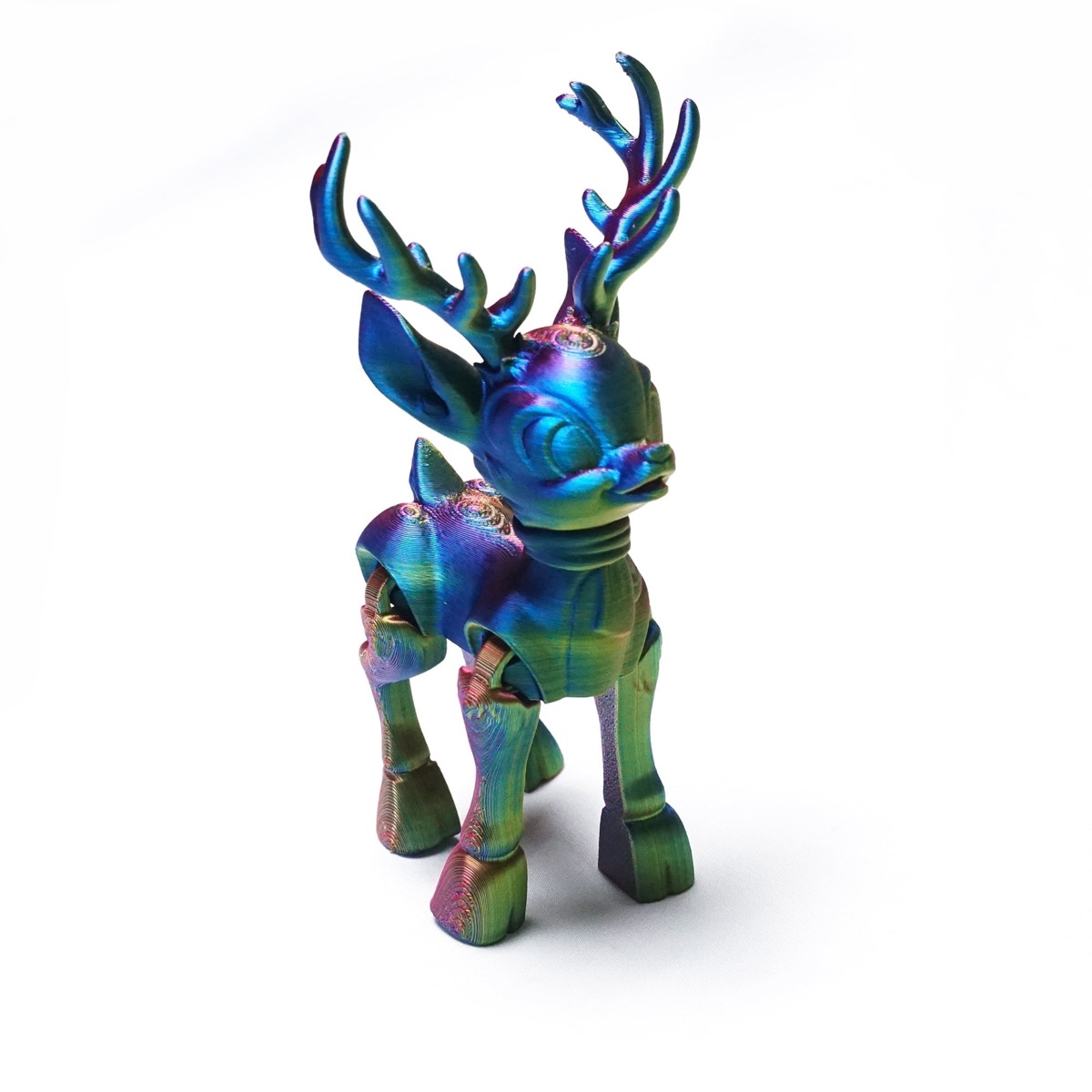
The flexy deer in a color-shifting print. It's public domain, so the commercial rights are unconditional.
12. Print-in-Place Flexi Christmas Train
A full train that prints as one piece, no assembly, no glue, no supports. It runs about 14.9 hours at three walls and 10% infill, and it's released as public domain. The designer's note is refreshingly open: take it, print it, sell it, even put your own logo on it.
Because it's public domain, you can remix it freely — and that's the real opportunity. The comments show people recoloring it for different holidays and turning it into props. It's a strong mid-price gift item on its own, but a custom-painted or branded version justifies a higher price. Just account for the longer print time and keep it as made-to-order during busy weeks.
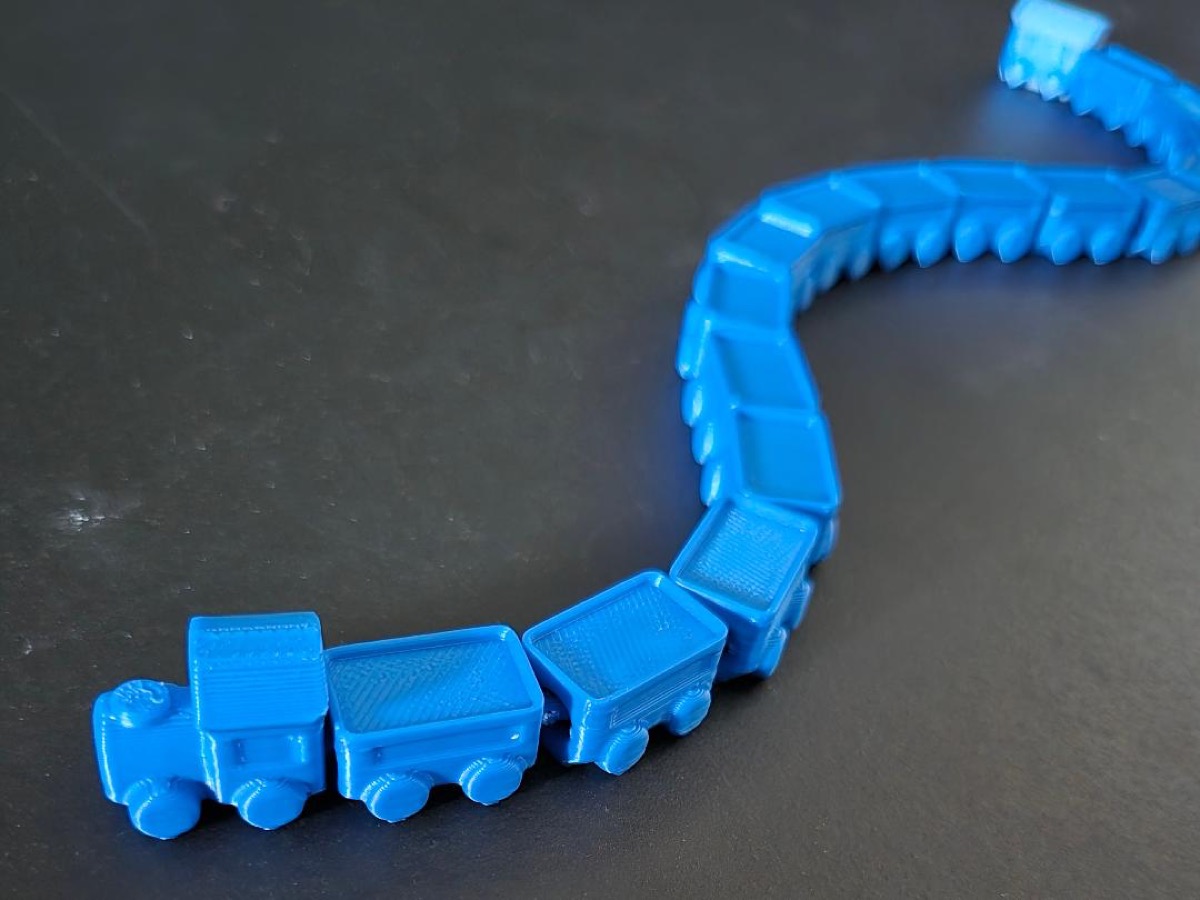
The print-in-place train in one continuous, flexible piece. Public domain status leaves room to remix it.
13. Santa Hat Spiral Fidget
A spiral cone fidget dressed up as a Santa hat, about two hours on one plate, using roughly 43 grams across two colors. It's designed for two-color printing through layer-height changes, so no AMS and no supports are needed. The license is a free commercial one, explicitly free to sell.
Fidgets sell year-round, and the holiday version catches the December wave without being limited to it. The two-color spiral looks more complex than it is, which helps the perceived value. One reviewer on the page used it as a prototype for a selling project, which tells you it scales well — run a few colors and keep them in stock as impulse buys.
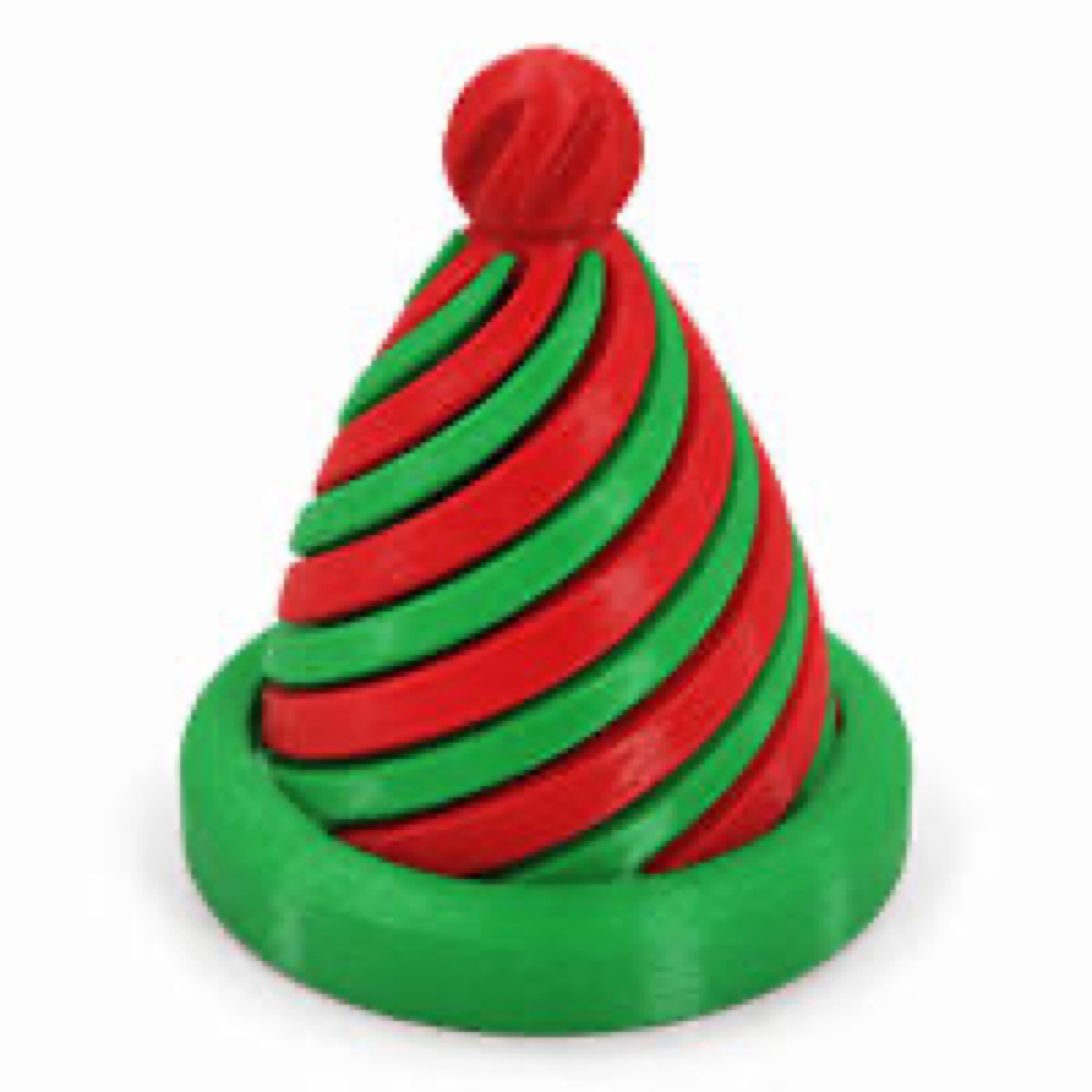
The Santa hat fidget in red and green. The two colors come from layer changes, not an AMS.
14. Ornament Fidget
A Christmas bauble that's also a fidget, so it pulls double duty as a tree decoration and a hand toy. It takes about 6.4 hours on one plate and uses around 96 grams of filament. It's licensed under Creative Commons Attribution-NoDerivatives, and the designer confirms it's free to sell.
There are supports at the top that need careful removal, or you can use PVA, so factor that into your prep time. The no-derivatives part means you can't remix the design, but selling prints is fully allowed. Position it as a gift for kids who can't keep their hands off the tree — it's a specific buyer with a specific problem, and that's easier to sell than a generic bauble.
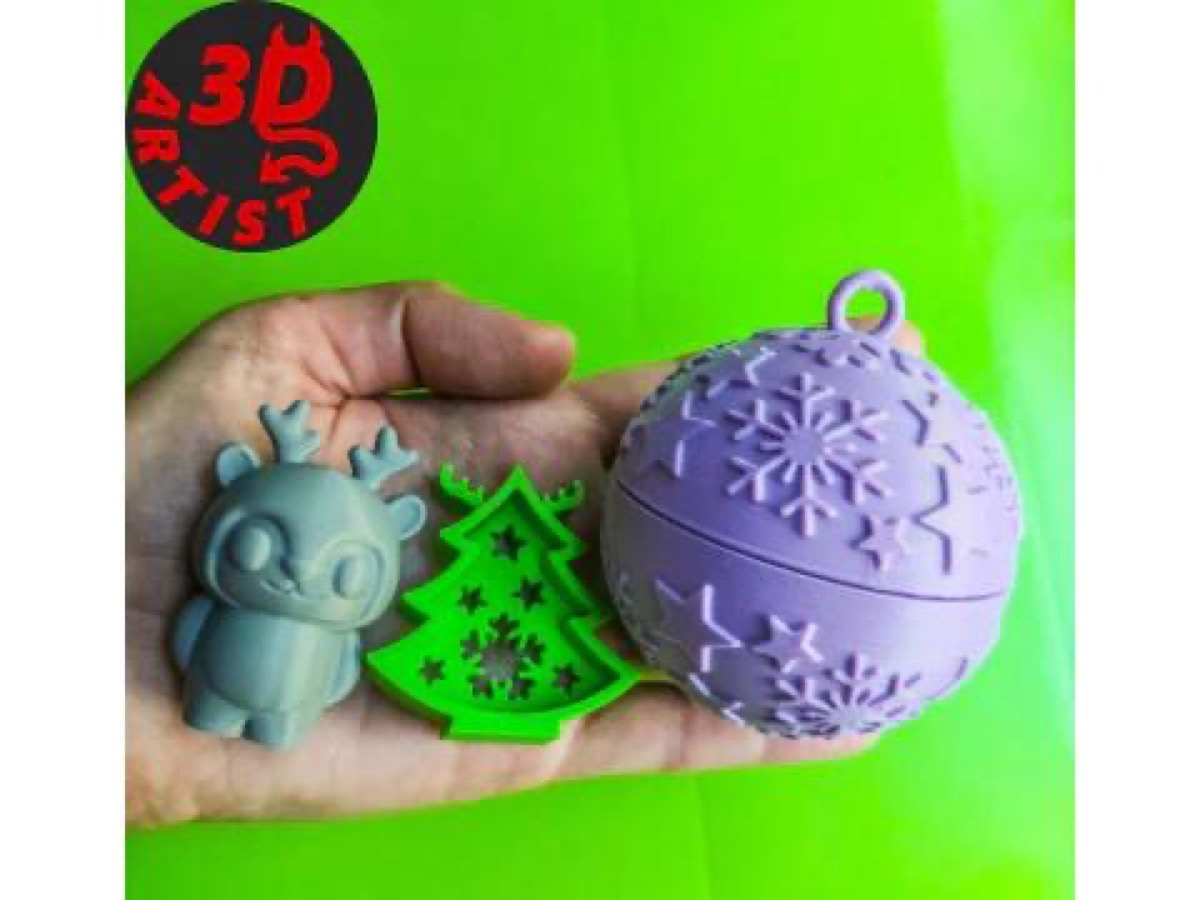
The ornament fidget. The CC BY-ND license permits selling prints but doesn't allow remixing the model.
15. Star Fidget
A star-shaped fidget that expands and contracts, sitting at the giftable end of the price scale. The title carries the free-to-sell permission directly, and the star shape keeps it seasonal enough for Christmas while staying generic enough to sell into January.
It's a good closing item for a reason — fidgets are cheap to make, durable to ship, and appeal to both kids and adults. Run it in a color-shifting filament for the holiday version and plain colors for the rest of the year. Like the other fidgets, it works as an add-on that nudges a customer over the free-shipping threshold.
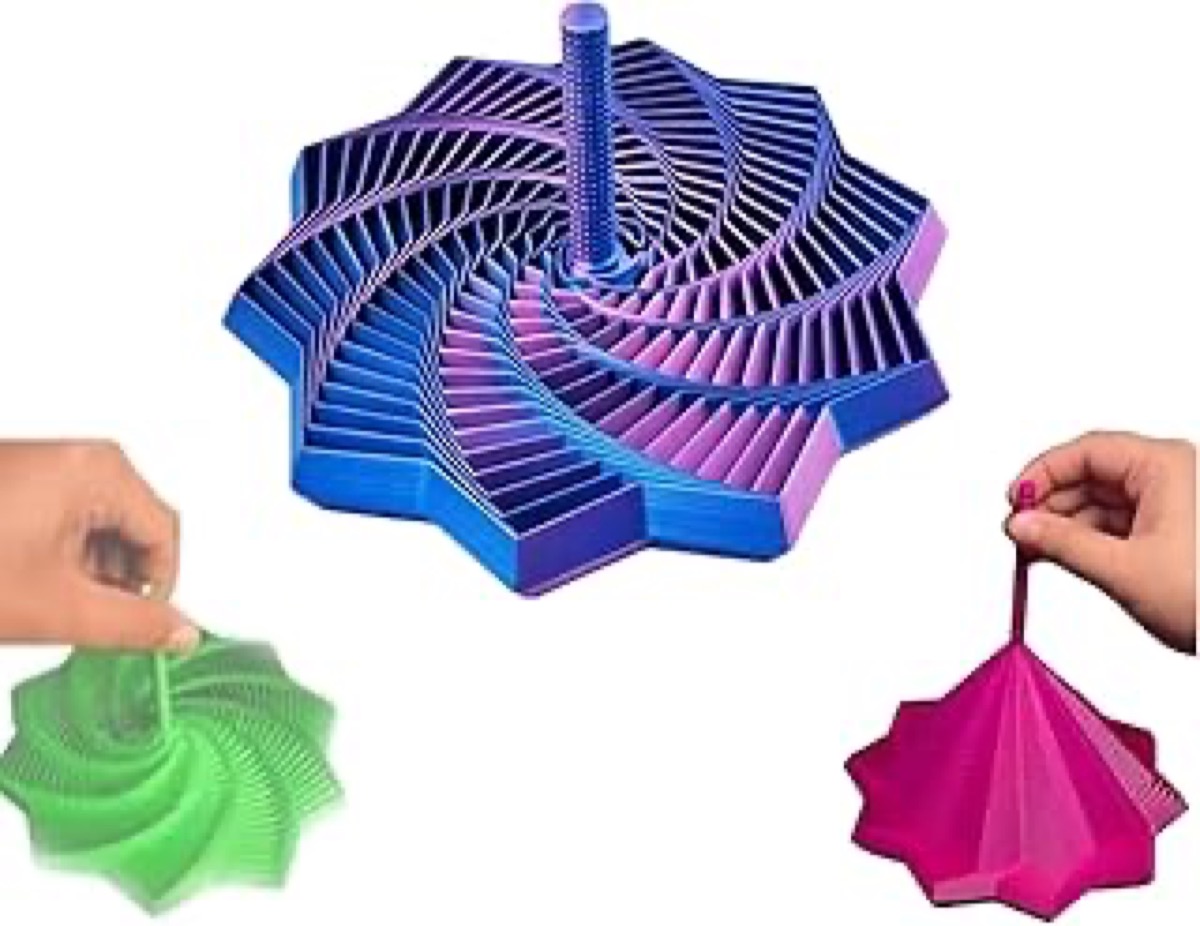
The expandable star fidget. The seasonal shape works for Christmas and holds up well beyond it.
How to price and sell these without guessing
Start with the cost you can actually measure. A 25-gram ornament at a $20/kg spool is about 50 cents of plastic, and even a 96-gram fidget stays under $2. The real cost is machine time and your own labor, not the filament. A common rule of thumb is to charge enough to cover materials plus a rate per hour of print time, and then check what the market actually bears rather than treating the formula as a fixed price.
Match the channel to the product. Quick, cheap ornaments and fidgets do well at in-person markets and as low-price online listings, where impulse buys happen. The longer pieces — the big Santa, the train, the large bauble tree — are better as made-to-order so you're not tying up the printer or holding inventory that might not move. Personalization is the easiest way to raise a price without raising your cost, especially on the small ornaments and gift tags.
Finally, keep a screenshot of each license page when you list. Permissions can change, and one of the models we left out this year had its commercial rights expire. If you have the original terms saved, you're protected for the prints you already made. Stick to selling the physical object, keep the files to yourself, and every model on this list stays on the right side of that line.