3D Printed Lamps in 2026: Who's Actually Making Money?
3D printed lamps look like a perfect side hustle. Instagram-friendly, high margin, warm glow, easy to print. The reality is messier. Roughly 65% of 3D printing sellers on Etsy earn less than $100 a year, and only about 10% build a profitable, sustainable business. The ones who make it don't win by printing faster or cheaper. They win by designing things people can't find anywhere else — and by stacking more than one revenue stream on top of each print.
This article pulls together public data on the biggest players, real unit economics from production runs, and the platform rule change that just killed the "buy STL, print, list" playbook. The numbers below come from company reports, platform data crawls, and wholesale price sheets — not from marketing decks.
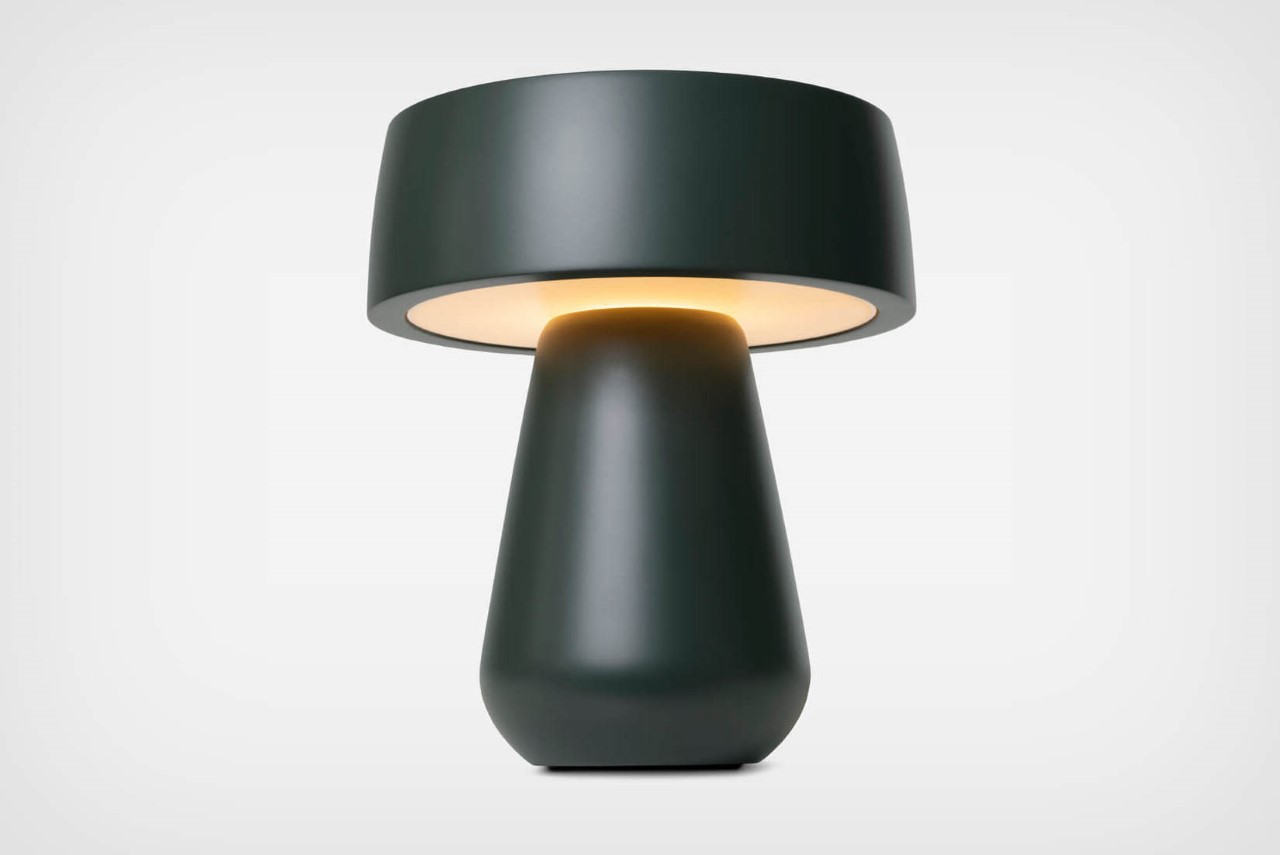
Gantri's Hula table lamp. Gantri runs 1,000+ printers in San Leandro, California, and projects around $14M in revenue for 2026. Its lamps retail for $248–$698 and are sold through MoMA Design Store.
The Market Size Trap
Start with a warning. If you've seen a report saying the "3D printed lighting market" is worth billions, read the fine print. Five research firms published 2025–2026 estimates that differ by a factor of 17 — ranging from $450 million to $7.5 trillion. The gap comes from definition: some count only decorative table lamps, others sweep in architectural lighting, automotive lighting, and commercial fixtures.
The only thing all five firms agree on is the growth rate: between 17% and 22% annually. That is directionally useful. It tells you demand is real and growing. It does not tell you the absolute market size, and it certainly does not mean you will capture any of it automatically. The practical takeaway is simpler: this is a fast-growing niche, not a gold rush. Your profit comes from design and customer acquisition, not from market tailwinds.
Who's Actually Winning?
Gantri: The Scale Play
Gantri is the biggest name in 3D printed lamps. The company runs more than 1,000 printers in San Leandro, California, uses a plant-based PLA polymer, and sells lamps direct-to-consumer for $248–$698. It projects roughly $14 million in revenue for 2026. Its products are stocked at MoMA Design Store.
The important detail: in May 2026, Gantri launched Gantri Made, a contract manufacturing platform open to other brands, with a starting order quantity of one piece and engineering setup fees from $10,000. That pivot tells you something important. A single lamp brand, even one with 1,000 printers and museum distribution, hit a ceiling and needed to sell manufacturing capacity to grow. For a small workshop, that is the realistic ceiling of a pure lamp brand — not the $14 million itself, but the lesson that one product line has a limit.
Wooj: The Bootstrap Model
If you want a comparison that actually applies to a small workshop, look at Wooj. The Brooklyn studio runs about 24 printers, uses recycled PETG made from plastic bottles, and sells five lamp designs for $100–$265. Its Wavy Lamp has sold over 5,000 units. The company sells roughly 15,000 lamps a year — about $2.25 million in revenue — and is profitable without venture funding. It distributes through its own site, MoMA, West Elm, and Urban Outfitters.
That is the model worth studying: a tight product line, sustainable materials as a brand story, and retail distribution that justifies prices well above filament cost. Twenty-four printers generating $2.25 million is about $94,000 per printer per year — a useful benchmark if you are scaling.
The Etsy Middle
Below the design brands, Etsy sellers tell a different story. Top-performing individual listings reveal where the money actually concentrates. A Final Fantasy XIV job lamp sold 846 units for about $25,372 in cumulative revenue. A "Crystal Lamp" design moved 568 units for roughly $18,931. A cottagecore mushroom lamp reached 280 sales and $8,397.
Those are solid numbers for a side project, not a business. A single niche product — a game item, a mushroom aesthetic, a personalized photo gift — can pull in $7,000–$25,000 over its lifetime. To break above that, you need either multiple SKUs, wholesale accounts, or a way to sell the same design as a digital file.
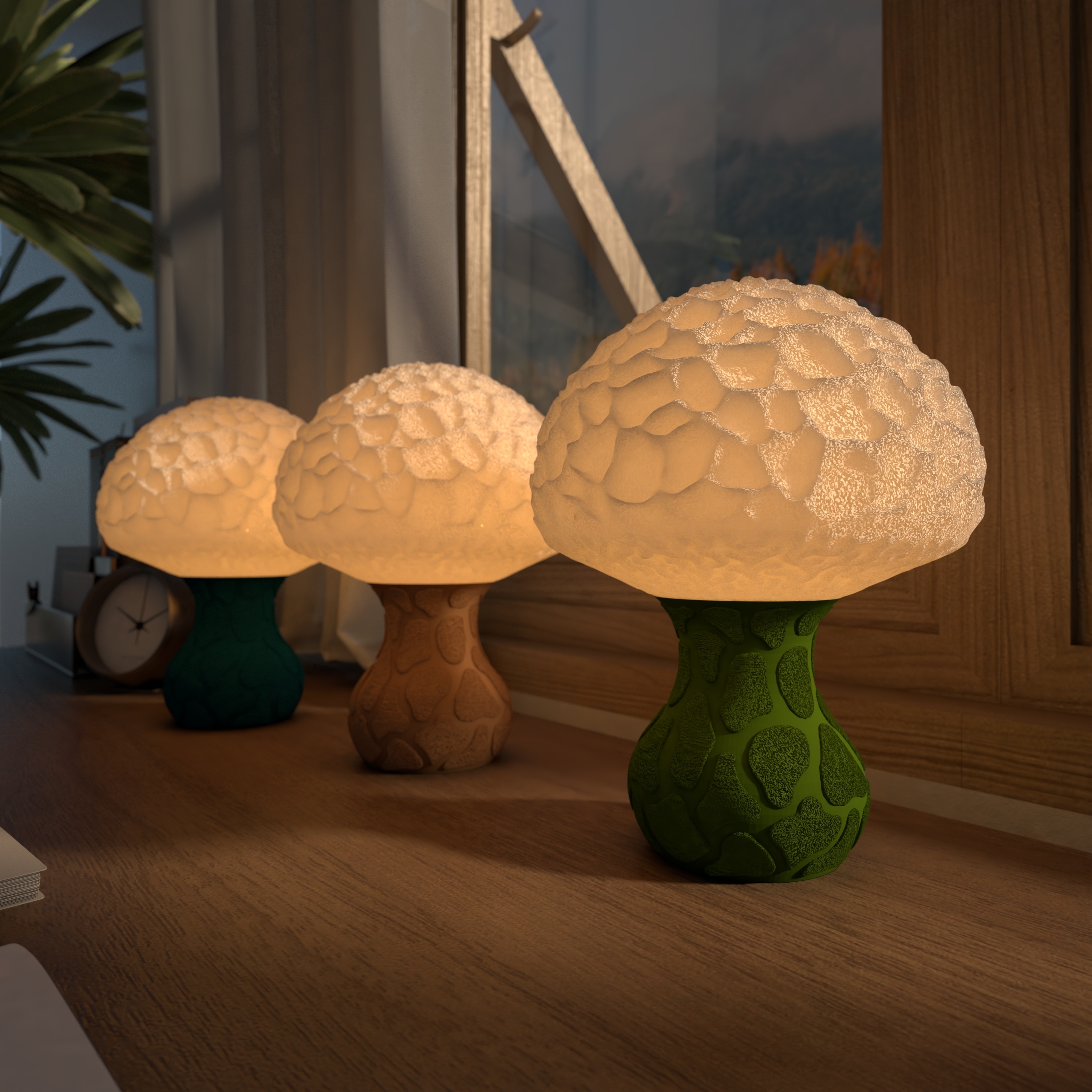
Mushroom lamps in cottagecore style. This aesthetic is one of the few Etsy niches with consistent demand outside generic geometric shapes. Photo: Cults3D community listing.
The Real Unit Economics
A mid-size lamp — roughly 15 cm, single-piece shade with a wooden base — costs about $5.65 in fully loaded production costs when you factor in filament, electricity, printer depreciation, LED components, accessories, 15 minutes of post-processing labor, packaging, and a typical 8% print failure rate. That breaks down to:
| Cost Component | Amount (USD) | Notes |
|---|---|---|
| Filament (110 g) | $1.05 | At ~$9.50/kg brand-name PLA |
| Electricity + printer depreciation | $0.95 | 9-hour print, amortized over 6,000 hours |
| LED module, wire, switch, base | $1.55 | The most underrated cost — equal to the filament |
| Post-processing labor (15 min) | $1.55 | At $6.20/hr — more than filament + electricity combined |
| Packaging + shipping | $2.05 | Cross-border shipping adds another $9 per unit |
| Total cost (domestic) | $7.15 |
Sell that lamp for $35 on Etsy, pay 11% in platform fees, and you net about $17 — a 50% margin after cross-border shipping. Sell it for $129 domestic and the margin jumps to 68%. Two findings jump out.
First, post-processing labor matters more than filament cost. Cutting your filament price by 20% improves margin by less than one percentage point. Cutting your sanding and assembly time from 15 minutes to 8 minutes is worth more. This is the mistake new sellers make: they obsess over filament price while the clock ticks during cleanup.
Second, the lamp is not just a printed object. It is a printed shade plus an LED module, wire, switch, base, and packaging. The electrical accessories alone cost as much as the plastic. If you are pricing a lamp the way you price a phone case — filament plus labor — you are missing half the bill of materials.
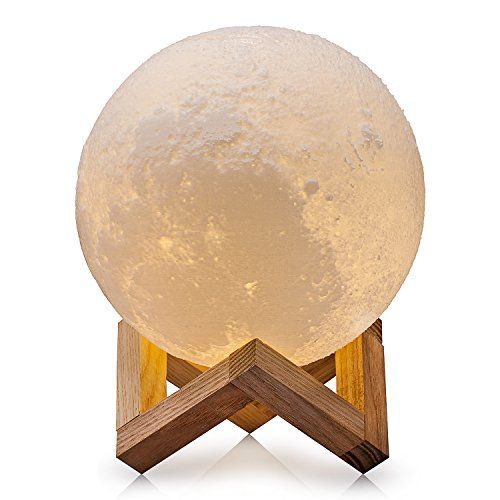
The classic moon lamp. This product has already gone through a complete price collapse cycle — from a $99 design item in 2016 to $10–$25 mass-produced units today. Do not build a business on a design that anyone can download and print.
The Rule Change That Just Happened
This is not a minor policy tweak. It raises the barrier to entry from "own a 3D printer" to "design things people want." If you are selling lamps on Etsy using a STL file you downloaded or bought, you are now at risk of delisting. The workaround is not to find a more permissive file source — it is to design your own lamps or modify existing designs so substantially that they qualify as original work. For serious sellers, this is actually good news. It removes the flood of identical geometric lamps that have been racing to the bottom.
Six Ways to Actually Make Money
Selling finished lamps is only one path, and it is the most constrained by print time. The profitable players combine several of these:
| Model | Margin | What It Takes |
|---|---|---|
| Sell STL files (digital download) | 95%+ | Original designs. Sell on Printables, Cults3D, MyMiniFactory. A popular lamp design sells 50–200 copies/year at $5–$20. |
| Patreon / subscription | 90%+ | Consistent new designs. Top 3D printing creators earn $3,000–$15,000/month, but this takes months of audience building. |
| Personalized gifts (photo lithophanes, pet memorials) | 60–75% | Material cost $1–3, sell for $25–$60. Mass manufacturing cannot replicate it — it uses the customer's own photo. |
| B2B custom orders (cafes, hotels, branded gifts) | 70–81% | Higher order values, weak price comparison, repeat business. 3-day prototyping undercuts injection molding on small runs. |
| Sell finished lamps | 50–75% | The baseline. Revenue is capped by printer hours. Needs multiple SKUs and higher average order value to scale. |
| Content + affiliate | 3–10% commission | Long-term asset. Review channels, comparison articles, filament recommendations. Compounds over time. |
The best combination for a small workshop is personalized custom lamps (cash flow), B2B orders (high ticket), and STL files (zero marginal cost). All three use the same design assets. One model can be printed and sold physically, sold as a file, and reviewed in a video — the "one fish, three meals" structure that makes this category work.
What to Actually Do
If you are considering 3D printed lamps as a business in 2026, skip the generic geometric pendant. There are 5,000+ identical listings on Etsy in the $40–$80 range, and Amazon sells the same concept for $10–$15. That market is a price war you cannot win.
Pick a niche where personalization or design ownership creates a moat. Photo lithophane lamps, pet memorial lights, game-themed lamps, or branded B2B pieces all have something mass manufacturing cannot copy. Price at $35–$60 for custom gifts or $100–$250 for design pieces. Do not compete below $30.
Use PETG or PC for the shade, not PLA. PLA softens around 60°C and a warm LED module sitting against it for weeks can deform. Budget 15 minutes of post-processing per lamp, not 5. Treat the LED hardware as a cost line item, not an afterthought. And start collecting emails from day one — a Shopify store with $30/month in fees has 70% lower transaction costs than Etsy's full 11–26% once you send enough traffic yourself.