How It Works
TPU method (use this)
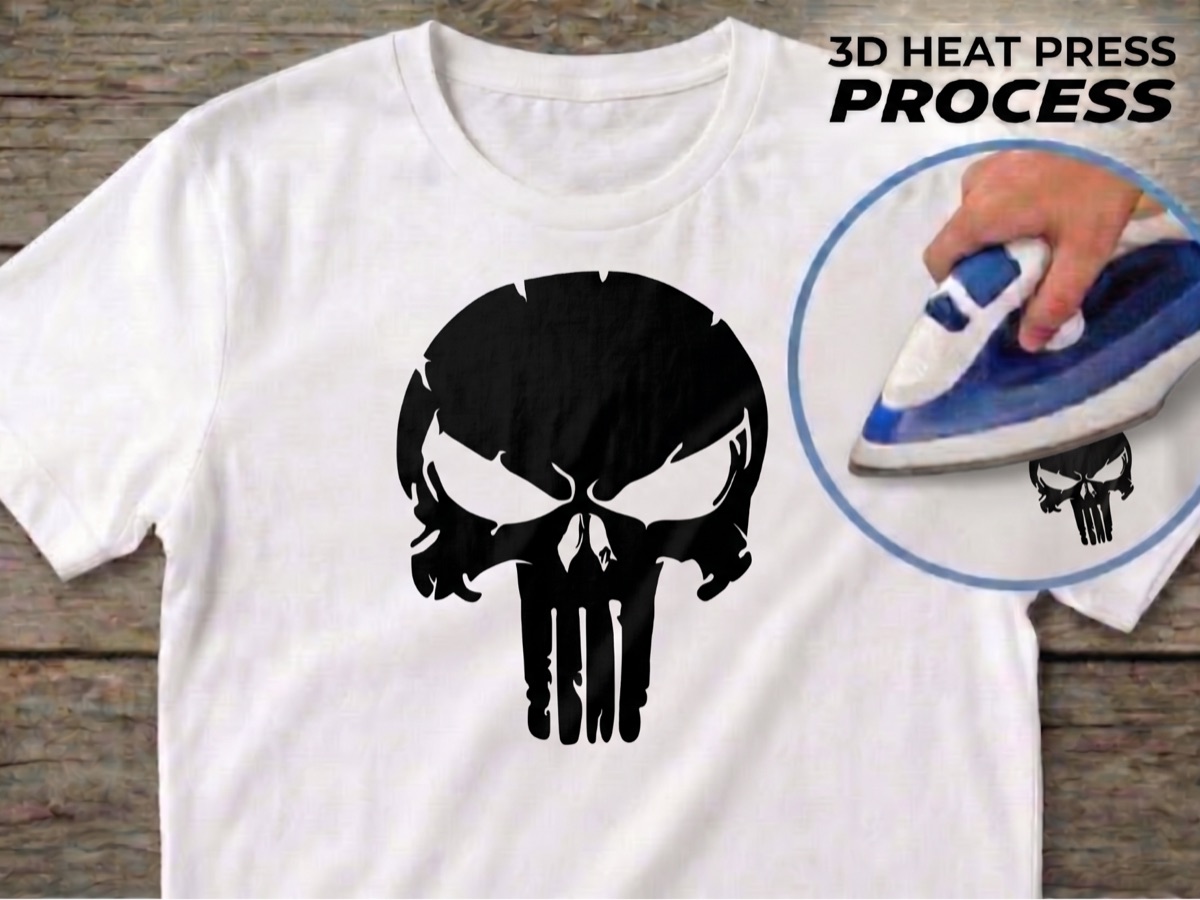
Print an ultra-thin (0.3mm) flexible TPU design, peel it off the bed, lay it on the fabric, and press it onto the fabric with an iron or heat press. The TPU melts slightly into the fibers and stays flexible when washed. The raised texture is what makes it stand out from regular screen printing or DTF.
PLA method (skip for selling)
Print a 1-2 layer PLA design on parchment paper and iron it on. Sharp detail, but it cracks after a few washes and feels plasticky. Fine for personal projects, not something you want customers paying for.
What You Can Make
T-shirts are the obvious one, but the community has already pushed this further:
- Canvas tote bags — flat surface, forgiving, people will pay a premium for these
- Hoodies and sweatshirts — thicker fabric holds the texture better
- Aprons — practical, great for local maker markets
- Upcycled clothing — print on thrifted denim jackets for a premium product
- Pet bandanas — small prints, fast turnaround, loyal customer base

Cost & Profit
An entry-level printer (Bambu A1, Ender 3, Anycubic Kobra — take your pick) is $200-400. TPU is $12-20/kg. A single shirt design uses 5-15 grams of filament. That's roughly $0.10-0.30 in material per print.
| Item | Cost | Notes |
|---|---|---|
| 3D Printer | $200-400 | One-time. Any FDM printer works. |
| TPU Filament (1kg) | $12-20 | 95A hardness recommended. ~60-100 prints per spool. |
| Heat Press (or iron) | $0-150 | Household iron works to start. Upgrade if scaling. |
| Blank T-shirts | $3-6 each | Bulk from Gildan, Bella+Canvas, and local wholesalers. |
| Tote Bags | $2-4 each | Canvas, 12oz+ for best results. |
| Per-unit cost | $3-7 | Filament + blank item + electricity. |

Pricing in practice: Regular custom shirts sell for $8-15. A 3D raised design commands a 30-50% premium, and the margin on a $20 shirt is roughly $14-16. Tote bags are even better — $2-3 cost, $18-25 retail.
Start in 4 Weeks
Week 1 — Test it
Buy one TPU spool (95A). Print 3 free MakerWorld designs, iron onto old shirts, wash them twice. If the design survives, you've got a process. If it peels, adjust temperature and pressure.
Week 2 — Pick one product
Start with tote bags (flat, forgiving). Design 5-10 original patterns. Shoot product photos on a clean background. Set up an Etsy shop or Instagram page.
Week 3 — Post & sell
Upload 3-5 process videos to TikTok/Reels. The printing itself is the hook — people watch the TPU come off the bed and go viral. Get your first 5 sales at a discounted "launch" price.
Week 4 — Decide
Check real costs, reorder rate, referrals. Good? Buy a second printer. Bad? You're out $50 in filament and a few evenings. No serious risk.
The Limitations
- Large designs (>15×15cm) warp and fail — you're making thin flexible stickers, physics gets in the way. Keep designs small and focused.
- TPU survives washes but isn't indestructible — tell customers: cold wash, inside out, hang dry. No dryer.
- Color is limited to your filament spools — no smooth gradients or photorealistic prints like DTF. Solid colors and bold lines work best.
- Throughput: 20-40 min per design + ironing — one person, one printer = ~10-15 shirts/day. This is a side hustle, not a factory.
Bottom Line
Nobody's getting rich printing shirts on a $300 machine, and that's the point. It's a small niche nobody else is targeting, with low startup costs, real margins, and almost no competition. The raised 3D texture is something DTF and screen printing can't replicate, and customers notice.
If you already own a printer, your only real cost is a $15 spool of TPU and an afternoon of testing. Worst case: you made some weird shirts. Best case: you've got a side hustle paying $500-1,500/month with room to grow.
Sources: MakerWorld t-shirt print model library | Smzdm: 3D printing on fabric — techniques and cost breakdown | PrintLab: fabric 3D printing case studies