Bambu Lab PLA Pure: The First Filament That Publishes Every Ingredient
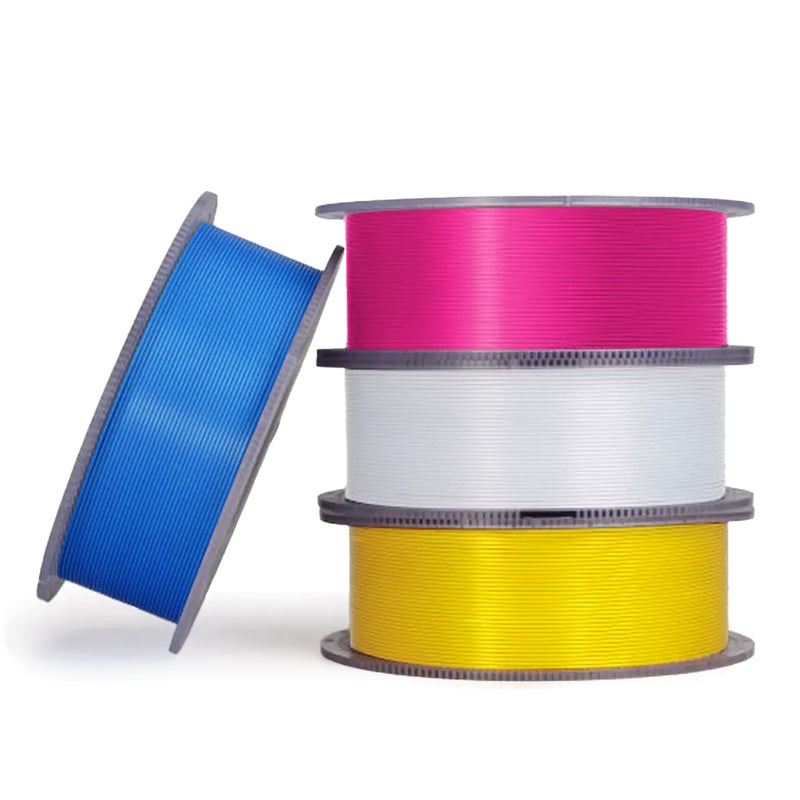
Bambu Lab has released PLA Pure, a consumer filament that does something most spools don't: publish its full ingredient list. The formula contains exactly five components, all named on the product page. That level of transparency is unprecedented in the desktop 3D printing market, where "proprietary blend" has been the standard answer for years.
The launch comes at a time when more people are running printers in living rooms, bedrooms, and home offices — spaces where air quality and material safety actually matter. Bambu Lab is positioning PLA Pure as the filament you can print with while your kids are in the room.
What's Actually in It
PLA Pure is built around polylactic acid (PLA) as the base polymer, with a small number of additives for flow, color, and print reliability. The company has not disclosed exact ratios, but every component is named — a first for a major filament brand.
Compare that to a typical PLA spool, which might list "PLA resin, pigments, processing aids" and nothing more. For most users that's fine, but if you're printing cookie cutters, toy parts, or anything that might end up in a mouth, knowing what's in the material matters.
Certifications That Actually Mean Something
EU 10/2011
European regulation for plastics intended for food contact. Every ingredient is certified compliant.
EN 71-3
Toy safety standard restricting heavy metal migration. Relevant for parts kids might handle or chew.
GREENGUARD Gold
Indoor air quality certification limiting chemical emissions. Tested for use in schools and healthcare.
These aren't self-declared claims. GREENGUARD Gold in particular requires third-party lab testing of emissions over time, and the certification is maintained through ongoing monitoring. That's a higher bar than "low odor" marketing copy.
Print Performance vs. Regular PLA
PLA Pure prints at standard PLA temperatures — 190-210°C hotend, 50-60°C bed. Early reviews report that it behaves like a premium PLA: good layer adhesion, minimal stringing, and a matte finish rather than the glossy look of basic PLA.
The trade-off is price. PLA Pure costs more per kilogram than Bambu Lab's Basic PLA, and it's currently available in a limited color range. If you're printing functional prototypes or bulk parts where safety certifications don't matter, regular PLA is still the better value.