Bambu Lab P2S Firmware 01.03.00.00: E3D High-Flow Hotend Support, Explained
Bambu Lab pushed firmware 01.03.00.00 to the P2S on October 12, and the headline change is official support for the E3D High-Flow Integrated Hotend. This is the firmware that lets you run a hotter, faster nozzle on a printer that shipped with a standard one.
For most P2S owners this is not an automatic upgrade. The high-flow hotend is a separate part you buy, and the firmware only unlocks it. But the update also ships a couple of things you get for free: Z-axis motor noise cancellation, and a higher travel speed that shortens print time without touching your part settings.
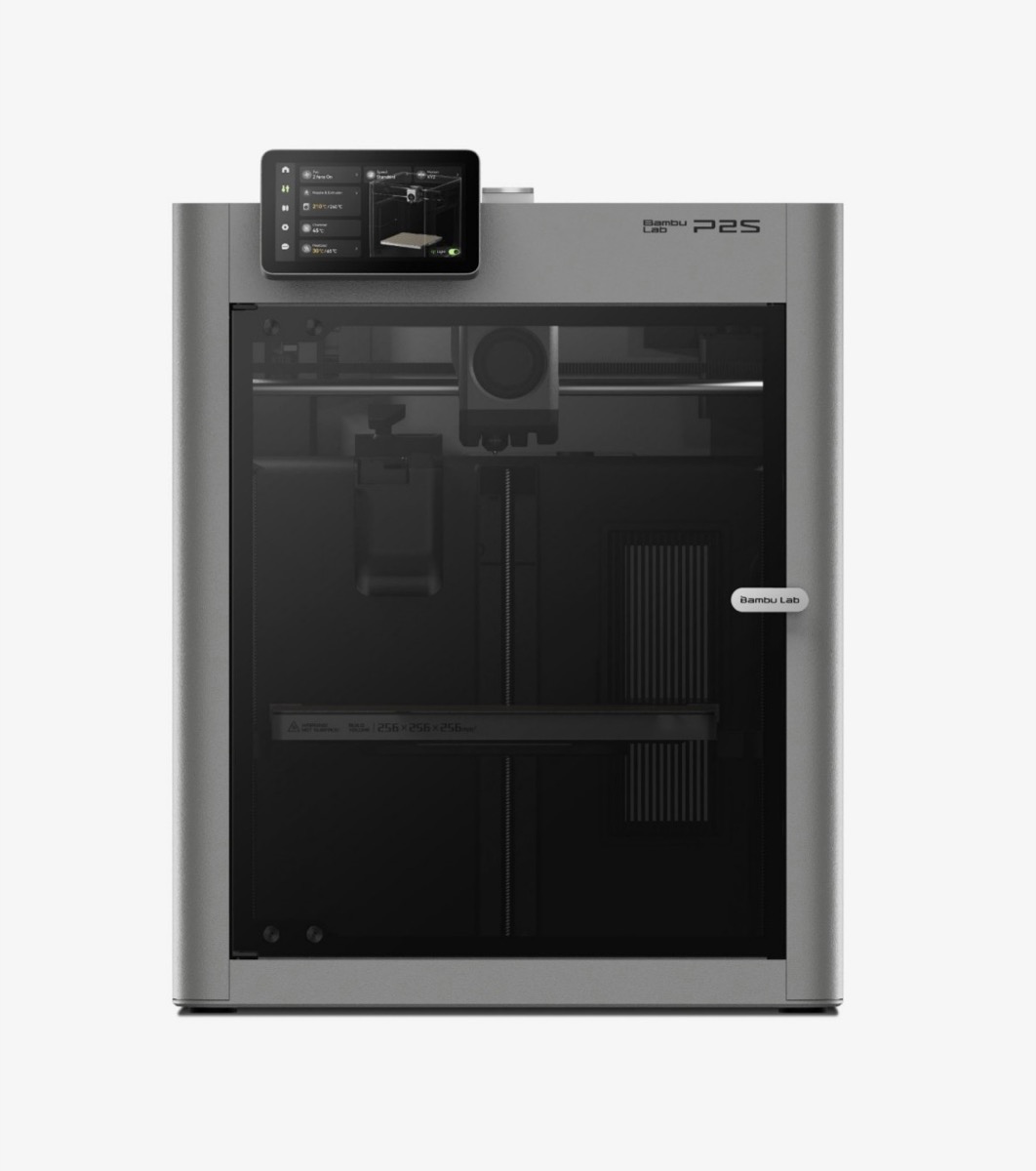
The P2S is Bambu's value CoreXY workhorse — 256 x 256 x 256 mm build volume, 20,000 mm/s² acceleration, and a PMSM servo extruder rated at 8.5 kg of force.
What actually changed in the update
Bambu's release notes for 01.03.00.00 list three things. First, support for the E3D High-Flow Integrated Hotend, which requires Bambu Studio v2.8.3.66 or later. Second, Z-axis motor noise cancellation, which does exactly what it sounds like: the printer adjusts motor drive to quiet the Z motion. Third, travel speed was raised to 1000 mm/s for shorter print times.
That travel speed number matters more than it looks. Travel moves are the times the nozzle is moving but not extruding — the hops between islands, the runs across the plate. Bumping that ceiling to 1000 mm/s cuts minutes off prints with lots of small features, and it does it with no quality tradeoff, because your print speeds stay exactly where you set them. The firmware update itself is OTA, so the printer just grabs it over the network.
What the E3D high-flow hotend actually is
The E3D High-Flow hotend is a drop-in replacement for the P2S toolhead. It uses a four-channel insert inside the heat break that feeds the melt zone faster, and E3D's numbers put the flow increase at over 60% compared to a standard nozzle. The ObXidian version adds a hardened, non-stick coating rated to 500 °C, which is well past what PLA, PETG, or ABS need — the point is abrasion resistance if you print fiber-filled materials.
You get it in 0.4 mm or 0.6 mm nozzle sizes. The heater and temperature wires are pre-integrated in the toolhead, so there's no wiring work — it's a swap, not a project.
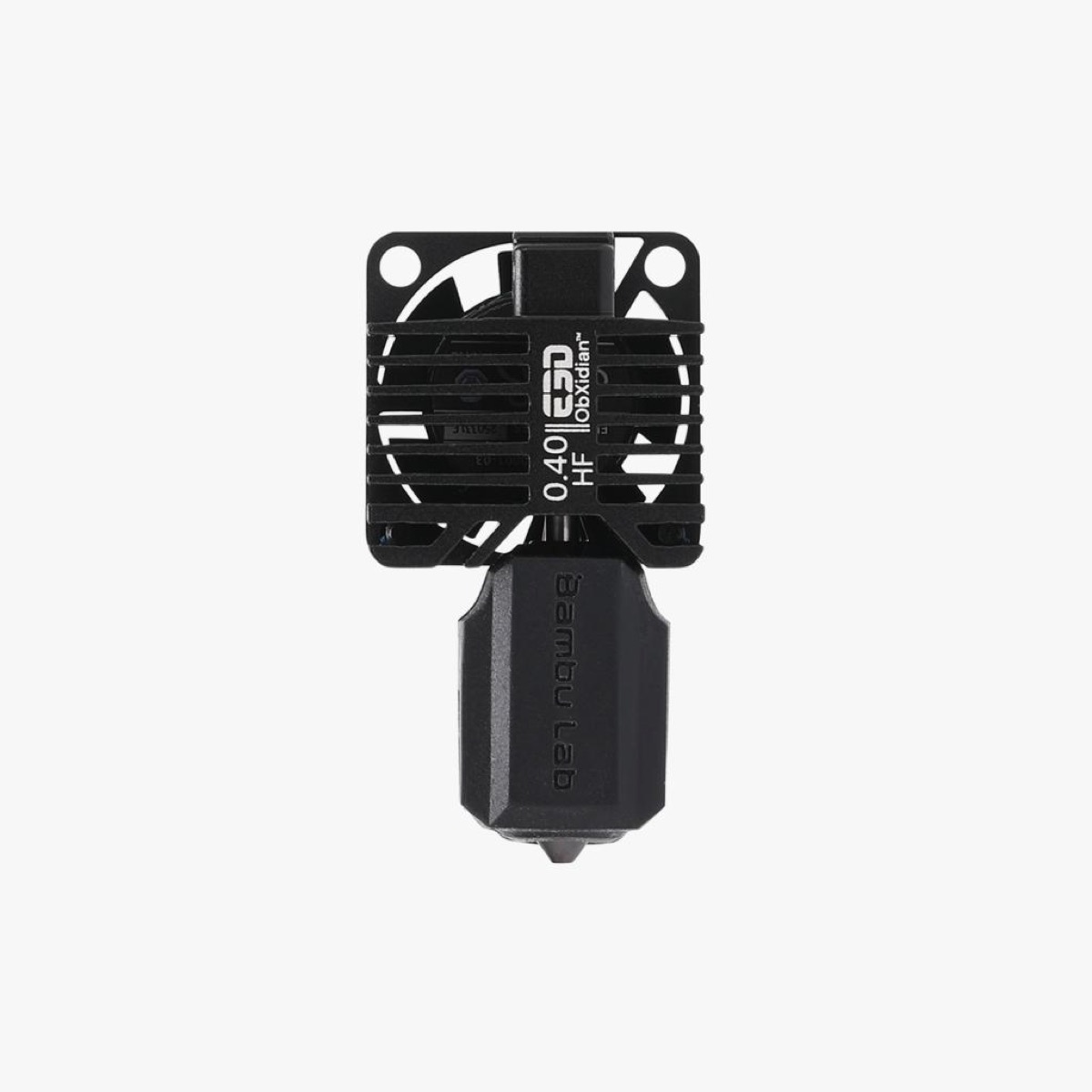
The E3D High Flow ObXidian hotend for the P2S. Four-channel insert, hardened coating rated to 500 °C, heater and thermistor wires pre-integrated.
Which printers it works on
Bambu's own compatibility table keeps this simple. The H2 series supports the high-flow hotend. So does the P2S. The X1 and P1 series do not. The A1 series is listed as compatible, with a catch: Bambu says the high-flow nozzle works on the A1 but does not improve volumetric speed, so on the A1 it performs the same as a standard nozzle.
For the P2S, the hardware was already capable. The printer ships with a PMSM servo extruder that puts out up to 8.5 kg of extrusion force — about 70% more than the previous generation — and samples resistance and position at 20 kHz to catch filament grinding and clogs in real time. What was missing was firmware that understood a high-flow nozzle profile. 01.03.00.00 is that firmware.
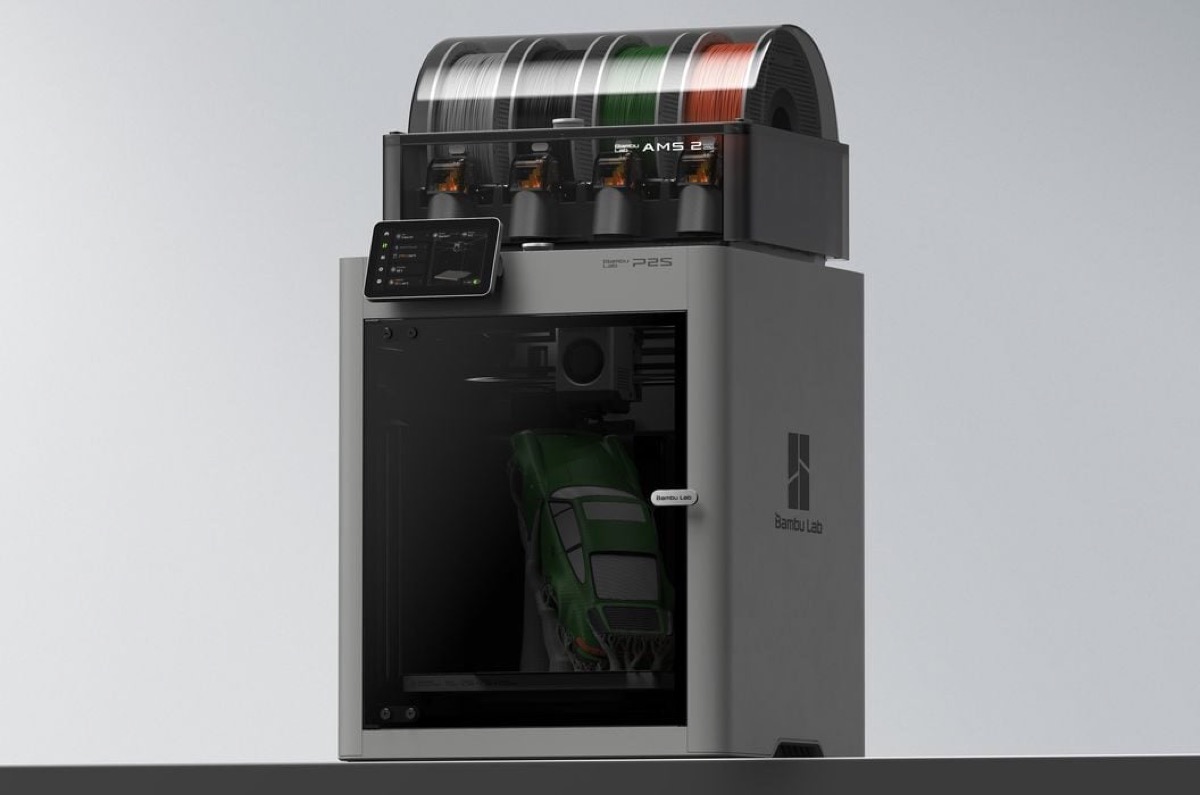
The P2S running a multi-color job with the AMS on top. The high-flow hotend matters most for long functional parts and abrasive filaments, not for small color prints.
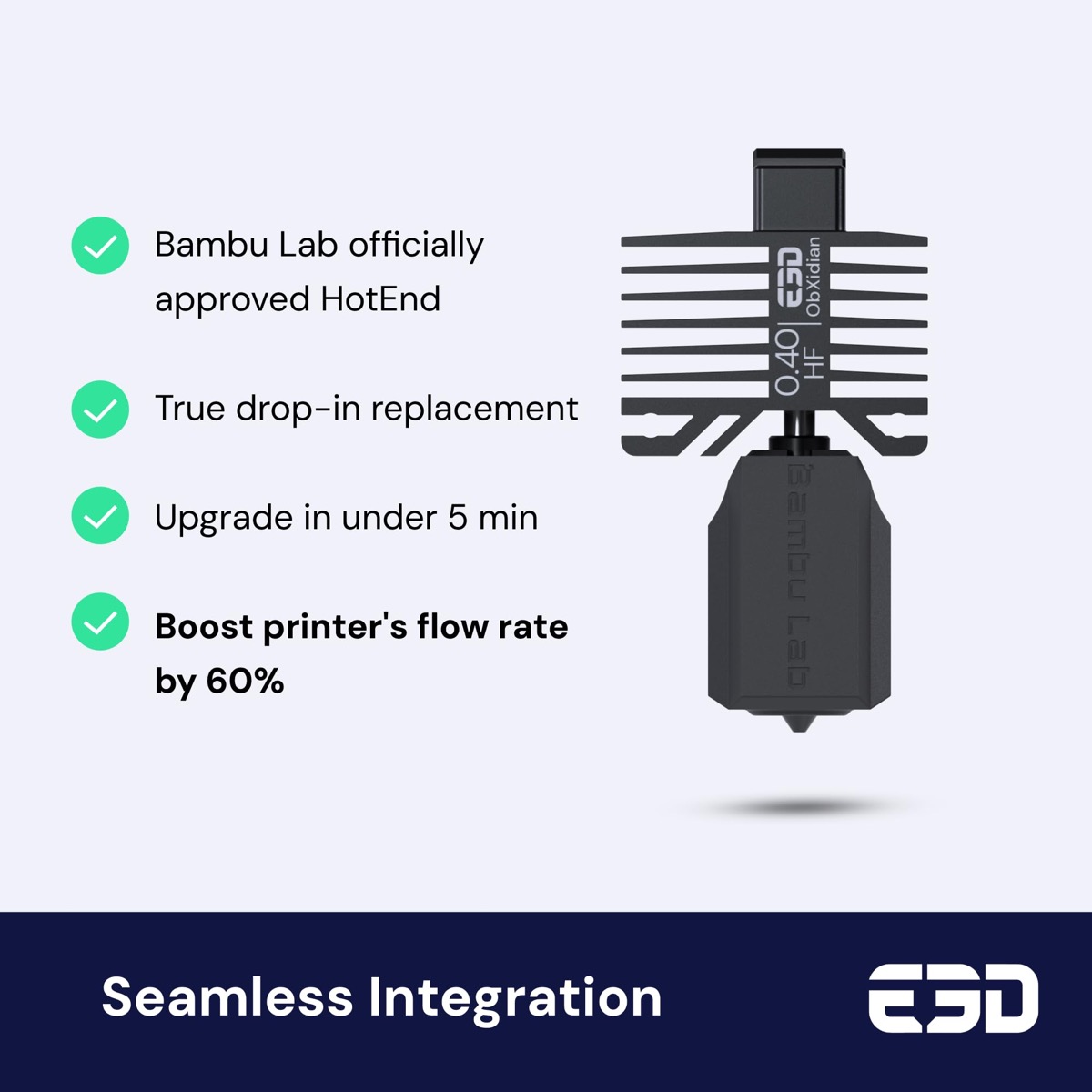
E3D's pitch for the high-flow hotend: a 60% flow boost, a true drop-in replacement, and an upgrade that takes under five minutes.
What it costs, and what you get for it
This is the part that matters for a saver's site, so here's the honest math. The high-flow hotend runs around $75 at US resellers, less when Bambu or a retailer runs a sale — the UK store has had it at £57.60 during promos. That's roughly the price of three to four rolls of budget PLA.
What you buy with that is time. A 60% flow increase means a given part can print faster at the same layer quality, and on big functional parts — brackets, organizers, anything with long walls — the hours saved add up fast. If you're running a print farm or filling Etsy orders, that's the difference between two jobs a day and three. If you print mostly small decorations and keychains, you'll barely notice, and $75 is a lot to spend on a difference you can't feel.
Should you update?
Yes to the firmware, no pressure on the hotend. The firmware itself is free, it's OTA, and it ships useful fixes regardless of whether you ever buy the E3D part. There's no reason to stay on an older build.
The hotend is worth it if you print abrasives like carbon-fiber nylon or glow-in-the-dark filament, where the hardened coating protects a nozzle that standard brass would chew through. It's worth it if you're time-constrained, meaning you sell prints or you batch-print parts for projects. It's not worth it if you print PLA trinkets on weekends — the standard hotend is already fast enough for that, and your money goes further on filament.
One practical note: check your Bambu Studio version before you order. The high-flow profile needs v2.8.3.66 or later, and if your slicer is old, the firmware alone won't get you the full benefit. Update both, then swap the hotend. That's the whole install — the printer and slicer handle the rest.
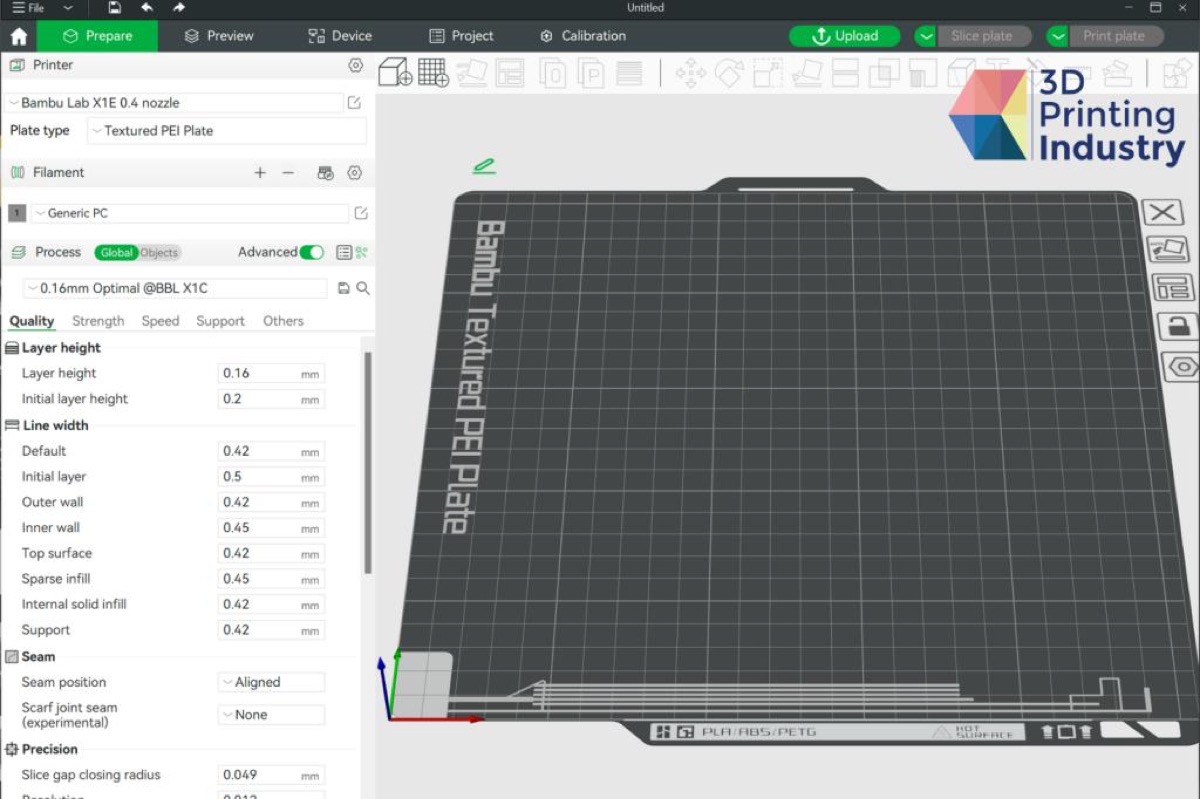
Bambu Studio v2.8.3.66 or later is required for the high-flow profile. Update the slicer before installing the new hotend.