Best 3D Printed Items to Sell for Profit in 2026
Turning a 3D printer into income is appealing, but not every printable item is a good product. The best items to sell share three traits: high perceived value relative to material cost, consistent demand, and low competition from mass-manufactured alternatives.
This guide covers the most profitable 3D printed items in 2026, with realistic cost and margin estimates. All figures are based on PLA or PETG material at $20–25/kg, electricity at $0.15/kWh, and typical Etsy/Amazon pricing. Your actual results will vary based on printer speed, labor costs, and market conditions.
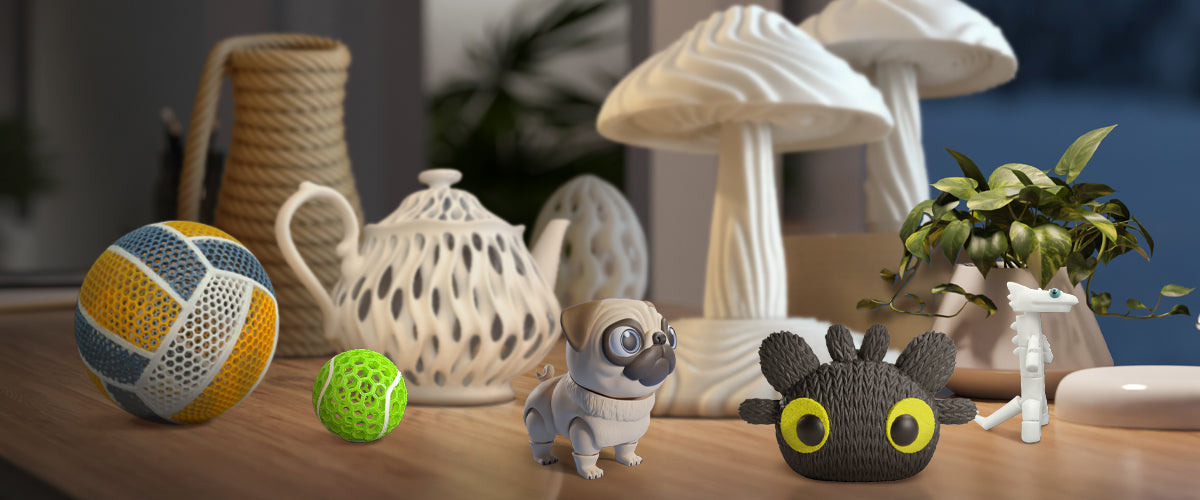
A range of 3D printed products — from home decor to functional gadgets — that sell consistently online.
What Makes a 3D Printed Item Profitable?
Before diving into specific products, understand the economics. A $20 spool of PLA contains roughly 330 meters of filament. A typical small product uses 10–30 grams, meaning the material cost is $0.20–$0.75 per unit. The real costs are printer time, electricity, post-processing, and marketing.
A profitable item should:
- Sell for at least 5–10× the material cost
- Print in under 4 hours (ideally under 2)
- Require minimal post-processing (no sanding, painting, or assembly)
- Solve a specific problem or serve a niche audience
- Not be easily available at Walmart or Amazon for less
Top Profitable Items
1. Custom Phone Stands and Device Holders
Phone stands are a perennial bestseller. They are quick to print (30–60 minutes), use minimal material (15–25g), and have high perceived value. Customizable versions — with names, logos, or specific phone models — command premium prices.
Material cost: $0.30–$0.50 | Selling price: $12–$25 | Profit margin: 85–90% | Print time: 30–60 min
Niche tip: Instead of generic stands, target specific use cases — "angled stand for recipe viewing," "charging stand for Apple Watch + iPhone," "vertical stand for Nintendo Switch." Specificity reduces competition.
2. Planters and Plant Pots
3D printed planters are popular on Etsy, especially geometric and modern designs. They print in 1–3 hours, use 30–80g of material, and sell well to the plant-parent demographic.
Material cost: $0.60–$1.60 | Selling price: $15–$35 | Profit margin: 80–88% | Print time: 1–3 hours
Niche tip: Use PETG for water resistance. Add drainage holes and include a drip tray. Succulent-sized pots (5–8 cm) sell fastest because they are cheap to ship.
3. Keychains and Bag Charms
Keychains are the entry-level 3D printing product. They print in 10–20 minutes, use 5–15g, and are easy to ship. The downside is competition — everyone prints keychains. The key is differentiation.
Material cost: $0.10–$0.30 | Selling price: $5–$12 | Profit margin: 80–90% | Print time: 10–20 min
Niche tip: Custom pet keychains (upload a photo, get a 3D printed silhouette), sports team keychains (avoid trademarked logos), or "world's best [occupation]" designs. Personalization is what makes people pay $10 instead of $2.
4. Kitchen Gadgets and Organizers
Cable organizers, spice rack labels, drawer dividers, and bag clips are practical items that people buy repeatedly. They are functional rather than decorative, which means customers buy them to solve a problem — not just because they look cool.
Material cost: $0.20–$1.00 | Selling price: $8–$20 | Profit margin: 82–90% | Print time: 30–90 min
Niche tip: "Cabinet door mount for [specific appliance]," "spice label set for [specific cabinet size]," "bag clip with measurement markings." Products that fit specific, non-standard spaces have less competition.
5. Board Game Accessories
The board game community is large, passionate, and willing to pay for quality accessories. Token organizers, card holders, dice towers, and insert trays for specific games are consistent sellers.
Material cost: $0.50–$3.00 | Selling price: $15–$50 | Profit margin: 80–88% | Print time: 1–5 hours
Niche tip: Design inserts for specific popular games (Gloomhaven, Wingspan, Terraforming Mars). These are high-value items because they solve a real pain point — box organization — and players are willing to pay for convenience.
6. Cosplay and Costume Accessories
Cosplayers need props, armor pieces, and accessories that are expensive to buy professionally. 3D printed cosplay parts — helmet components, armor plates, weapon props — sell at premium prices because they are custom and labor-intensive to produce traditionally.
Material cost: $2–$10 | Selling price: $30–$150 | Profit margin: 75–85% | Print time: 4–20 hours
Niche tip: Focus on popular, evergreen franchises (Star Wars, Marvel, Zelda) but avoid selling trademarked character designs directly. Sell "generic sci-fi armor" or "cosplay hardware kits" that buyers can customize. Check Etsy's IP policy carefully.
7. Replacement Parts and Repairs
This is the most underrated category. People search for "replacement knob for [specific appliance]," "battery cover for [specific device]," "wheel for [specific luggage]." If you can identify a commonly broken part and print a better version, you have a product.
Material cost: $0.20–$2.00 | Selling price: $10–$30 | Profit margin: 80–90% | Print time: 30–120 min
Niche tip: Browse Reddit's r/functionalprint and r/3Dprinting for "does anyone have a model for..." requests. Those are unmet demand signals. Also check appliance parts websites for frequently out-of-stock items.
Profit Margin Comparison
| Product | Material Cost | Sell Price | Margin | Print Time |
|---|---|---|---|---|
| Phone stand | $0.40 | $18 | 88% | 45 min |
| Planter (small) | $0.80 | $20 | 86% | 1.5 hr |
| Keychain | $0.15 | $8 | 89% | 15 min |
| Kitchen organizer | $0.60 | $15 | 86% | 1 hr |
| Board game insert | $1.50 | $35 | 87% | 3 hr |
| Cosplay part | $5.00 | $75 | 83% | 10 hr |
| Replacement part | $0.50 | $18 | 87% | 1 hr |
Where to Sell
Etsy: Best for handmade, custom, and niche products. Fees: $0.20 listing + 6.5% transaction + 3% + $0.25 payment processing. High buyer intent for 3D printed items.
Amazon: Larger audience but more competition and stricter rules. FBA (Fulfillment by Amazon) handles shipping but requires inventory investment. Best for standardized, high-volume products.
Local markets: Farmers markets, craft fairs, and comic conventions. No listing fees, immediate cash, and customer feedback. Great for testing products before scaling online.
Your own website: Highest margins (no platform fees) but requires marketing effort. Use Shopify or WooCommerce. Best once you have an established customer base.
Pricing Strategy for 3D Printed Products
Pricing is the hardest part of selling 3D prints. Price too high and nobody buys. Price too low and you work for pennies. Use this formula as a starting point:
Price = (Material Cost × 4) + (Printer Time × $2–$5/hr) + (Labor × $15–$25/hr) + Platform Fees + Shipping
For a phone stand that uses $0.40 of filament, takes 45 minutes of print time, and 5 minutes of post-processing:
- Material: $0.40 × 4 = $1.60
- Printer time: 0.75 hr × $3 = $2.25
- Labor: 0.08 hr × $20 = $1.60
- Etsy fees (~12%): ~$2.50
- Shipping: $3.50 (or build into price)
- Total: ~$11.50 → list at $14.99–$18.99
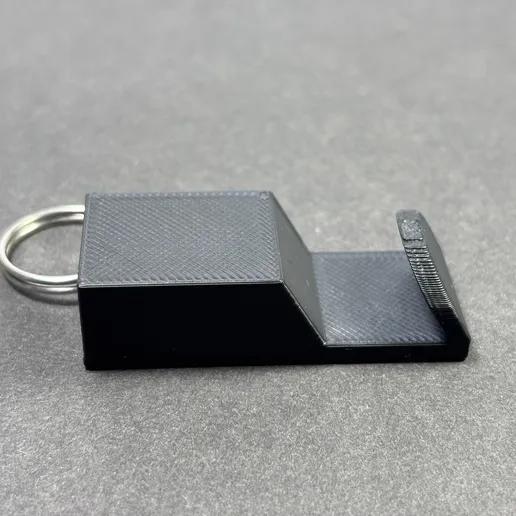
Small, practical items like this keychain phone stand are consistent sellers. They print fast, ship cheap, and solve a real problem.
Always check what similar products sell for on Etsy and Amazon. If the market price is below your cost formula, either find a way to reduce print time (larger nozzle, thinner walls, faster settings) or pick a different product. Competing on price alone in a saturated market is a race to the bottom.
Shipping and Packaging Tips
Shipping costs eat into profits more than any other expense. These tips help:
Use USPS First Class for small items. Keychains, phone stands, and small planters fit in a padded envelope and ship for $3–$5 domestically. Priority Mail is overkill for items under 1 lb.
Design for flat packaging. Products that ship flat (wall art, organizers, flat keychains) cost less to ship than bulky items. If a product requires a box, the shipping cost doubles.
Offer free shipping with minimum order. Build shipping cost into the product price and offer "free shipping" — customers love it. Set a minimum order ($25–$35) to encourage multi-item purchases.
Use branded packaging sparingly. Custom boxes and tissue paper look great but add $1–$2 per order. Start with plain poly mailers and a business card. Upgrade to branded packaging once volume justifies it.
International shipping is optional. Start with domestic only. International shipping adds complexity, customs forms, and higher loss rates. Expand internationally once you have 50+ domestic sales per month.
Scaling Beyond One Printer
Once you have a winning product, scaling means more printers. A single printer running 16 hours/day can produce roughly $200–$500/month in profit at the margins above. A farm of 5 printers can do $1,000–$2,500/month. At that point, you need to consider bulk filament purchasing (saves 20–30%), automated print removal, and time management for post-processing and shipping.