Formnext 2026 Preview: Every Printer and Material We Expect in Frankfurt
Formnext opens in Frankfurt in about two and a half weeks, and this is the point where the industry starts leaking what it plans to show. If you're trying to decide whether to buy a printer now or wait, this is the event that sets the table for next year.
The show runs November 17 through 20 at Messe Frankfurt, Tuesday through Friday. Here's what we know is coming, what's still rumor, and what it means for your wallet.
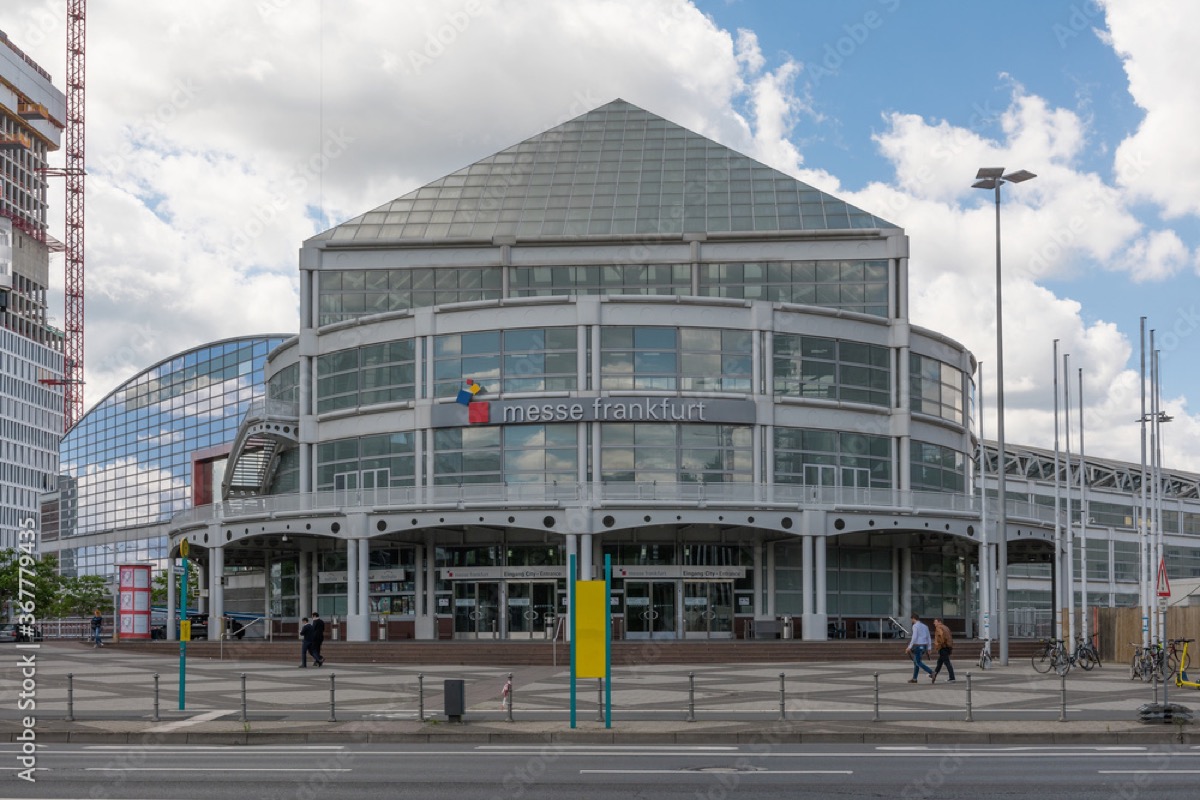
The entrance to Messe Frankfurt, where Formnext 2026 takes place November 17-20. The show covers the full AM process chain, from machines and materials to software and post-processing.
The basics: how big this year's show is
Formnext is the largest additive manufacturing show in the world, and it's still growing. As of early March, 527 companies from 34 countries had registered, with about 64.5% of them coming from outside Germany. By June that number was up to 579, and organizers expect more than 800 exhibitors and over 38,000 visitors by the time the doors open.
The geography is interesting. China sends the biggest international group, with 115 companies registered. Italy is second with 32, ahead of France and the US. The UK is this year's partner country, which means a dedicated program of British AM companies and events. The big industrial names are all on the list: 3D Systems, Carbon, DMG Mori, EOS, Farsoon, Formlabs, HP, Nikon, Renishaw, Siemens, and Stratasys, along with a long list of material and software vendors.
The industrial side: one confirmed reveal, more coming
EOS has already put a date on its announcement. On November 17 at 11 a.m., the first morning of the show, the company will unveil a new polymer production platform at its booth, D71 in Hall 12.0. EOS says it's built for contract manufacturing and high-mix production, with first-time-right quality and higher throughput as the selling points. What it hasn't released is the name or the specs, so treat any details you see before the show as speculation.
EOS will also run an Innovation Zone on the same booth for future metal technology. Metal is where the industrial money is going right now, and the company is pitching certified space, aerospace, and medical applications alongside its existing machine lineup.
A few other things worth marking on the schedule. The Formnext Awards winners will be announced November 19 at 4:10 p.m., and this year's finalists include a recycled copper powder project among the metal technologies. Fraunhofer ILT will show a powder flow control system, graded porous structures for hydrogen applications, and parts with sensors built in. On the smaller side, Lynxter is bringing a silicone printing upgrade, and Admatec will debut a desktop ceramic machine called the Admaflex Discovery.
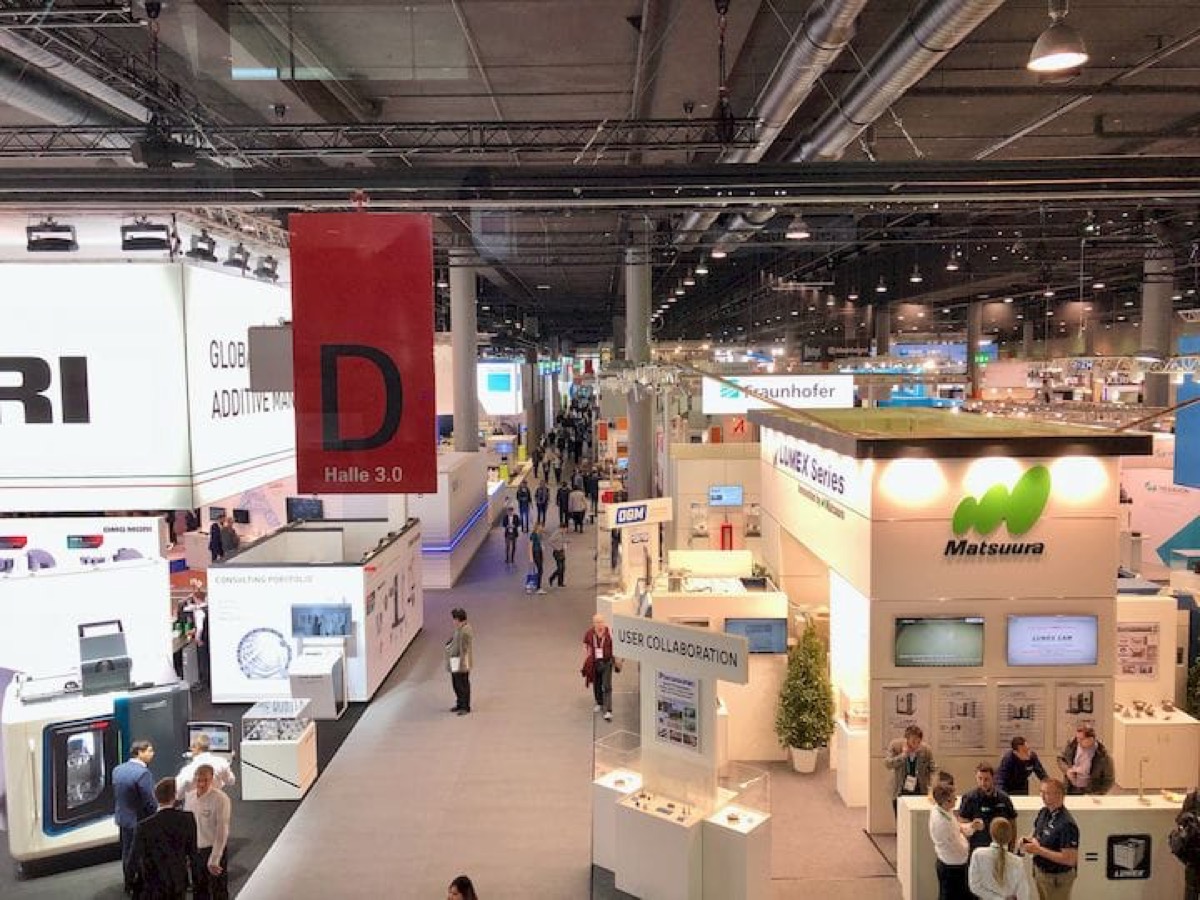
A typical Formnext hall from above. Rows of machine builders, material suppliers, and service providers run the length of the building, with industrial systems taking up most of the floor space.
What the desktop brands are bringing
This is the part that matters for most readers, and Formnext organizers have confirmed that Bambu Lab, Creality, and Prusa will all exhibit. The prosumer tier is no longer parked in a separate corner, either. The show's own framing points out that desktop machines are increasingly used by industrial companies, small businesses, and print farms.
Creality has the clearest story. The K3, its flagship multi-color machine, opened for pre-order in October at $849 and uses the company's KliTek system for automatic nozzle swaps in under five seconds. Expect the K3 to get a big booth push, along with the rest of the K series. Creality listed on the Hong Kong Stock Exchange in June, so this is its first Formnext as a public company.
Prusa will show the CORE One line with the INDX multi-material system, which supports up to ten toolheads, and look for more certified materials and expansions of that system. The company has been pushing tool changing hard as its answer to single-nozzle multi-color setups.
Bambu Lab is the one to watch, and also the one where you have to be careful about what's confirmed. A string called "Bambu Lab N8" appeared in Bambu Studio with a laser mode, which set off speculation about a new device, and there are reports of an S1 3D scanner being teased for November. None of that is official yet, so file it under rumor. What's safer to expect is a new generation of the P-series line, which multiple industry guides have flagged as the likely announcement. We'll know for sure on the show floor.
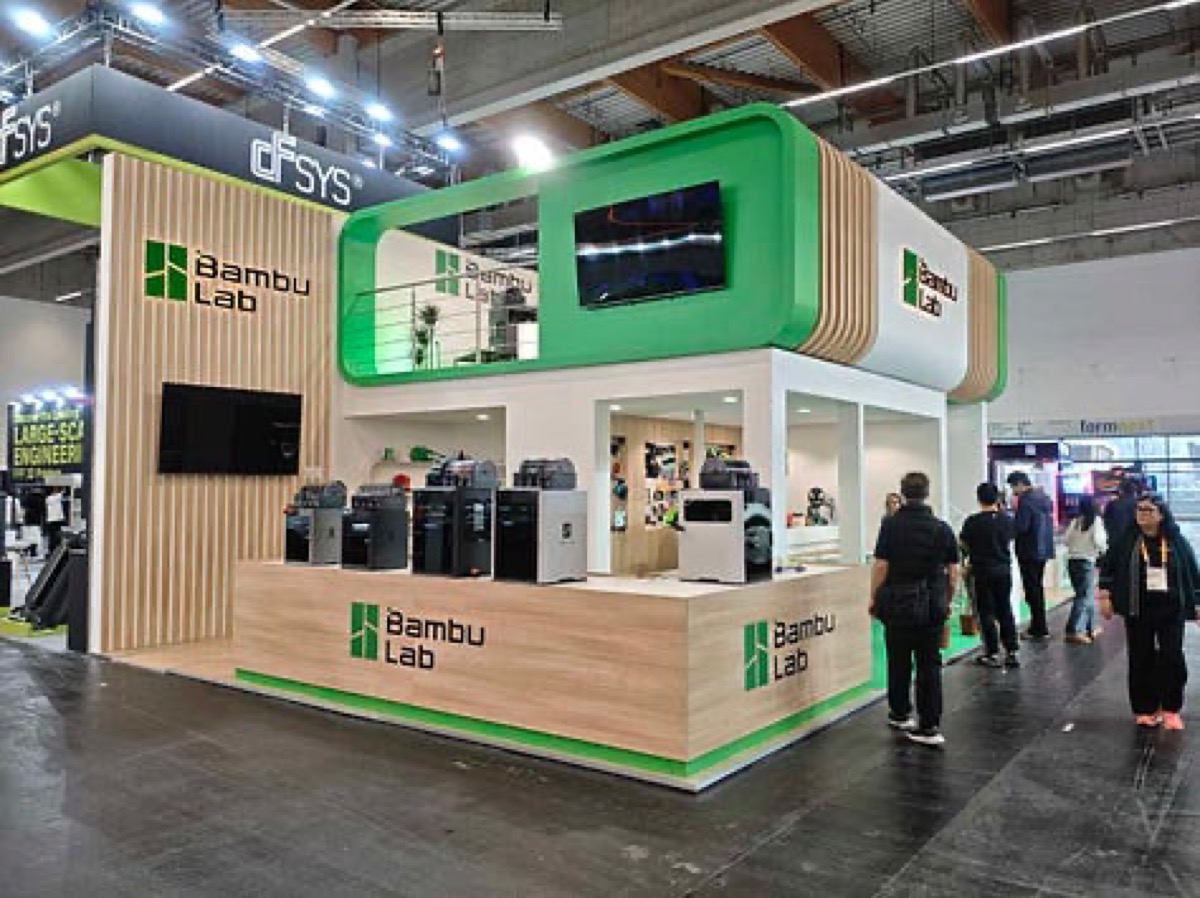
The Bambu Lab booth at a recent Formnext. The company hasn't confirmed its 2026 lineup, but a new P-series machine is the widely expected reveal, with the mysterious N8 device still unconfirmed.
Materials worth watching
Materials are where a lot of the practical value of the show shows up, and three trends keep coming up in the pre-show coverage. High-temperature engineering filaments are first: nylon, polycarbonate, PEI, and PEEK, often reinforced with carbon or glass fiber, keep moving into smaller machines. If you run a desktop printer with an enclosed chamber, that's the category that changes what you can make.
Flexible materials are the second. TPU is now standard, but PEBA and softer, more elastic filaments are showing up from brands like NinjaTek. Advanced PLA is the third: high-speed PLA tuned for fast print moves, matte finishes, and safety-certified grades for kids' products. Polymaker, Evonik, and Sandvik are among the material suppliers exhibiting, along with a long list of smaller specialists.
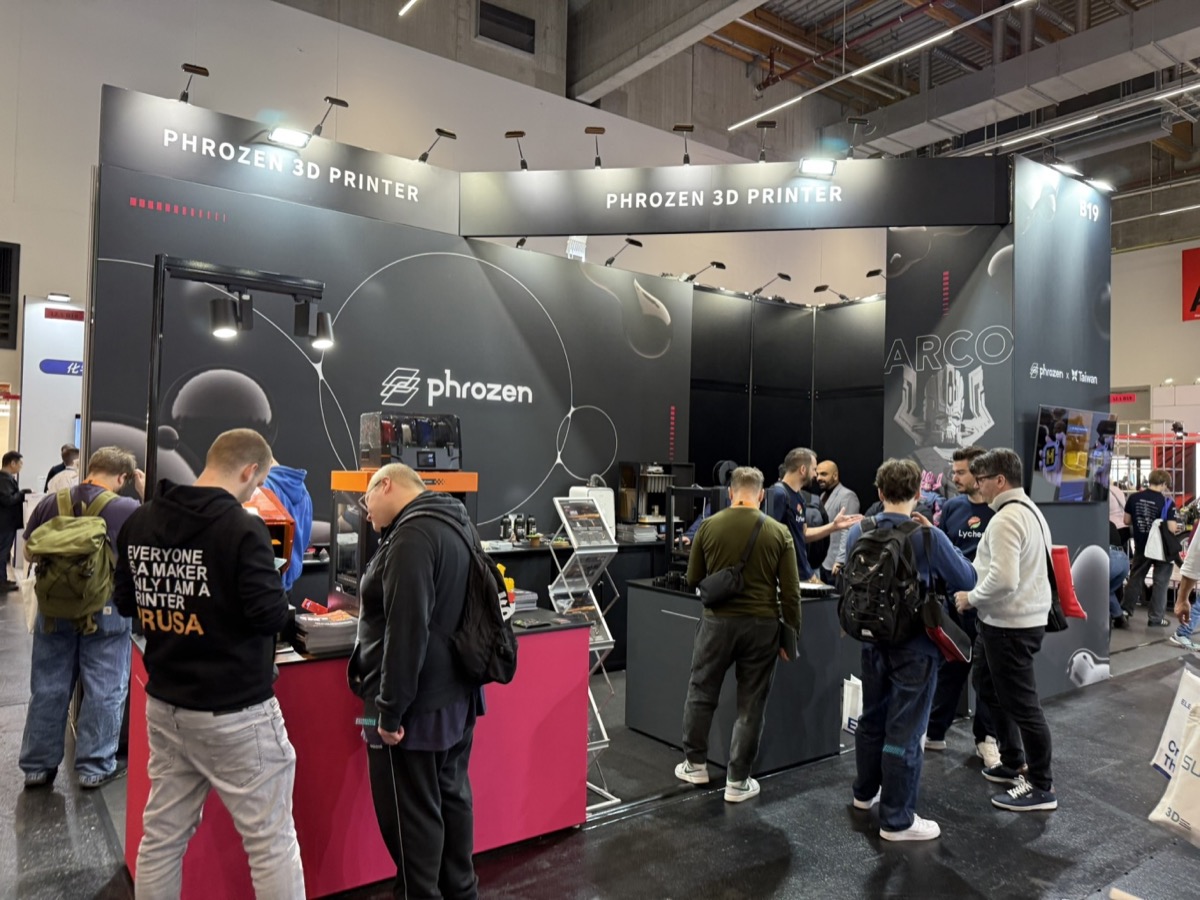
A resin printer booth at a recent Formnext. Resin and material suppliers use the show to launch new formulations, from engineering-grade resins to flexible and high-temperature materials.
Should you wait for the show before buying?
Here's the honest answer, and it depends on what you're buying. The machines announced at Formnext typically don't reach stores until January through March, and the bigger industrial systems take longer. If you need a printer now, waiting three or four months for a rumor doesn't make sense, especially with Black Friday deals already live across Bambu, Creality, and the other desktop brands.
If you're not in a hurry, the show is worth watching for one reason: prices. When a new generation gets announced, the current generation tends to get discounted hard, and that's the pattern that saves real money. The CONTEXT data from earlier this month already points to a saturated entry-level market, so discounting on older models is likely to get more aggressive, not less.
For small businesses and print farms, the calculation is different. The tool-changing and automation systems on display are aimed at cutting labor and waste, and a five-second nozzle swap or automated depowdering can pay for itself in a way a hobbyist machine never will. That's the tier where waiting for the show announcements actually makes financial sense.
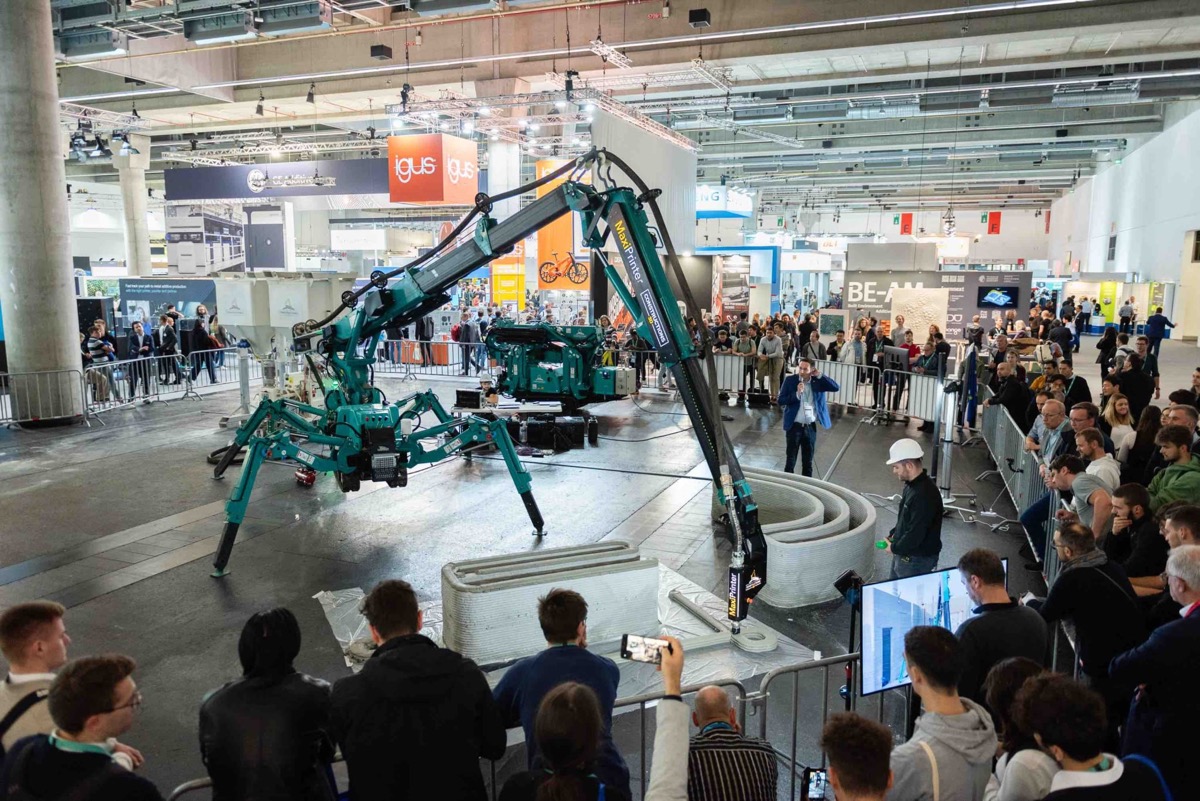
A large-format printing system on the Formnext floor. Industrial automation and tool changing are the areas most likely to matter for print farms and small production businesses.