By 3D Maker Saver · November 11, 2026
A slicer says your part uses $2 worth of filament. You sell it for $20. That leaves $18, right?
Only if your time, printer, packaging, shipping, and mistakes are free. For a small shop, those costs can eat up most of the difference. In the worked example below, a 100-gram PLA part costs about $9.44 to produce and pack. Selling it for $20 with seller-paid shipping leaves roughly $3.16 before fixed overhead and taxes.
These are planning assumptions in U.S. dollars, not measurements from a customer order or a claim about typical seller earnings. Use the method with your own numbers. This guide covers desktop filament printing; resin needs a separate allowance for washing, curing, consumables, and waste handling.
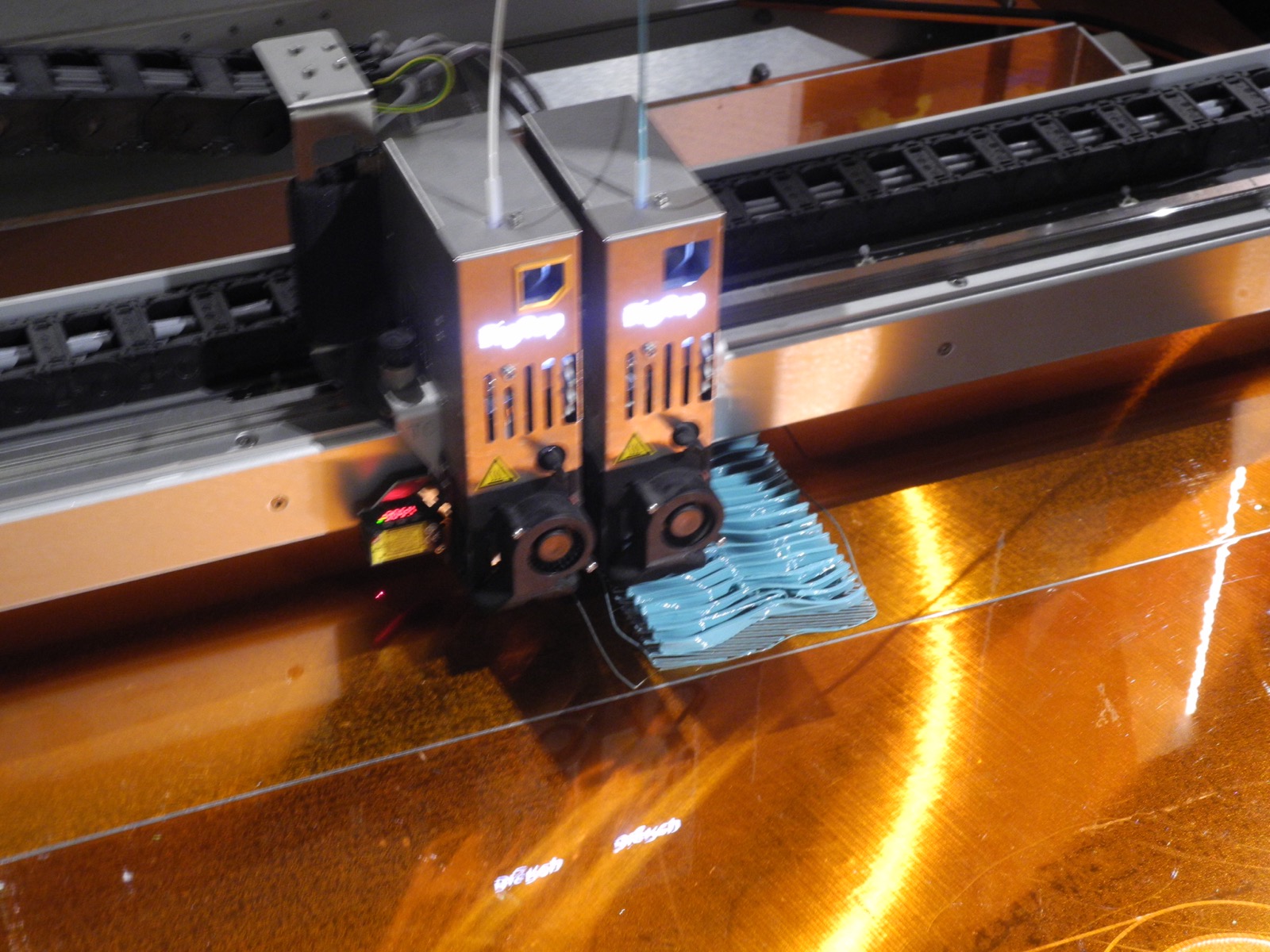
A 100-gram print, priced one line at a time
Suppose you sell a small desk organizer. It takes five hours to print and uses 100 grams, including supports and other extrusion waste. You spend 15 minutes handling the order, preparing the file, cleaning the part, checking it, and packing it.
| Cost | Assumption | Per order |
|---|---|---|
| Filament | 100 g at $20/kg delivered | $2.00 |
| Electricity | 0.12 kW × 5 hours × $0.20/kWh | $0.12 |
| Machine allowance | $600 ÷ 3,000 productive hours × 5 hours | $1.00 |
| Maintenance reserve | $0.05 per print hour × 5 hours | $0.25 |
| Failed-print reserve | 10% full-attempt failure assumption; explained below | $0.37 |
| Hands-on labor | 15 minutes at $18/hour | $4.50 |
| Packaging | Box, padding, tape, and label | $1.20 |
| Production and packing | Before selling fees and postage | $9.44 |
| Selling and payment fees | Illustrative 10% of $20 plus $0.40 | $2.40 |
| Seller-paid postage | Example label cost | $5.00 |
| Total order cost | Before fixed overhead and taxes | $16.84 |
At a $20 selling price, the remaining $3.16 is a 15.8% contribution margin. It still has to cover costs such as software subscriptions, workspace, insurance, and returns that this example does not include. The assumed fee is not a quote from Etsy or any other marketplace.
Filament: use the delivered price and all the grams
Divide the delivered spool cost by its usable weight, then multiply by the weight consumed by the job. For a $20, 1,000-gram spool, each gram costs two cents.
Material cost = job grams ÷ 1,000 × delivered cost per kilogram.
Count supports, brims, purge towers, and color-change waste. A 100-gram finished part may consume more than 100 grams. For imported filament, allocate freight and other purchase costs across the order before comparing it with a local spool. Our China sourcing guide is a starting point for that comparison.
Dropping from $20 to $15 per kilogram saves $0.50 on this job. Useful, but six extra minutes of handling at $18 an hour costs $1.80. Record both.
Electricity: measure a whole print
A printer’s power-supply rating is not its average draw. Use a suitable plug-in energy meter to measure kilowatt-hours for a complete job, including warm-up, and multiply by your applicable electricity rate. Include a filament dryer or other equipment if the order requires it.
The example assumes an average 120 watts for five hours: 0.6 kWh, costing $0.12 at the assumed rate. A hotter bed, enclosure, different material, or different utility rate changes that result. Don’t treat this figure as a specification for your printer.
Your printer needs to earn its replacement
A printer you already paid for still wears out. The example spreads $600 over 3,000 productive hours, giving a machine allowance of $0.20 per hour. The 3,000-hour figure is a budgeting choice, not a promised service life.
Keep repairs separate if your machine allowance covers only the purchase price. Here, another $0.05 per hour goes toward maintenance. If your hourly machine rate already includes repairs, don’t add them twice. Revisit the allowance using your actual nozzle, build-plate, belt, and repair spending.
Failed prints belong in the cost of good prints
If one in ten attempts fails, you need more than one attempt, on average, to deliver a good part. Under a simple model where each failure consumes the full repeatable print cost, the reserve is:
Failure reserve per good part = repeatable attempt cost × failure rate ÷ (1 − failure rate).
Our repeatable cost is $3.37: material, electricity, machine time, and maintenance. At a 10% failure rate, the reserve is $3.37 × 0.10 ÷ 0.90 = $0.374, rounded to $0.37.
That model is deliberately simple. Early failures waste less material and machine time; repeated setup and cleanup add labor. Keep a reject log with grams, hours, cause, and extra handling time, then replace the assumption with your measured cost. Packaging is excluded from this reserve because the example assumes failed parts are caught before packing.
The fifteen minutes you forget to charge for
Customer messages, slicing, removing supports, checking dimensions, changing spools, and printing labels all take time. Track a few actual orders. If a custom request takes 45 minutes instead of 15, that adds $9 at the example labor rate.
Charge design and revision work separately when it varies by customer. For batch orders, divide shared setup time across the quantity, but keep inspection and packing time per item. Ten parts on one plate are not automatically ten times cheaper to handle.
What should you charge?
Start with a price that pays the costs you identified. If percentage fees apply to the selling price, adding 10% to your costs does not fully cover a 10% fee.
Price = (cost before selling fees + fixed fee) ÷ (1 − percentage fee − target contribution margin).
Using $9.44 production and packing, $5 postage, a $0.40 fixed fee, a 10% percentage fee, and a 25% target contribution margin gives ($9.44 + $5 + $0.40) ÷ 0.65 = $22.83, rounded up to the nearest cent. That target margin is before fixed overhead and taxes; it is not net profit.
This simplified formula assumes one percentage fee on the whole sale. Actual channels may charge different fees on shipping, taxes, ads, or other amounts. Check the current Etsy fee policy if you sell there, and use the fee base that applies to your order. A calculated price also needs a buyer willing to pay it.
Which changes actually help?
- Save five minutes of handling: $1.50 per order at $18/hour.
- Save $5 per kilogram of filament: $0.50 on a 100-gram job, before changes to the failure reserve.
- Cut print time by one hour: about $0.274 in the example’s direct electricity, machine, and maintenance allowances, before failure effects. The freed capacity matters more when you have orders waiting.
- Reduce failures: moving from 10% to 5% reduces the modeled reserve from about $0.37 to $0.18, before any extra labor savings.
Start with the biggest measured loss. Cheaper filament that causes rejects may cost more per sellable part. A faster setting that leaves cleanup marks may trade machine time for paid labor.
Keep a simple order log
For your next ten orders, record sale price, total grams, print hours, measured energy, rejects, hands-on minutes, packaging, fees, and postage. Add design licenses and other order-specific costs where they apply. Review the totals before buying another printer.
Use our 3D print cost calculator to organize production costs and our print price calculator to explore a quote. Check which costs a tool includes before adding your own allowances. For broader planning, read Starting a US 3D Printing Side Hustle.
Common questions
How much does 3D printing cost per hour?
There is no single useful hourly rate without a material flow rate and labor allowance. In this example, five hours consume $3.37 in material, power, machine allowance, and maintenance: about $0.67 per print hour before rejects, hands-on work, packing, and selling costs.
Is filament cost enough to price a print?
No. Here, filament is $2, while production and packing total $9.44. Multiplying filament cost by an arbitrary number can miss labor-intensive orders and overprice others.
Does owning the printer make the print cheaper?
It reduces the cash you need to spend today. Keep a machine allowance in your pricing if the business will eventually need to replace that printer.
Method note: all dollar amounts and operating assumptions in the worked example are illustrative. Calculations use unrounded values where stated and display cents. For an independent cost-category reference, see Prusa’s printing price calculator, which includes preparation, postprocessing, electricity, and machine upkeep.