Kexcelled PLA Coffee and K8 TPU Air: Innovative Materials Beyond Basic PLA
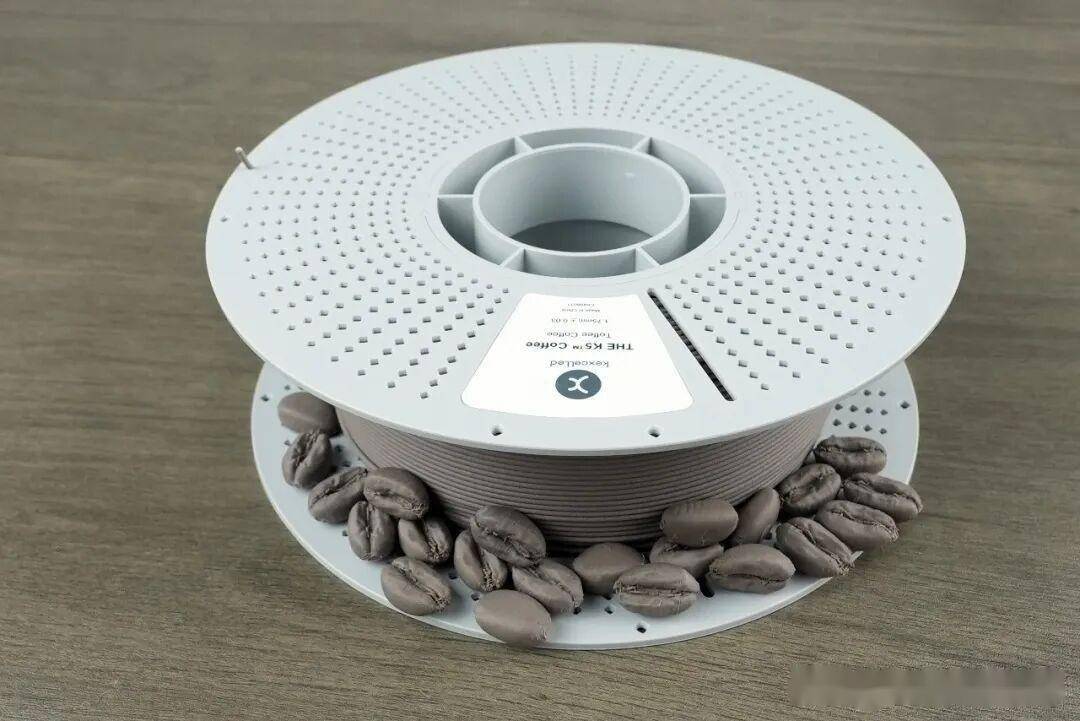
Kexcelled has been quietly building one of the most innovative material portfolios in 3D printing, and the 2026 lineup — showcased at TCT Asia and Formnext — includes some genuinely unusual materials. PLA Coffee uses recycled coffee grounds for a natural speckled finish and a subtle coffee aroma. K8 TPU Air is a "foaming TPU" that changes density and hardness depending on print temperature. And K6 PETG ESD is formulated for static-sensitive electronic environments.
What ties these together is Kexcelled's focus on functional, application-specific materials rather than trying to make the best generic PLA. The company was founded in 2013 and holds 40+ patents, with products sold in 60+ countries. Their K-series naming convention covers everything from basic PLA (K5) to industrial PEEK (K11), with a heavy emphasis on flexible and engineering materials.
Standout Materials from the 2026 Lineup
| Material | Category | Key Feature |
|---|---|---|
| PLA Coffee | Eco / Special | Recycled coffee grounds, natural texture, aroma |
| K8 TPU Air | Flexible | Foaming TPU, variable density by temperature |
| K9 PEBA | Flexible | Lightweight, high rebound, sports/orthotics |
| K6 PETG ESD | Engineering | Anti-static, electronic enclosures |
| K5 Eco-Aesthetic | Consumer | Matte PETG, sustainable formulation |
K8 TPU Air is the most technically interesting. Traditional TPU has a fixed hardness — 95A is 95A, no matter how you print it. K8 TPU Air uses a foaming agent that activates at different temperatures, so the same filament can print softer and lighter at higher temperatures or firmer and denser at lower temperatures. That means you can tune the material properties for different parts of the same print — a softer grip area and a firmer structural section, all from one spool.
PLA Coffee: Sustainability You Can Smell
PLA Coffee is part of Kexcelled's Eco-Innovation series, which also includes PLA Tea and PLA Bamboo. The filament uses spent coffee grounds collected from coffee shops, dried and ground into a fine powder, then blended with PLA. The result is a natural speckled matte finish that hides layer lines, with a subtle coffee aroma that's most noticeable during printing. It's not just a gimmick — the coffee grounds also improve layer adhesion and reduce warping compared to standard PLA.
Kexcelled also uses reusable filament spools for their premium materials, including PEEK, PEI, and TPU. The spools are designed to be refilled with bulk filament, reducing plastic waste — a small but meaningful step for a company that sells industrial-grade materials in large quantities.