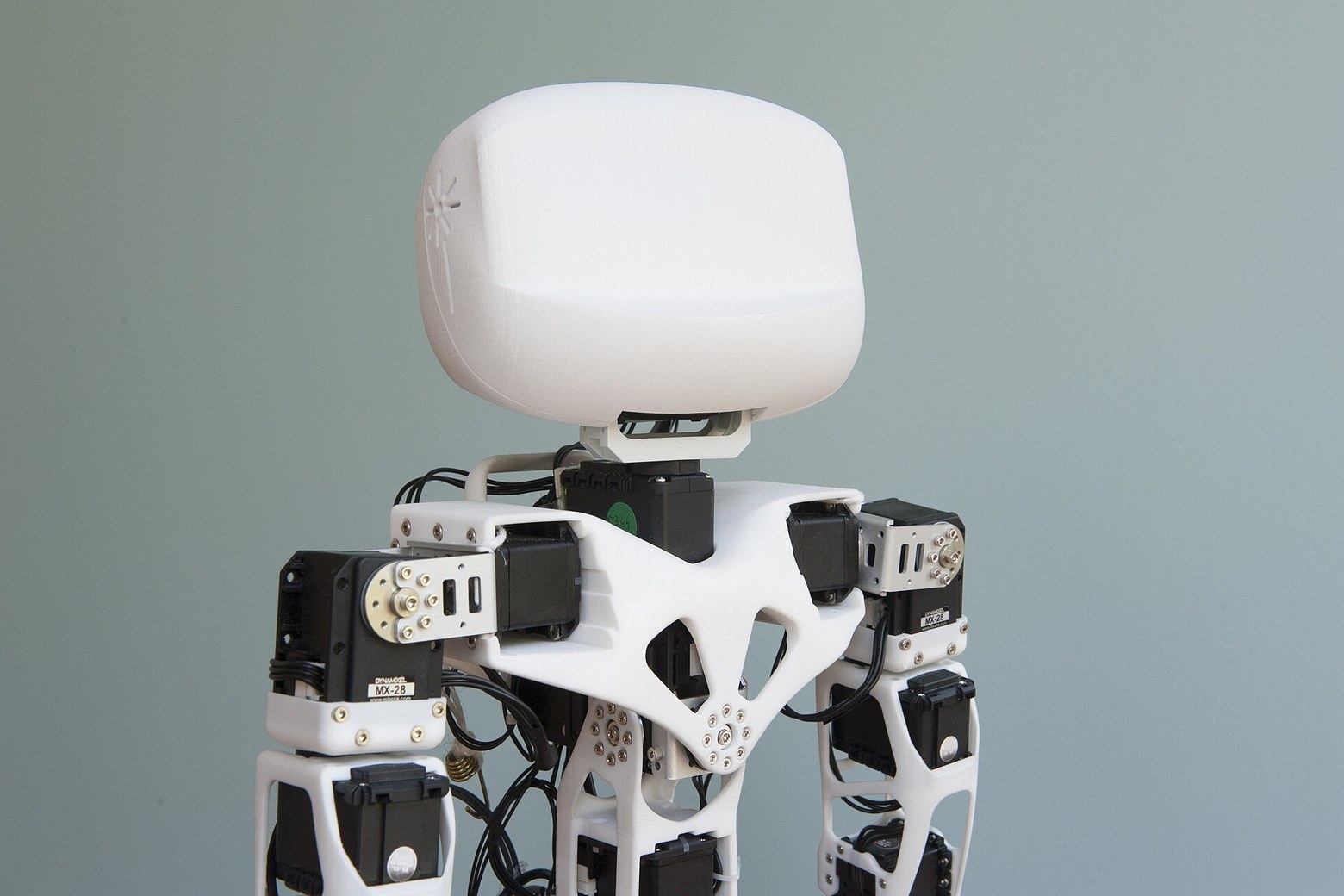
Robotics teams are not just buying 3D printing for one-off prototypes. A recent order analysis from Massachusetts-based custom manufacturer Upside Parts suggests that speed remains important even when customers move into larger batches.
The company reviewed more than 30,000 3D-printed parts across hundreds of customer orders. Robotics customers accounted for 82.3% of the part volume in that dataset. The share of robotics parts produced on a rush schedule was 36.7%, compared with 7.2% among the company’s hardware-and-other customers.
Those figures are striking, but they need the right frame: this is one supplier’s customer base, not a census of all robotics manufacturing. It does, however, offer a useful operational signal for print-service businesses deciding where fast-turn capacity may be valued.
Why “rush” can matter more than unit price
Robotics development tends to move through repeated physical tests. A bracket, cable guide, sensor mount, gripper finger, or protective housing may need to change after a robot encounters a real-world collision, load, or reach constraint. When that part is on the critical path, waiting for conventional tooling or a long supplier queue can stall the next test.
In Upside Parts’ dataset, 31.5% of all analyzed parts were made on rush schedules. The share was higher for robotics orders. The company’s founder described lead time as a factor in how quickly a team can reach its next physical iteration—not just a purchasing metric.
Rush does not mean “one prototype”
The data also complicate the assumption that urgency is limited to tiny sample runs. Orders above 100 parts represented 89% of the analyzed volume. Within that volume, 32.5% was produced on rush schedules, compared with 23.8% for orders of 100 parts or fewer.
That does not prove every production batch should be expedited. It does show that customers may request speed even when they need many parts. For a supplier, the opportunity is to define which jobs truly need a rush lane, price that capacity transparently, and keep the standard schedule reliable.
Materials and repeatability still matter
Nearly half of the orders in the analysis included at least one material outside the familiar PETG, PLA, or ABS group. The mix varied, especially in runs of 101–500 parts, where no single material represented more than 27.1% of the volume. Robotics work can span flexible components, fixtures, enclosures, and parts that must tolerate heat, impact, or repeated motion.
For service providers, that variety argues against treating rush printing as simply “print faster.” A useful operation needs material-specific profiles, clear limits, quality checks, and a repeatable way to reorder a qualified part. The faster a buyer expects a part, the less time there is to discover that a material or orientation was wrong.
How a small shop can apply the signal
- Track urgency by customer type. Separate robotics orders from other demand before investing in dedicated capacity.
- Build a rush lane, not a blanket promise. Define which materials, sizes, and post-processing steps qualify for expedited delivery.
- Make repeat orders easier. Retain approved settings, material choice, orientation, and inspection notes for recurring components.
- Price schedule certainty. A rush premium should reflect reserved capacity and handling, not just a vague “expedite” label.
- Measure misses as well as wins. Track on-time delivery, reprints, and quality escapes so speed does not erode trust.
The practical takeaway is not that every robotics buyer wants a printer in-house. It is that some customers value a short, predictable path from design change to physical part. For a print service, that is a more actionable market signal than a broad claim that robotics is “booming.”
- Robotics & Automation News, “Robotics companies turn to rush 3D printing as demand for faster production grows,” Oct. 8, 2026
- Upside Parts, the manufacturing company whose order analysis is discussed in the report
The percentages describe Upside Parts’ analyzed orders and should not be read as market-wide robotics statistics.