TCT Shenzhen 2026: What Southern China's Biggest 3D Printing Show Tells Us About 2026
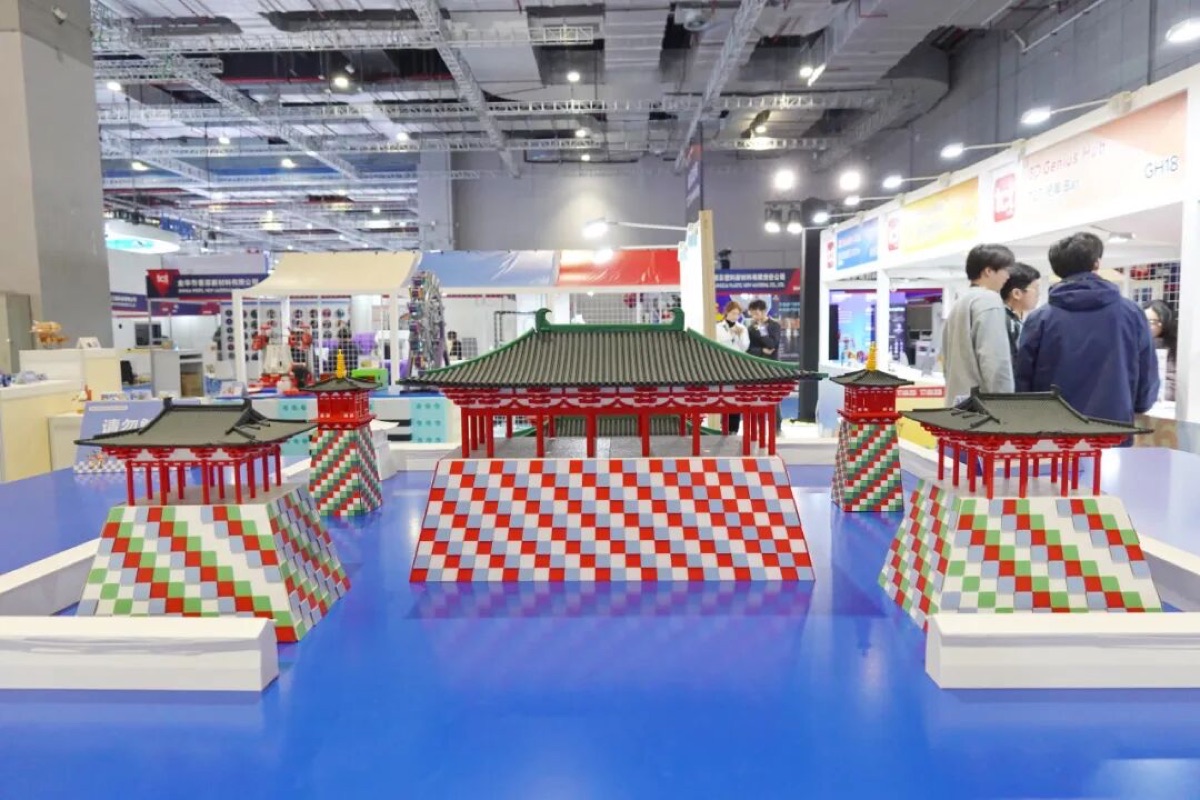
3D-printed architectural models on the TCT Asia show floor, Shanghai, March 2026. File photo from the same event series.
The 2026 edition of TCT Shenzhen wrapped up on October 16, after three days at the Shenzhen World Exhibition & Convention Center in Bao'an. By the numbers, it was a sizable show: more than 250 exhibitors, roughly 20,000 square meters of floor space, around 25,000 visitors, and 80-plus conference sessions running alongside the exhibits.
Those numbers are worth a second look, because the growth story underneath them is the more interesting part. TCT says overseas pre-registration jumped 140 percent this year, while domestic registration grew 80 percent. Twenty-five-plus international buyer delegations were organized for the show. In other words, the Shenzhen stop is no longer just a domestic trade event. It is becoming the place where overseas buyers, Southeast Asian distributors, and Chinese additive manufacturing suppliers actually meet.
I wasn't on the floor this week, so this piece is based on the published program, the exhibitor categories, and the reports coming out of the show rather than first-hand impressions. But the agenda itself tells you where the industry thinks the money is going in 2026.
The program is not about printers anymore
The most telling thing about this year's TCT Shenzhen is what it chose to put on stage. Eight themed conferences ran across three days, and only a handful of them were about the hardware itself. The rest were about specific end markets.
The AI + 3D Printing Smart Manufacturing forum is the one I would point to first. This tracks directly with what we saw from Hi3D earlier this month, where an AI agent for 3D creation launched with a claimed two-minute model turnaround. AI has stopped being a sidebar topic at these shows. It now has its own stage, because the equipment makers are all trying to bolt generative tools onto their slicers and print farms.
The medical and dental forums are the other obvious pair. Dentistry is already the most commercially mature 3D printing vertical in China, and the program for this year's dental forum pulled in clinicians from PLA General Hospital and Nanjing University Medical School's affiliated stomatology hospital. The medical forum covered precision orthopedics, flexible biomaterials, and rehabilitation devices. These are not speculative applications anymore. They are clinical workflows with regulatory pathways attached.
Then there are the two newer categories that say the most about where the supply chain is heading. The low-altitude economy and commercial space forum makes sense once you realize what "low-altitude economy" means in China: eVTOL aircraft, delivery drones, and urban air mobility. Those vehicles need lightweight topology-optimized structures, brackets, and housings, and that is exactly what polymer and metal printing does well. The thermal management and electronics manufacturing forum is the same story from a different angle, centered on heat sinks and cooled components for EVs and power electronics. Printed cooling structures are quietly becoming a real revenue line for industrial polymer printers.
The footwear forum deserves a mention too, because two roundtables on printed shoes suggests supply-chain companies and brands are still working through it, not giving up on it. And the Greater Bay Area Going Global forum is where Chinese print farm operators and filament makers talked about selling into Southeast Asia and beyond.
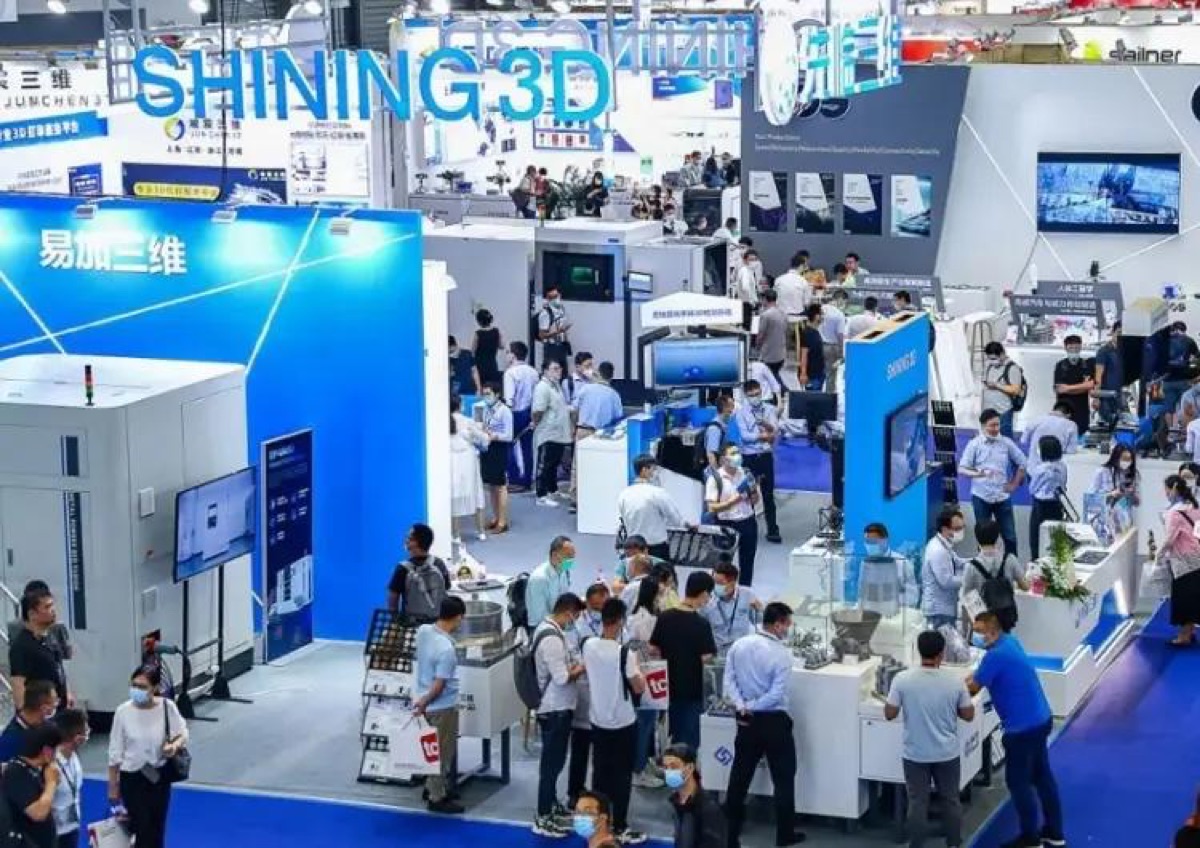
TCT exhibition floor file photo. This year's Shenzhen show ran October 14-16, 2026 in Hall 15.
What the exhibitor categories tell you
If you step back from the stage program and look at what companies were actually exhibiting, the floor split into the usual stack that every Chinese AM show now has: metal printers, industrial polymer systems, desktop printers, materials, CAD/CAE and reverse-engineering software, lasers and galvanometers, pre- and post-processing, mold-making, and 3D printing services.
What stood out in the categories TCT chose to highlight were the verticals: consumer electronics, wearables, toys, jewelry, fashion design, tooling, dental, healthcare, EV components, industrial automation, and robotics integration. That is not a hobbyist show floor. It is a show floor built around factories sourcing production parts.
A dedicated section called 3D Genius Hub got upgraded this year, with formats called Genius Drop, Test Lab, and Live Talk Space. Roughly translated, that is a startup-and-creator corner: concept pitches, hands-on product testing, and live sessions between makers and suppliers. It is the closest thing the show has to a consumer-facing zone.
Why overseas makers and small studios should care
If you run a small print farm, buy filament by the spool, or source custom parts from China, there are three practical takeaways from this year's show.
First, the supply chain you already depend on is moving faster than it was. Multicolor systems, dryers, nozzles, and materials are iterating on roughly a quarterly cycle. A buyer who skips this year's show and re-evaluates in 18 months will likely find three generations of desktop hardware has passed them by.
Second, the export angle is now built into the show rather than bolted on. The international buyer delegations and the Going Global forum mean Chinese suppliers are actively looking for overseas distributors, not just selling domestically. For small US and European distributors, this is the moment to compare terms directly with manufacturers instead of waiting for middlemen.
Third, the application depth matters. If you only print miniatures and figurines, the metal and aerospace forums look irrelevant. But the thermal management, electronics, and footwear sessions show where the higher-margin production work is going. A small studio that can print cooling parts or brackets is competing in a less crowded market than one that prints cosplay props.
How it compares to the other big shows
It helps to put TCT Shenzhen in context. Formnext in Frankfurt remains the global reference for industrial additive manufacturing, and RAPID + TCT in Detroit holds the North American anchor. TCT Asia in Shanghai runs the bigger China show, at roughly 55,000 square meters after this year's expansion, with independent visitor counts reportedly up 42 percent year over year and overseas visitors up 50 percent.
Shenzhen is the smaller, faster, more application-focused cousin. It sits on top of the actual supply chain: the same metro area where Bambu Lab, Elegoo, Anycubic, and most of the desktop filament and hardware ecosystem designs and ships from. That means the floor skews toward desktop and mid-range equipment, materials, and consumer-facing applications rather than the massive metal-powder rooms you see at Formnext. For a small studio or a mid-size distributor, it is often more relevant than the industrial flagship shows, because the products on display are the ones you can actually afford to buy and resell.
What this means if you are not Chinese
If you are reading this from the US or Europe, the practical question is what to do with this information.
If you buy equipment or filament, set a reminder for next September. TCT Shenzhen opens for pre-registration a month ahead, and early registration is free. By October 2027, the show will likely have another generation of desktop multicolor printers, dryers, and materials on display, plus whatever AI tools are bolted onto slicers.
If you sell into the US or EU market, watch which Chinese brands exhibit at the Going Global forum. Those are the companies actively building overseas distribution channels right now, and they are the ones most likely to offer distributor terms, warranty support, and English documentation in the next 12 months.
If you just print for fun, the takeaway is simpler. The supply chain moving this fast means the price-performance ratio for desktop equipment keeps improving every year. A machine that looked overpriced in 2025 is now mid-range, and the 2027 models will make today's look slow.
The honest caveats
A few things should temper the excitement.
The 250 exhibitor, 25,000 visitor, and 20,000-square-meter figures come from the organizer and the event listing platforms. They are not independently audited. The 140 percent overseas growth figure is the kind of number that always looks bigger against a small base. A 140 percent jump from a low baseline is not the same as a mature international audience.
The show is still overwhelmingly Chinese-language on the floor. English translation was available for the summit sessions, but if you do not read Mandarin, the exhibitor booths and most of the networking happen in Chinese. An overseas visitor should budget for a local translator or a Chinese-speaking partner.
And like every trade show, the product launches announced at TCT Introducing look better on stage than they do six months later. The printers and materials that matter are the ones still shipping reliably next spring, not the ones on the opening day press release.
Bottom line
TCT Shenzhen 2026 is worth watching even if you never plan to fly to Bao'an. It is the clearest read on where Chinese additive manufacturing is betting next: AI-assisted generation, clinical medical and dental workflows, low-altitude and EV parts, and a serious push to export to Southeast Asia and beyond.
If you are in the business of printing for profit, the useful question is not whether this show matters. It is which of those verticals you can actually serve. The 3D printer on your desk is the easy part. The application is where the money is.