A 3D-printed object usually waits for someone—or another machine—to move it. MIT researchers are exploring a different idea: build sensing into the object so it can register a touch and respond.
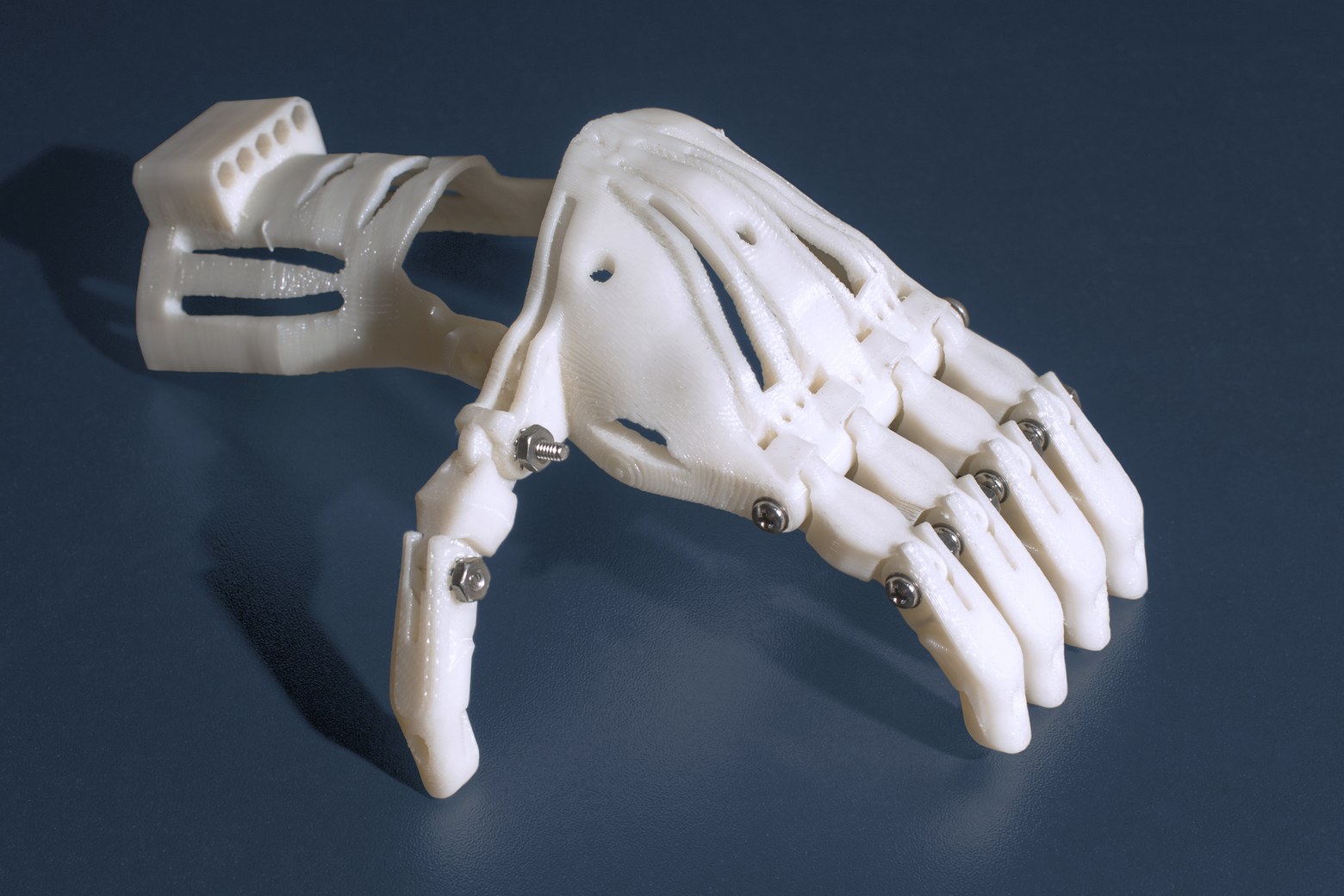
Their X-Hinges design software helps users create objects with hinges, sensors, and conductive paths in a printable structure. In demonstrations described by 3Dnatives, a printed glove sends finger-motion signals to a robotic hand; a foldable lamp changes brightness when pinched; and a platform recognizes an object placed on it. These are early research prototypes, not plug-and-play products. But they suggest a useful direction for makers and manufacturers: printing a functional interaction, not just the shell around one.
What makes X-Hinges different?
Putting a sensor inside a printed part is not new. The harder problem is getting the sensor to produce a signal that can be separated from the electrical behavior of the surrounding structure. When sensing and conductive elements behave too similarly, readings can become noisy or ambiguous.
X-Hinges addresses that design problem by allowing two different materials to be placed in a connected geometry. One material forms sensing elements chosen for a stronger signal; another forms the conductive traces that carry it. The software lets a designer assemble simple forms, define how sections should move, and then incorporate the sensing layout into the object.
Why this could matter outside the lab
For product teams, this kind of approach could open up low-volume, customized interfaces: a grip that senses pressure, a flexible switch embedded in a panel, or a fixture that detects whether a component is seated correctly. In robotics, a printed glove or compliant surface could capture motion or contact without adding a bulky array of off-the-shelf sensors.
The attraction is not simply “fewer parts.” It is the possibility of placing sensing where a user actually touches, bends, or loads an object. Additive manufacturing can vary geometry across a part, which gives designers more freedom to tune stiffness and movement around the sensor. That could be useful for assistive devices, soft robotics, interactive products, and custom tools—provided the printed signal is repeatable enough for the job.
The calibration problem is still real
MIT’s team has also identified a key limitation: electrical components can land slightly differently from one print to another. As a result, two objects with the same digital design may not initially produce identical readings. The researchers currently use computer vision to recalibrate the devices.
That matters because a compelling demo is not the same as a production-ready process. A product used in a factory, medical setting, or safety-critical application needs stable output across machines, materials, and print runs. Calibration, durability, signal drift, and validation will determine whether embedded sensing becomes a reliable manufacturing option or remains a research technique.
A practical watch list for makers
- Start with low-risk use cases. Interactive art, educational models, and non-critical robot interfaces are better early targets than safety-critical controls.
- Track repeatability. Compare signal output across several prints, not just one carefully tuned sample.
- Budget for material and process tests. Conductive paths, sensor materials, geometry, and printer settings all affect the result.
- Separate the design claim from the product claim. Software that can create a responsive shape does not by itself establish long-term reliability or commercial readiness.
X-Hinges offers a glimpse of a broader idea: a printed object could detect how it is being used and respond in a deliberate way. The engineering challenge now is to make that behavior predictable enough that manufacturers can trust it.
- 3Dnatives, “X-Hinges, the MIT software that makes 3D-printed objects responsive to touch,” Oct. 28, 2026
- MIT News, “Design software reimagines everyday objects as self-aware devices,” Oct. 22, 2026
This article is an original editorial synthesis. It does not claim that X-Hinges is a commercial product or that the prototypes are production-qualified.