Everyone talks about printers. Speed numbers, build volumes, new extruder designs. But if you run a print shop — or even just burn through a few spools a month — the material is where the money actually goes, and where the quality lives or dies. In 2026 the material side of the industry is moving faster than it has in years. Recycled PLA is finally good enough to use for real products. Bio-based filaments have stopped being a gimmick. And engineering plastics that cost $200 a kilogram two years ago are showing up on AliExpress for $45.
This is not a cheerleading piece. Some of these materials are genuinely useful. Some are still marketing wrapped around a mediocre spool. I'll tell you which is which.
Recycled PLA: It's Actually Good Now (Mostly)
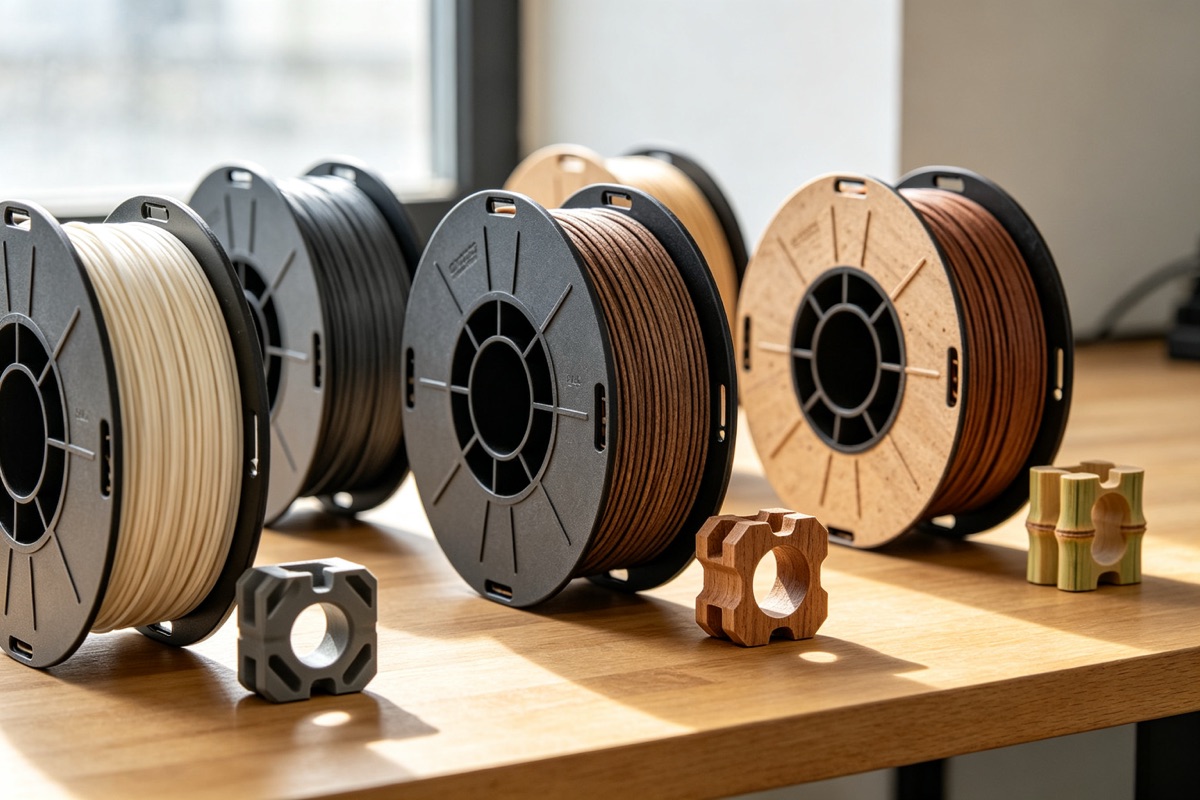
Let's start with the category that has improved the most. Recycled PLA used to mean one thing: a brittle, inconsistent spool that clogged your nozzle every third print and came in a color best described as "dirty dishwater." That was 2023. In 2026, the serious players — Filamentive, Reflow, and a handful of Chinese contract manufacturers — have figured out consistent sorting and re-extrusion.
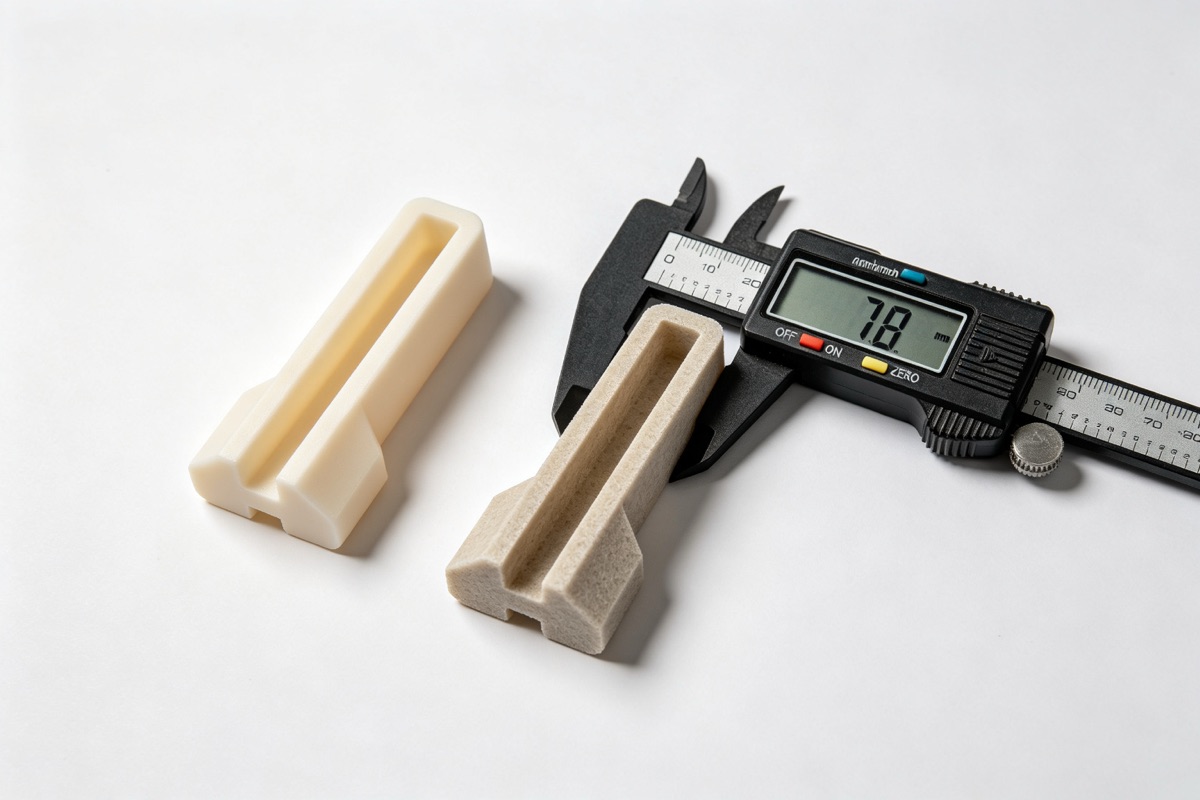
The numbers tell the story. Independent tensile testing from 3DSpecMetrics in early 2026 put quality recycled PLA at 52–58 MPa tensile strength, versus 58–65 MPa for virgin PLA. That's a 10–12% drop, not the 30–40% you saw three years ago. Layer adhesion is within margin of error. Diameter consistency on the better brands runs ±0.03mm, same as mid-tier virgin filament.
What hasn't changed: the cheap stuff is still bad. There are $12/kg "recycled PLA" listings on AliExpress that are basically factory floor sweepings re-extruded once. You'll get moisture bubbles, diameter swings, and the occasional mystery contamination. The price gap between budget recycled and quality recycled is about $4–6/kg. It is not worth saving.
What to look for on the label
- Mechanical recycling, not chemical. Chemical recycling is cleaner but still expensive; mechanical is what's actually available at consumer prices.
- Post-consumer vs post-industrial. Post-industrial (factory scrap) is more consistent. Post-consumer is more environmentally meaningful but varies more.
- Diameter tolerance stated. If the listing doesn't say ±0.03mm or better, assume it's worse.
- Drying recommendation. Recycled PLA absorbs more moisture. If the brand doesn't mention drying, they haven't tested it properly.
Bio-Based Filaments: Coffee, Bamboo, Algae, and the Rest
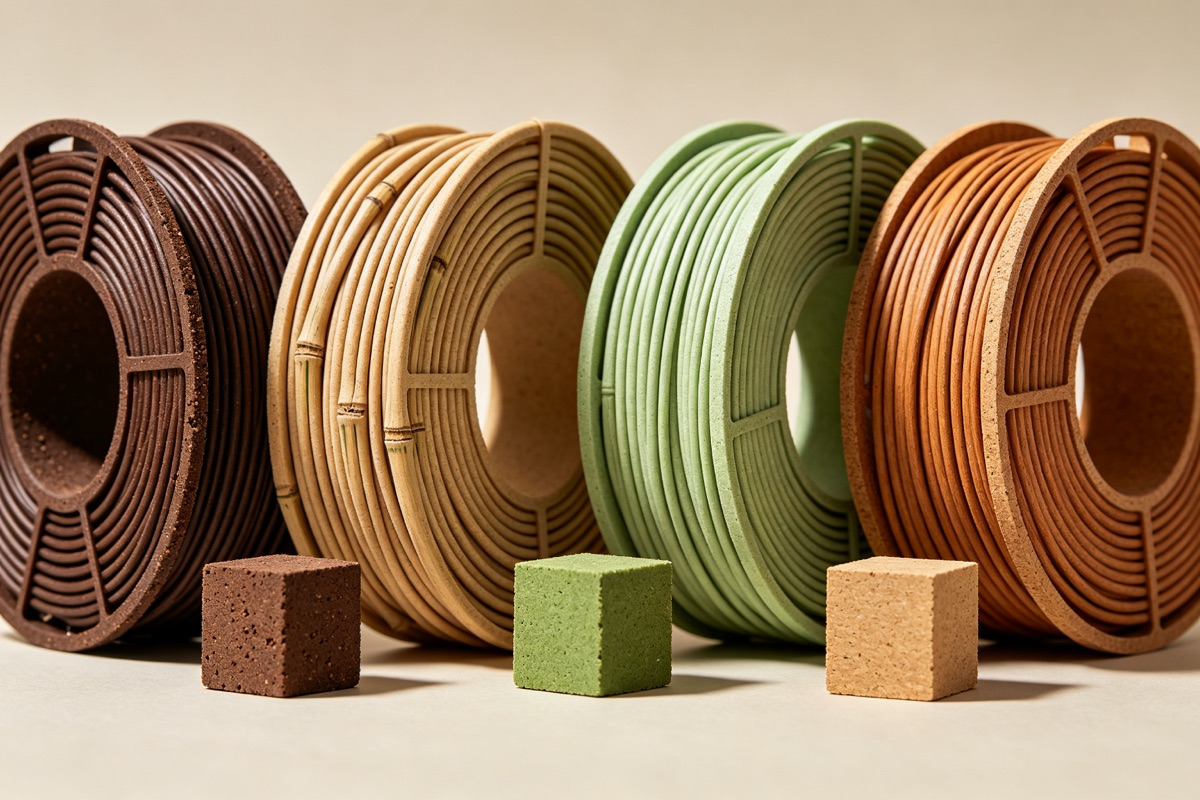
Bio-based is not the same as biodegradable, and this is where most people get confused. A "coffee-infused PLA" is still PLA — it's PLA plastic with ground coffee shells mixed in as a filler. It will not break down in your backyard any faster than regular PLA. What it will do is smell like coffee when it prints, look like dark wood, and cost $5–8 more per kilogram.
That said, some of these are genuinely nice to print with. Here's where things stand in 2026:
- Wood-filled PLA / PETG: The oldest category, and still the most useful. Bamboo fiber and pine flour fillers produce a real wood-like surface that takes stain. The good ones (ColorFabb WoodFill, Bambu Wood PLA) print cleanly. The cheap ones clog. Expect 10–15% dimensional shrinkage compared to plain PLA.
- Coffee-ground PLA: Mostly a novelty. The color is nice (deep brown with subtle texture), the smell during printing is pleasant, but the mechanical properties are worse than plain PLA and it's more abrasive on nozzles. Fine for decorative items, pointless for anything functional.
- Algae-based PLA: The newest entrant. Brands like Algik and a few Chinese contract manufacturers are mixing algae powder into PLA. It prints similarly to wood-fill, has a matte greenish-tan finish, and the algae content is genuinely from agricultural waste. Still early — consistency varies batch to batch.
- Hemp and flax fiber: Stronger than wood-fill, with a fibrous matte finish. More prone to stringing. Good for large decorative pieces where layer lines don't matter.
The Biodegradability Question: What Actually Breaks Down
This is the most lied-about topic in 3D printing materials. Let's be direct.
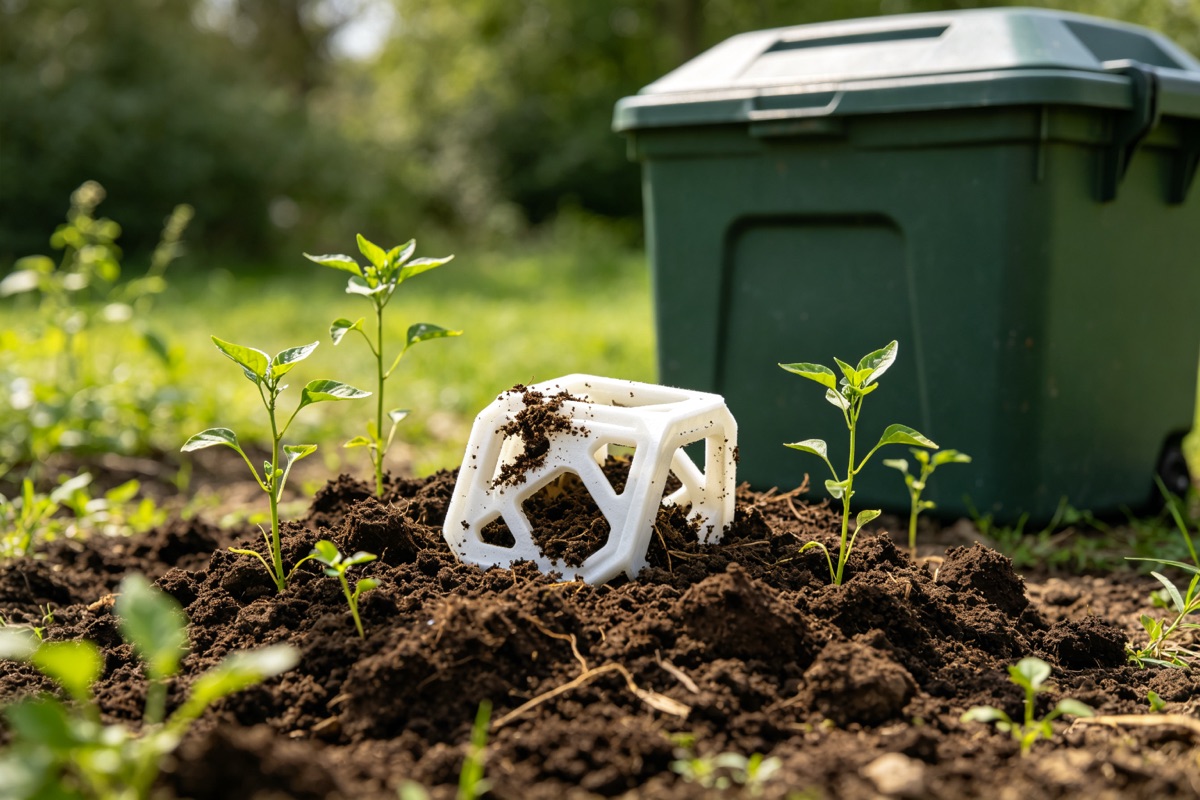
PLA is not biodegradable in any meaningful sense for a consumer. It is technically compostable — but only in an industrial composting facility that maintains 58–70°C (136–158°F) with consistent moisture and microbial activity for 90–180 days. Your backyard compost pile does not get that hot. A PLA print left in a garden will look the same in two years. A study from the University of Plymouth found PLA samples showed no measurable degradation after 12 months in marine environments.
What does actually break down?
- PVOH (PVA): Water-soluble support material. Dissolves in warm water in a few hours. Not a build material.
- Thermoplastic starch blends: Some specialty filaments (like RepRap's BioFil) use starch-polymer blends that break down in home compost in 6–12 months. But they're weak, hygroscopic, and have terrible layer adhesion. You can't print anything useful with them.
- PHB / PHA blends: This is the one to watch. Polyhydroxyalkanoate is genuinely biodegradable in home compost, marine environments, and even anaerobic digestion. In 2025–2026, companies like P4P Materials and a few Chinese startups have started blending PHA with PLA to create filaments that print reasonably well and break down in home compost in 6–12 months. Current PHA-PLA blends print at 190–210°C, have tensile strength around 35–40 MPa (about 60% of PLA), and cost $35–50/kg. They're not ready for production parts, but for single-use items, packaging prototypes, or event props, they're the first genuinely compostable option that doesn't print like wet cardboard.
Engineering Plastics Are Dropping to Desktop Prices
This is the quietest and most important shift in 2026 materials. Two years ago, if you wanted CF-nylon (carbon fiber reinforced polyamide), you paid $80–120/kg and needed a hardened steel nozzle and an enclosed printer. Today, you can buy CF-PA12 from Chinese suppliers for $35–45/kg, and it prints on a Bambu P1S with the stock hardened nozzle.
PEEK and PEI are still expensive ($150–300/kg) and still require a high-temp enclosed printer (300°C+ nozzle, 120°C+ chamber). But PETG-CF, PAHT-CF, and PC (polycarbonate) blends have all dropped to $25–50/kg and print on mid-range desktop machines.
For a small print shop, this changes what you can offer. A functional drone frame, a custom gear, a heat-resistant bracket — these used to be SLA or industrial FDM jobs. Now you can print them on a $400 machine with $40/kg filament. The quality isn't industrial-grade, but for one-off and small-batch functional parts, it's good enough, and that's the entire game.
2026 Material Price Reference
| Material | Price/kg (mid-tier) | Print temp | Best for | Watch out for |
|---|---|---|---|---|
| Virgin PLA | $18–28 | 190–220°C | Prototypes, display, low-stress parts | Heat distortion above 55°C |
| Quality recycled PLA | $15–22 | 190–220°C | Same as PLA, non-critical | Moisture, cheap brands |
| PETG | $20–30 | 220–250°C | Functional parts, outdoor | Stringing, oozing |
| Wood/bamboo filled | $28–45 | 190–220°C | Decorative, stainable pieces | Nozzle wear, clogging |
| CF-PA12 (nylon) | $35–55 | 250–280°C | Strong functional parts | Moisture absorption, hardened nozzle |
| PC (polycarbonate) | $30–50 | 260–300°C | Heat-resistant, transparent | Enclosure needed, fumes |
| PHA-PLA compostable blend | $35–50 | 190–210°C | Single-use, packaging, props | Low strength, new product |
| PEEK / PEI | $150–300 | 350–400°C | Industrial, medical, aerospace | Requires high-temp printer |
What This Means for a Small Print Shop
If you're running one to five printers out of a garage or spare room, the material decisions that actually matter in 2026 are:
- Use quality recycled PLA for non-critical work. The 10–12% strength drop doesn't matter for a desk organizer or a display piece. Save $4–6/kg and put it toward something useful.
- Keep one spool of CF-PA12 for functional jobs. A customer asks for a bracket or a gear — being able to say "yes, and it'll be carbon-fiber nylon" instead of "it'll be PLA" is a $20–40 upcharge on a $10 part.
- Don't buy bio-based filaments unless you have a specific use. They're fun, they smell nice, but they're more expensive and less consistent. If a customer specifically wants a wood-look finish, then yes. Otherwise, skip.
- Stop telling customers PLA is biodegradable. It's not, in any way that matters. If sustainability is a selling point, use PHA-PHA blends or be honest that PLA is recyclable (in facilities that accept it) but not compostable at home.
- Dry your filament. This is boring advice and it's still the number one cause of bad prints, especially with recycled and nylon materials. A $30 dry box or a $50 filament dryer will save you more money than any material upgrade.
The material market in 2026 is finally catching up to the printer market. For ten years, printers got faster and cheaper while filament stayed basically the same. That's no longer true. The next two years will be about who can consistently produce recycled and engineering-grade materials at consumer prices — and the brands that figure that out will own the market the way Bambu owns printers today.
FAQ
Is recycled PLA strong enough for functional parts?
For non-load-bearing functional parts (brackets, mounts, organizers), yes. For anything under sustained stress or impact, use virgin PLA, PETG, or nylon. The strength gap is about 10–12% on quality recycled filament.
Will PLA break down in my backyard compost?
No. PLA requires industrial composting conditions (58–70°C, consistent moisture, 90–180 days). A backyard pile doesn't get hot enough. PLA prints will remain essentially intact for years in home compost or soil.
What's the difference between bio-based and biodegradable?
Bio-based means the raw material comes from plants (corn starch, sugarcane, algae) instead of petroleum. Biodegradable means the material actually breaks down in the environment. A bio-based PLA is still PLA — it's bio-based but not home-biodegradable. PHA blends are both.
Can I print CF-nylon on a stock Bambu or Creality printer?
On Bambu P1S/X1 series with the stock hardened steel nozzle, yes — use the CF-PA profile and dry the filament thoroughly. On Creality K1/K2 with hardened nozzle, also yes. On printers with brass nozzles (Ender-3, A1 Mini), you'll need a hardened steel nozzle ($5–10) because carbon fiber abrades brass quickly.
Is PHA-PLA blend worth the premium price?
Only if you specifically need home-compostable parts. For regular products, it's weaker and more expensive than PLA. For single-use items, event props, or packaging prototypes where the customer explicitly wants compostability, it's the only real option in 2026.