If you own a Bambu Lab printer, you have probably seen PLA Pure on the spool rack. It is the default filament that ships with most machines, and Bambu markets it as cleaner and safer than regular PLA. But what does that actually mean for the air in your room, the parts you print, and whether you can drink out of a 3D-printed cup?
This guide skips the chemistry jargon and gives you the practical answers. The short version: PLA is the safest filament you can print at home, but "safe" has limits. A spool that is food-contact certified does not make a printed cup food-safe. A box that says "compostable" does not mean it will break down in your backyard. And a part that looks solid on day one can slowly bend over a month.

First: What "PLA Pure" Actually Is
Despite the name, PLA Pure is not 100% pure PLA. Bambu publishes the full formula: PLA plastic (made from corn or sugarcane), a softening plastic used in children's toys, color pigment, a lubricant that is also used in food wrap, and talc (the same stuff in baby powder, minus asbestos).
Every one of those five ingredients is on the European Union's approved list for food-contact materials. The filament also passes three independent safety tests: one for indoor air quality, one for toy heavy-metal safety, and one for food-contact materials.
What Comes Out of Your Printer While It Prints
Every 3D printer releases two things into the air while it runs: tiny dust particles (much smaller than PM2.5) and smelly gases. Neither is zero, but PLA releases far less of both than ABS or ASA.
| PLA (incl. PLA Pure) | ABS | PETG | |
|---|---|---|---|
| Dust particles per minute | ~110 million | ~61 billion (550x more) | Low, similar to PLA |
| Main smell/gas | Mild, slightly sweet (lactide) | Strong, acrid (styrene — suspected carcinogen) | Very mild smell |
| Overall air risk | Low | High | Low |
One thing most people miss: the color of your filament matters. A 2024 study found that black PLA (which uses carbon black pigment) and metallic PLA can release hundreds of times more dust particles than natural-colored PLA. PLA Pure's formula contains no carbon black, no metal powders, and no nano-fillers. That is why its emissions should sit at the low end of the PLA range — the color is not just cosmetic when it comes to what you breathe.
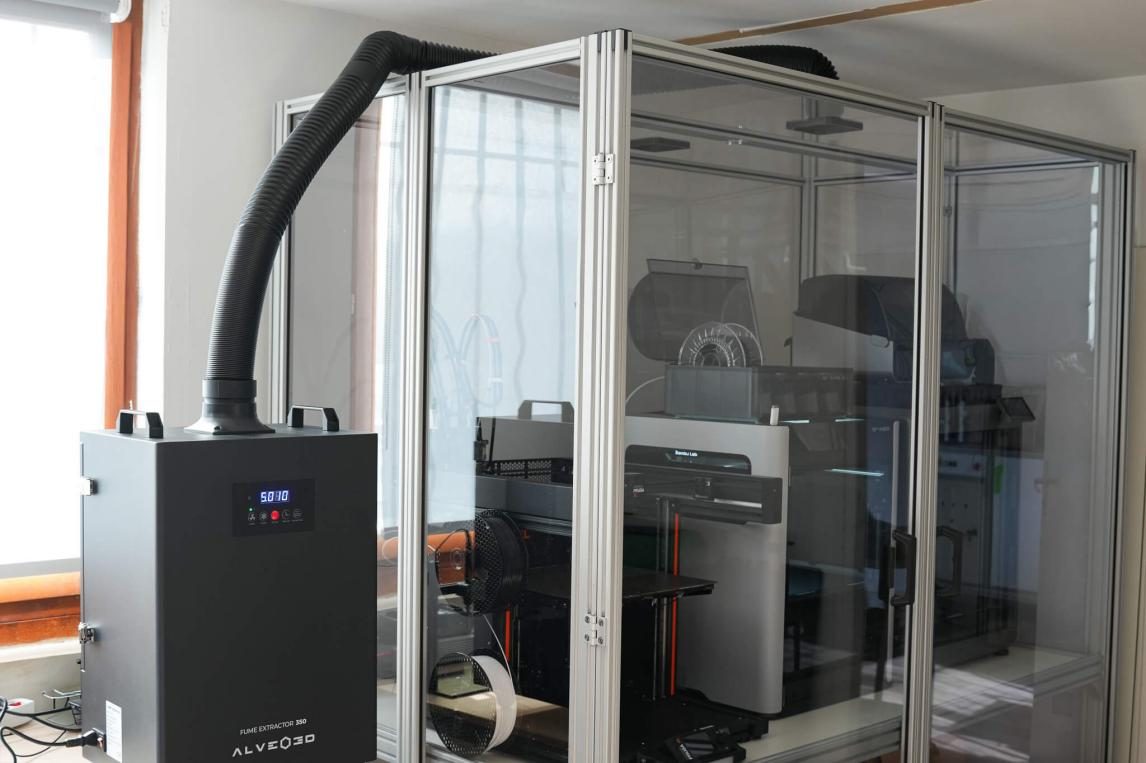
Do you need a fancy air filter for PLA?
Probably not. For PLA at home, the setup that works is simple: print in a room with a window cracked or an exhaust fan running, sit at least 3 feet (1 meter) away from the printer, and do not run multi-day prints in a sealed bedroom. An enclosure plus HEPA filter is nice to have, but it is not mandatory for PLA alone.
If you also print ABS or ASA on the same machine, the rules change. Those filaments release styrene, and a carbon filter will eventually saturate without warning. Ducted exhaust to the outside is the correct setup for ABS/ASA — a desktop filter alone is not enough.
Can You Eat or Drink From a 3D-Printed Part?
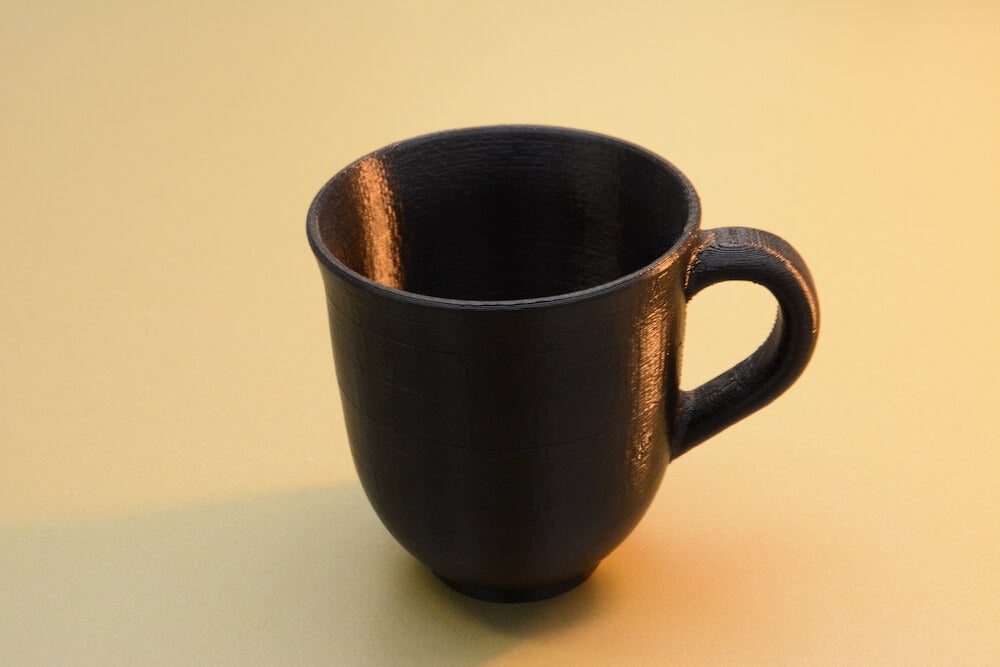
This is the question everyone asks, and the answer is more nuanced than the filament marketing suggests. A PLA Pure spool is food-contact certified. A thing you print with it is not automatically food-safe. Three problems stack up:
| Problem | Why it matters | What it means for you |
|---|---|---|
| Layer lines trap bacteria | FDM printing leaves microscopic grooves. Food residue gets stuck and grows biofilm. No food-safety certification covers a layer-lined surface. | A printed cup or cutting board cannot be reliably cleaned, even if you sterilize it before first use. |
| PLA gets soft at 55–60 °C | Dishwashers run 50–75 °C. Hot coffee is ~70 °C. Microwaves get hotter. | A printed cup deforms in a dishwasher. Microwave use is an absolute no for any printed plastic. |
| Additives can leach | Pigment and lubricant can migrate into food, especially with hot or fatty foods. | Cold, dry, short-contact uses are the only defensible food applications. |
Is It Safe for Skin Contact and Kids' Toys?
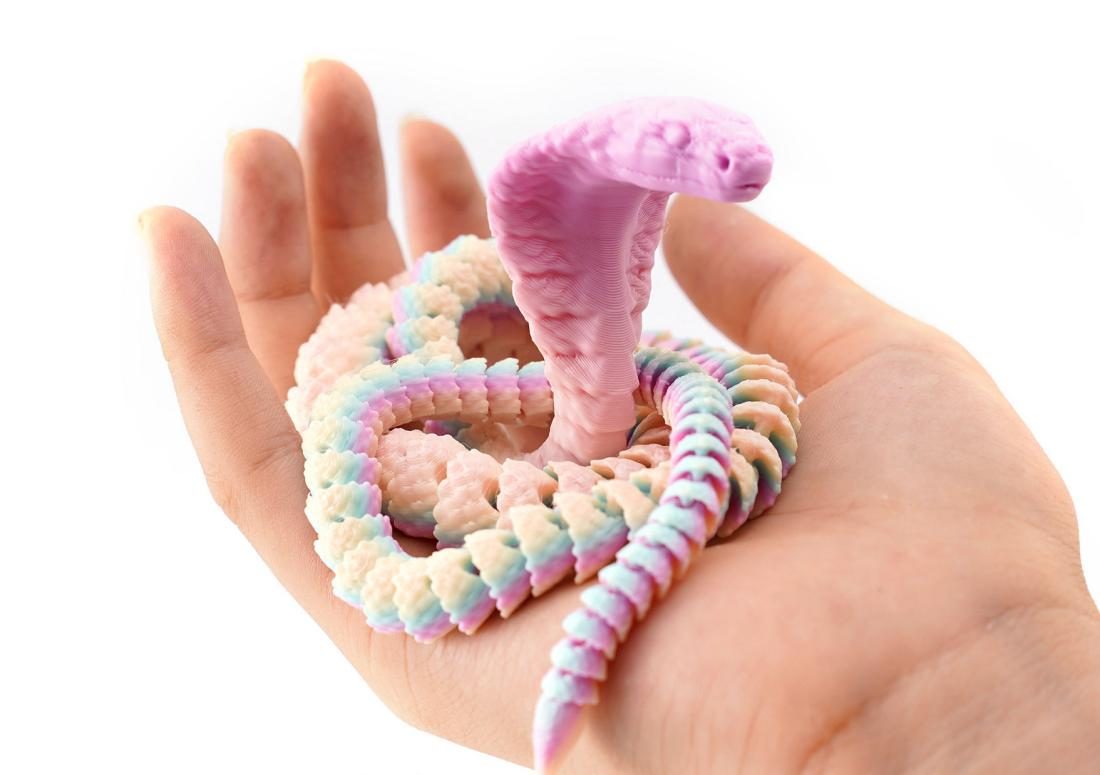
For normal skin contact, yes. PLA is biologically inert as a solid — it does not leach anything significant at room temperature. It is the same material used in absorbable surgical sutures, which break down into lactic acid (a normal substance your body produces).
Kids' toys are trickier. PLA Pure passes the toy heavy-metal safety test (EN 71-3), but that test only covers chemical migration from the material. It does not cover whether a printed toy has sharp layer edges, small parts that snap off, or parts a toddler could choke on. A printed toy with detachable bits is still a choking hazard regardless of what filament you used.
For older kids (age 3+), display models, and cosplay props, PLA Pure is a reasonable choice. For toddlers who put everything in their mouth, an injection-molded toy from a store is still the safer product.
Does PLA Really Compost?
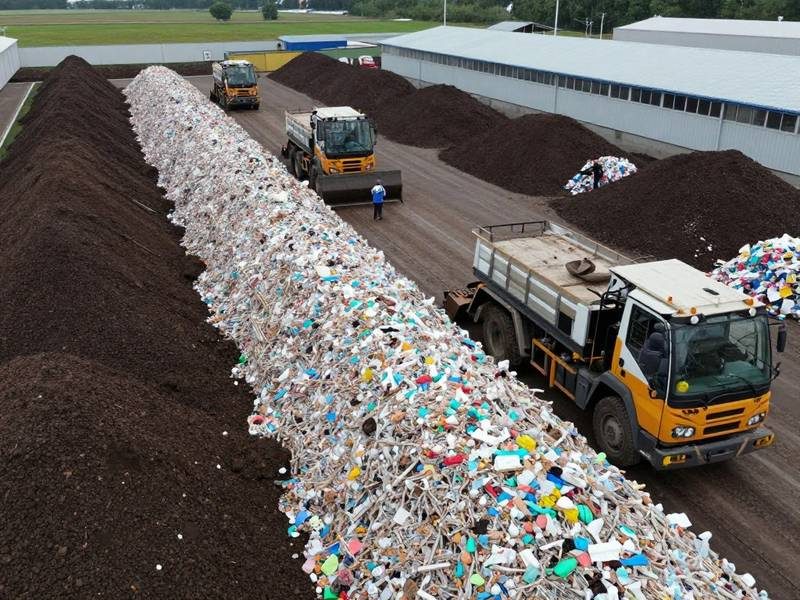
The word "compostable" on a filament box has a specific technical meaning: it breaks down in an industrial composting facility at a sustained 58 °C. Most people do not have one of those in their backyard.
| Environment | Temperature | What actually happens | How long |
|---|---|---|---|
| Industrial composting facility | 58 °C sustained | 92% breaks down | ~4 months |
| Warm soil / hot home bin | 37 °C | ~20% breaks down | Months, incomplete |
| Normal backyard compost | 20–40 °C | ~15% breaks down | 2–3 years for visible change |
| Landfill (no oxygen) | Ambient | Minimal — PLA persists like any other plastic | Years to decades |
| Ocean / water | Ambient | Negligible | Does not meaningfully degrade |
A PLA print thrown into a backyard pile will outlast the food scraps around it. In a landfill, it behaves exactly like any other plastic. If you want to dispose of it responsibly, check whether your city's curbside organics program accepts PLA (many do not) or just throw it in the regular trash. Do not litter it assuming it will vanish.
Where PLA Parts Actually Fail
Safety is not just about chemicals. A part that slowly bends or cracks in use is a safety problem too. PLA Pure has the same mechanical limits as any standard PLA — the clean formula does not change how the plastic behaves under load or heat.
| What goes wrong | When it happens | What you see |
|---|---|---|
| Softens and loses shape | Above 50–60 °C (hot car dashboard, near a radiator) | Part becomes rubbery, sags under its own weight |
| Creeps (slowly bends) | Constant load over weeks or months, even at room temp | A shelf bracket sags 2–5 mm after a month; a hook straightens over time |
| Layer separation | Impact or bending across the layer lines | Crack runs along a layer; part splits cleanly |
| Brittle fracture | Sharp impact, any temperature | Part cracks or shatters instead of bending |
| UV degradation | Sunlight + moisture over months | Surface turns chalky and brittle; becomes fragile |
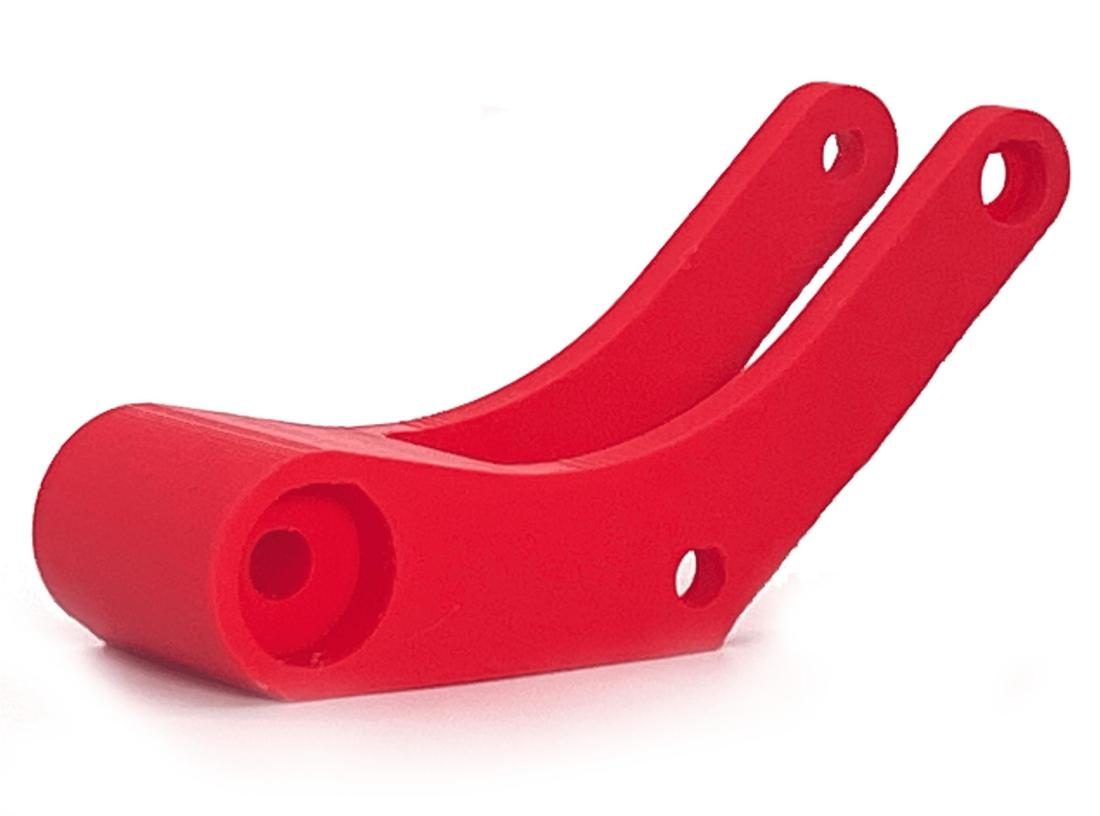
A few design rules that prevent most of these failures: print load-bearing parts with 3–4 walls and 40–60% infill (not 10%), add rounded corners where stress concentrates, and never rely on PLA above 45 °C ambient for anything that carries weight. If a part holds a person, supports something heavy over a hard floor, or contains pressure, PLA is the wrong material — even if it prints perfectly.
The Bottom Line: What to Print With PLA Pure
Here is the practical list. Use it as a quick reference before you start a print.
- Display models, figurines, cosplay props
- Desk organizers, cable clips, drawer dividers
- Prototypes and fit-check parts
- Classroom / educational prints (lowest emissions of any common filament)
- Planters and pots (with a waterproof liner inside)
- Cold, dry, single-use food tools: cookie cutters, chocolate molds
- Toys for kids age 3+ (round all edges, no detachable small parts, supervise use)
- Light-load hooks and brackets under 1 kg (oversize them, inspect monthly, keep away from heat)
- Reptile / pet enclosure decor (keep away from heat lamps, remove if chewed)
- Low-voltage electronics enclosures (Raspberry Pi, sensor boxes — not power supplies)
- Hot drink cups, mugs, thermos parts (PLA softens at coffee temperature)
- Anything dishwasher-safe or microwaveable
- Baby / toddler toys that go in the mouth
- Outdoor parts exposed to sun (use ASA instead)
- Safety-critical load parts (bike mounts, drone frames, weight-bearing brackets)
- Parts near sustained heat above 45 °C (use ABS, ASA, PC, or annealed HT-PLA)
- Bearings, gears under load, sliding surfaces (use PETG, nylon, or POM)
- Anything you want to market as "home compostable" — it is not, in any practical sense
Final Word
PLA Pure is the right default filament for indoor, room-temperature, light-load, non-food prints. Its published ingredient list and third-party certifications make it more transparent than generic PLA, and it releases less dust and odor than any other common desktop filament.
It is not food-safe as a printed object. It is not structurally reliable for sustained loads. It is not outdoor-rated. And it is not home-compostable in any way that matters for most people. Use it for what it is good at, and switch materials before you push it into a category where its 55 °C softening point or its layer lines become a problem.