Search Etsy or Shopify for "pet memorial" and the same three products keep showing up: a sculpted urn with the dog's face on the front, a thin silver pendant stamped from a nose print, and a hand-painted figurine of the animal in a pose the owner picked. None of this is new. What changed is that desktop resin printers and phone-based 3D scanning now let a one-person studio in Shenzhen, Tallinn, or Austin produce these at a price grieving customers will pay — and at a margin that makes factory buyers take notice.
This brief is for cross-border sellers and indie-store founders looking at those three categories. I'll cover actual shelf prices, what it costs to make each one, why new brands keep entering this space, and when the sales spikes hit.
The three categories, and what they actually are
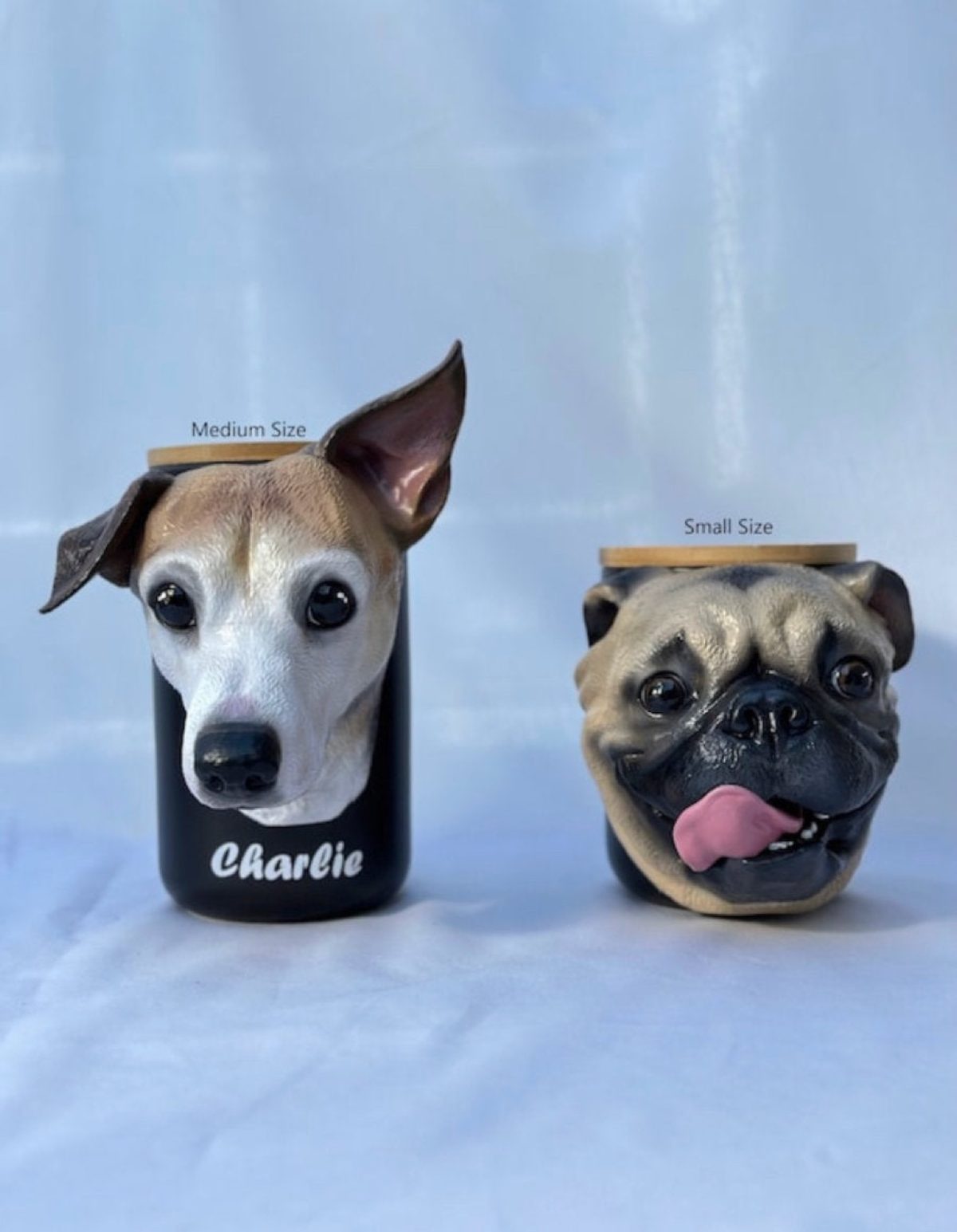
Custom-faced pet urns
A resin urn, hollow inside for ashes, with a 3D-printed portrait of the pet's head bonded to the front. The workflow: customer sends 3–5 photos, the studio sculpts a likeness in ZBrush or Blender, prints in tough ABS-like resin on an LCD printer, sands and paints, then ships. Lead times run 3–6 weeks.
Real shelf prices from live stores:
| Store / product | SKU | Price (USD) |
|---|---|---|
| Dog In Arts — Pet Urn (Face) | Small → X-Large | 250 – 440 |
| Dog In Arts — Pet Urn (Bust) | Standard | 250 |
| Dog In Arts — Pet Urn (Head) | Standard | 650 |
| Dog In Arts — Pet Urn (Full Body) | Small → Large | 650 – 1,300 |
| My3DSelfie — Detachable-Head Urn Figurine | Standard | ~290 – 360 |
The pattern holds across sellers: bigger the sculpture, higher the price. A full-body piece sits at $650–$1,300 because resin and hand-finish time scale with surface area, not printing hours — which stay under eight hours on a 4K LCD for any of these sizes.
Nose and paw-print keepsakes
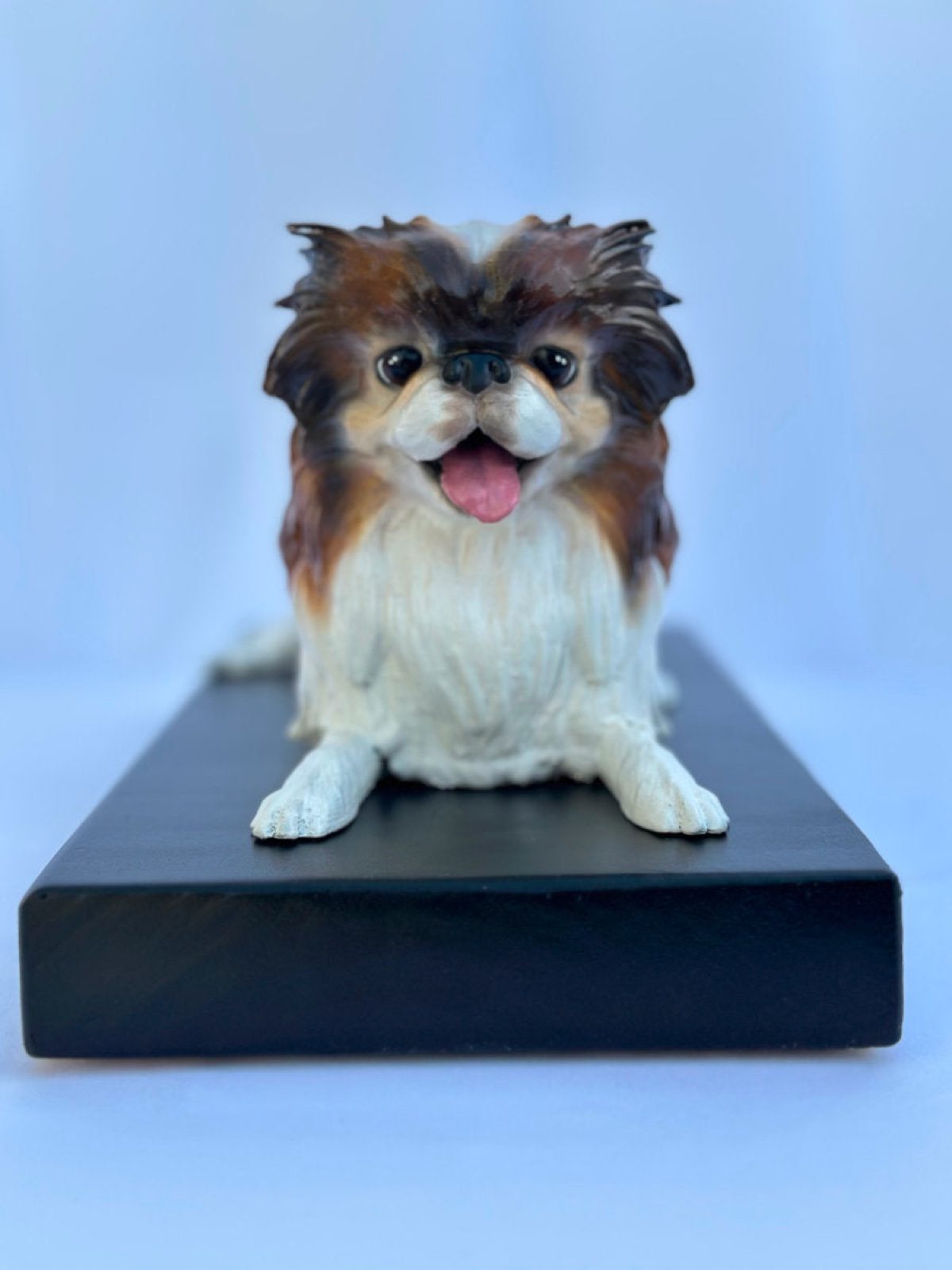
Two formats dominate. The first is a framed clay impression: the owner presses the pet's nose (or paw) into a non-drying clay pad, mails it back, and the studio casts it in resin, mounts it in a small shadow box, and adds a name-and-dates plate. The second is jewelry — a sterling-silver pendant stamped from a 3D scan of the nose, or a charm carrying a fingerprint-style paw pad.
Real shelf prices:
- Darwin & Gray — Pet Nose Impression Kit (framed resin, US-based): ~US$140 for a 5x5 frame, $220 for 8x8, personalization included. The studio markets it explicitly as a "memorial keepsake," not a novelty.
- NozyPaws — Nose-Print Pendant (UK-based, 925 silver): ~£69–£119 (US$85–US$150) for a single-stone nose pendant, depending on chain length and stone.
- TinkerTaro — Nose & Paw Charm (US-based, 925 silver): $65–$95 for the smaller charms, with a starter kit at $35.
The advantage here is that the input asset is free — the customer makes it themselves with a clay kit. The studio's cost is mostly finishing, plating, and packaging.
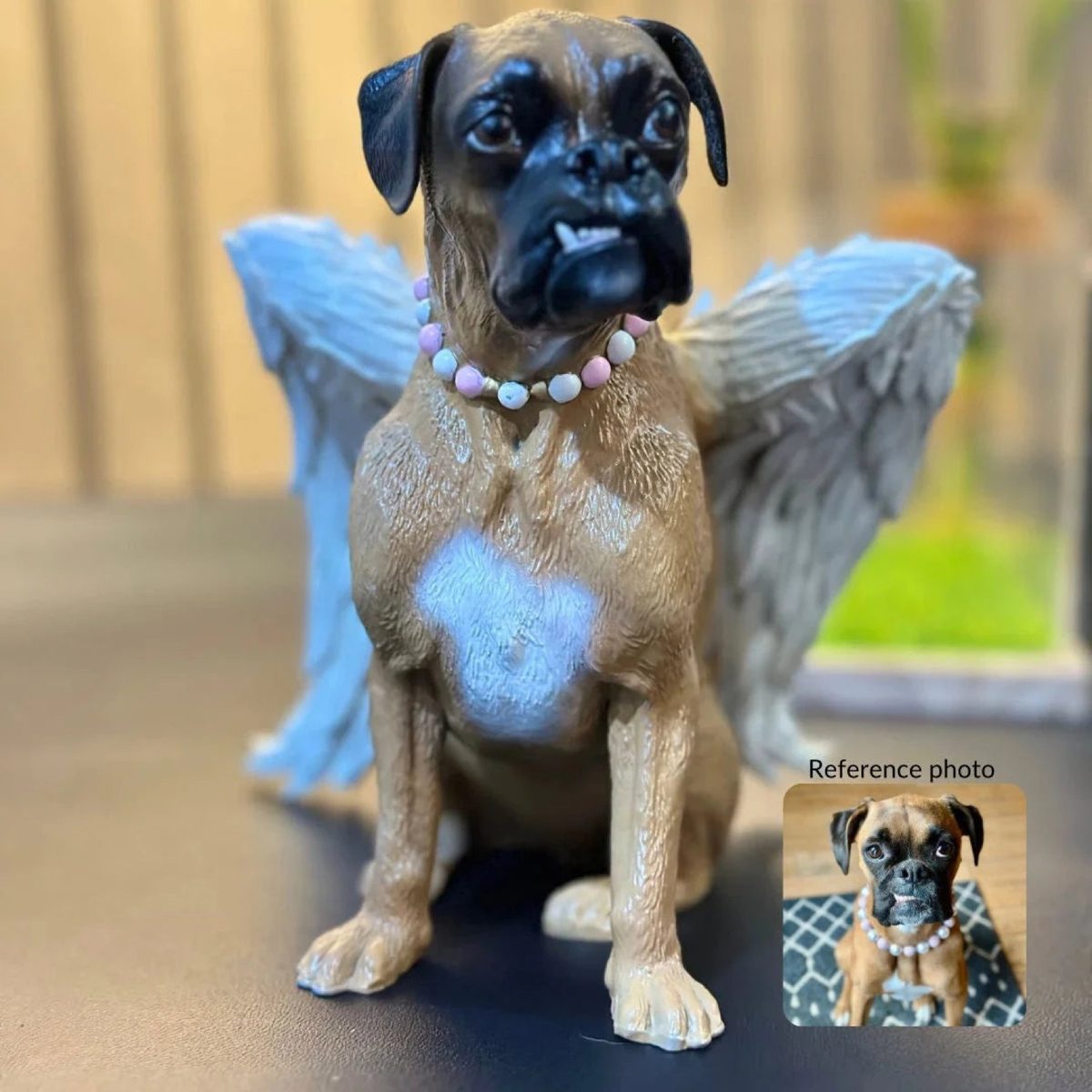
Bespoke pet statues
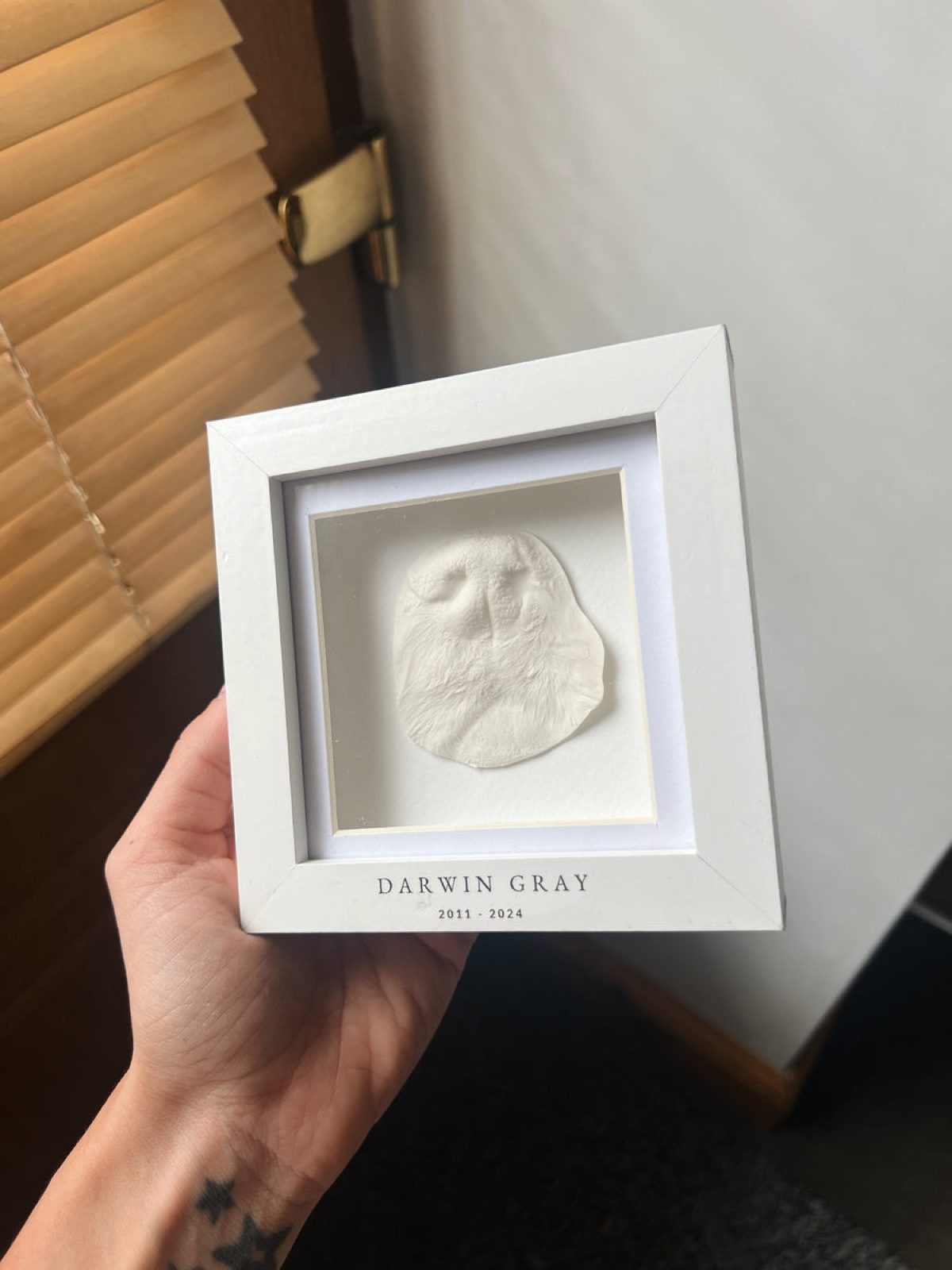
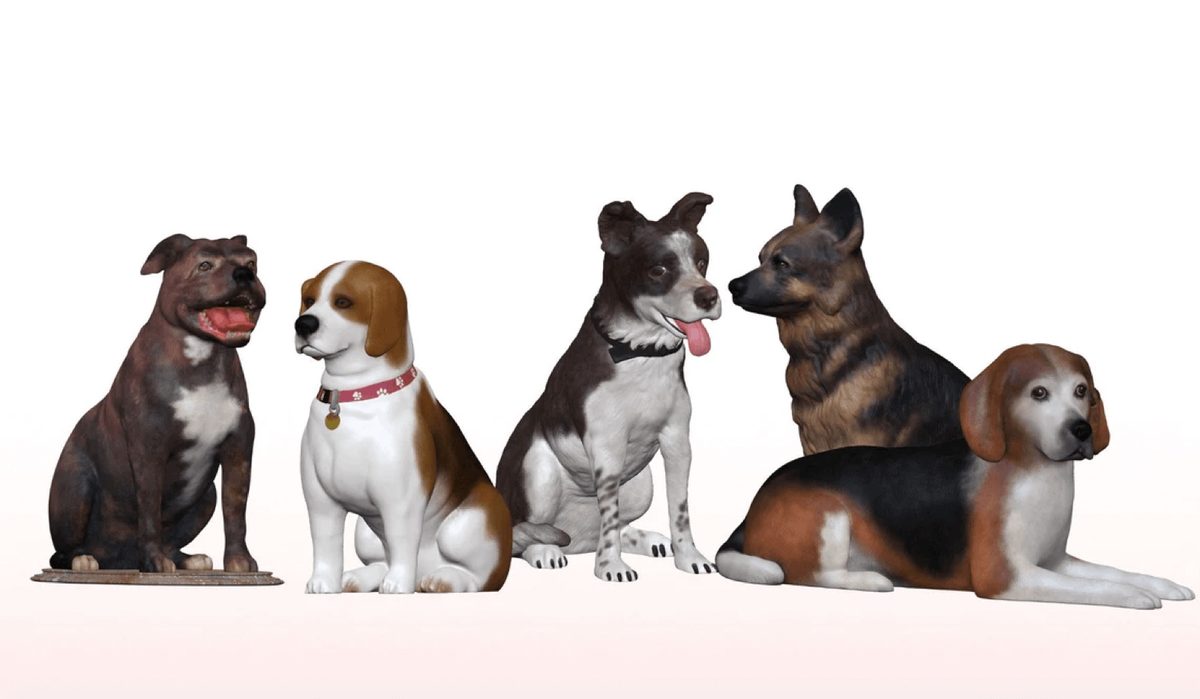
Full-body, hand-painted figurines — not urns — sold as art objects, shelf decor, or "rainbow bridge" tributes. They price like small sculpture: $120–$300 for an 8–12 cm figure, $400+ for a 20 cm+ diorama.
The cost stack behind the markup
None of these is cheap to make. But making the same one a second time is cheap — and that gap is where small studios win.
Material cost per unit, assuming a $200–$500 LCD printer already paid off:
- Resin face urn: 80–150 ml of standard gray or tough resin, plus paint and a threaded lid. Resin alone runs $3–$8; consumables total under $20.
- Framed nose-print kit: ~30 ml of casting resin, a shadow box, a brass nameplate, glue. Material cost $4–$9.
- Pet figurine (8–12 cm): 60–120 ml of resin, plus primer, paint, sealer, and a base. Material cost $6–$15.
The real cost is labor. Hand-finishing and hand-painting is what turns a $15 piece of printed resin into a $250 urn. Most small studios spend 4–8 hours per piece on sculpt touch-ups, support removal, sanding, priming, and painting. At an internal labor rate of $15–$25/hour, that's $60–$200 of soft cost before shipping.
On a P&L line: a $290 figurine with $15 in materials, $120 in labor, and $25 in shipping leaves roughly $130 gross margin. Subtract 10% for payment processing and 8% for ad spend, and a small studio clears $80–$100 contribution margin per unit. That margin is why founders keep entering this category.
Why new brands keep launching here
Demand is large and mostly invisible. The US cremation rate for cats and dogs sits around 90%, and 70%+ of owners who lose a pet want some kind of memorial object within 30 days, per surveys from the American Veterinary Medical Association and the International Association of Pet Memorial Providers. Industry estimates put US pet-aftercare and memorialization at well over $3 billion a year. Most of that money flows through vet clinics and crematoriums — channels where a Shopify brand can take share without a head-to-head fight.
The input is on the customer's phone. Three to five well-lit photos of a pet is enough for a competent digital sculptor to produce a likeness. That kills the old bottleneck of "the customer has to drive to a studio for a 3D scan." The whole fulfillment chain is mail-based and photo-based now.
Hand-finish and storytelling matter more than specs. Two stores selling the same urn at the same price will diverge sharply on revenue — one has a real "From photo to urn in 4 weeks" landing page and copy that doesn't sound like a product description, the other has a CAD render. Customers in this category are buying the confidence that someone will get their pet's face right. That's the opening for small brands.
When the orders actually spike
Three windows matter:
- Late November through December 23. The "sympathy gift under $150" window. Pet urns and small keepsakes spike because bereaved owners are shopping for family members' pets, and adult children are buying for parents who just lost a long-time companion.
- Second Sunday of July — National Pet Memorial Day (US). Smaller but very targeted. Etsy-reported trends put it 30–50% above the trailing 4-week baseline for memorial SKUs.
- August 28 — Rainbow Bridge Remembrance Day. Soft peak, mostly social-driven, but it converts on framed keepsakes and jewelry. The week after is a reliable test window for ad creative.
Ad spend gets cheaper in the week before each spike, when intent is high and competition hasn't fully cranked up. Plan two pushes per spike: a low-budget one 14 days out (mostly email and retargeting), and a harder one in the 72 hours before the date.
A short playbook if you're sourcing or launching
- Sourcing from a factory: Skip the full-body figurine — lead time, hand-finishing, and shipping make it a margin trap. Stick to the resin face urn ($250–$450) or the framed nose-print kit, where the factory can deliver a finished, packaged unit. Push the factory to absorb the 3D modeling step, or partner with a freelancer network upstream.
- In-house printing: Buy a $300–$700 4K LCD printer (Elegoo Saturn, Anycubic Photon Mono, Phrozen Sonic), a phone or iPad for photo capture, and one seat of ZBrush. Skip the scanner on day one — photos are enough for the likeness, and you'll add scanning when you move up to $500+ dioramas.
- Shopify / Etsy founder with no print background: Don't print. Resell. License the likeness sculpting to a small studio in your network and focus on the landing page, post-purchase flow, and review collection. Most of the gross margin in this market still goes to whoever owns the storefront.
- TikTok Shop: Lead with the unboxing. The moment that works is the customer seeing the figurine and recognizing their pet — fixed angle, soft lighting, no music for the first three seconds. That clip outperforms every other creative in this category by a wide margin.
Honest caveats
Acrylic and resin off-gassing: post-cure every print under UV for the manufacturer-recommended time and keep an SDS on file.
Intellectual property on the likeness: a single-line "I confirm I am the owner of this pet" checkbox at checkout, plus photo retention for the warranty window, will save you from the takedown or chargeback that will eventually show up.
Beyond those two, the numbers are what they are. The category is large enough, entry is cheap enough, and the markup is real. The edge still belongs to small studios that can show the process honestly — the photos, the sculpting, the painting — and let the customer feel that someone is paying attention. Start with one SKU, get ten units into customers' hands, and decide from there whether it's worth scaling.