Industry note · September 2026
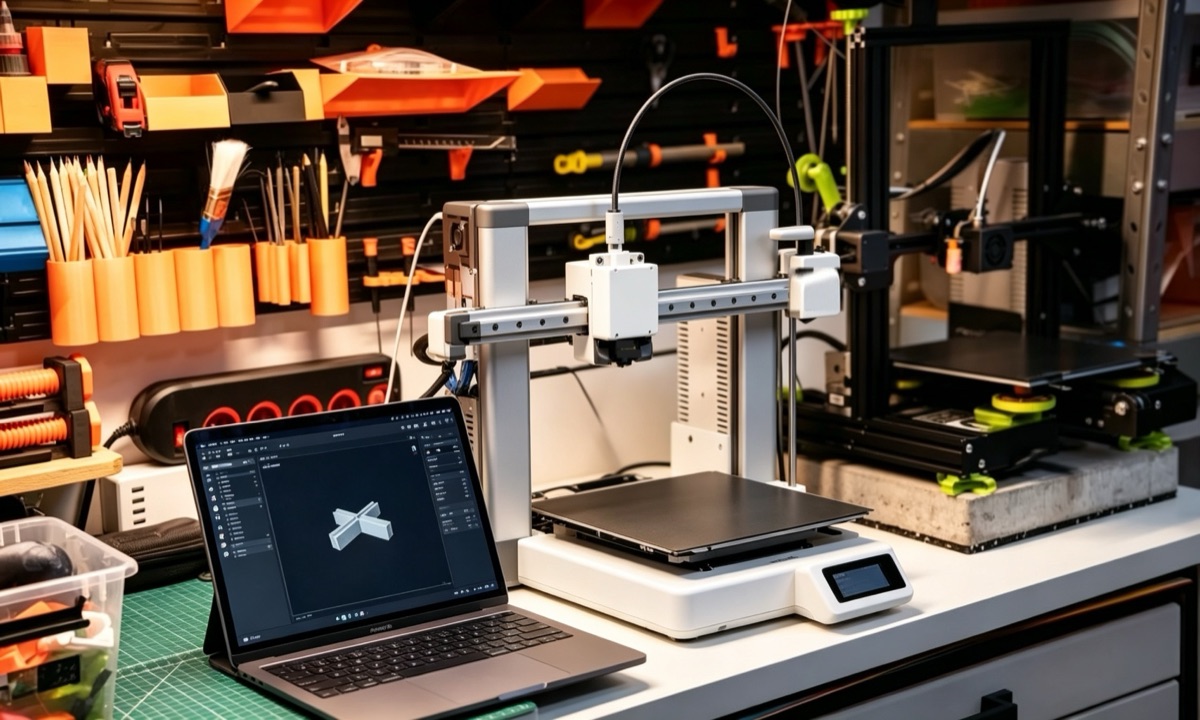
Start in a spare bedroom or a corner of a garage. A $300 desktop printer runs through the night. In the morning, one person pops a batch of parts off the build plate, boxes them, and checks an Etsy dashboard before the workday starts. This is the one-person 3D-printing studio, and in 2026 it stopped looking like a fringe hobby story. The tools got cheap and reliable enough, the design software got help from AI, and a layer of fulfillment platforms appeared on top. The result is a genuine new kind of micro-manufacturer — and a growing pile of operators discovering that cheap hardware is the easy part.
A Market That Finally Tipped Toward the Individual
The top-line numbers are large enough to matter. Shopify's 2026 guide puts the global 3D-printing market at $28.55 billion this year, on track for $136.76 billion by 2034 — a 21.6% annual clip. Industry blog 3DBite cites a similar arc, from roughly $30 billion in 2025 to about $134 billion by 2034. What changed is who captures that growth. It no longer flows only to industrial firms running metal laser sinterers. A rising share lands with solo operators running one or two desktop machines out of a home.
Hardware explains a lot of the shift. A printer dependable enough to run unattended overnight — the bar for any real business — now costs $200 to $500. Guides written in early 2026 repeatedly name the Bambu Lab A1 Mini (around $200–300) and the P1S (about $399) as default starting points. Five years ago, that bought a kit you spent weekends calibrating. Today it buys a mostly self-managing appliance. The entry ticket to manufacturing fell below the cost of a decent laptop.
What a One-Person Studio Actually Sells
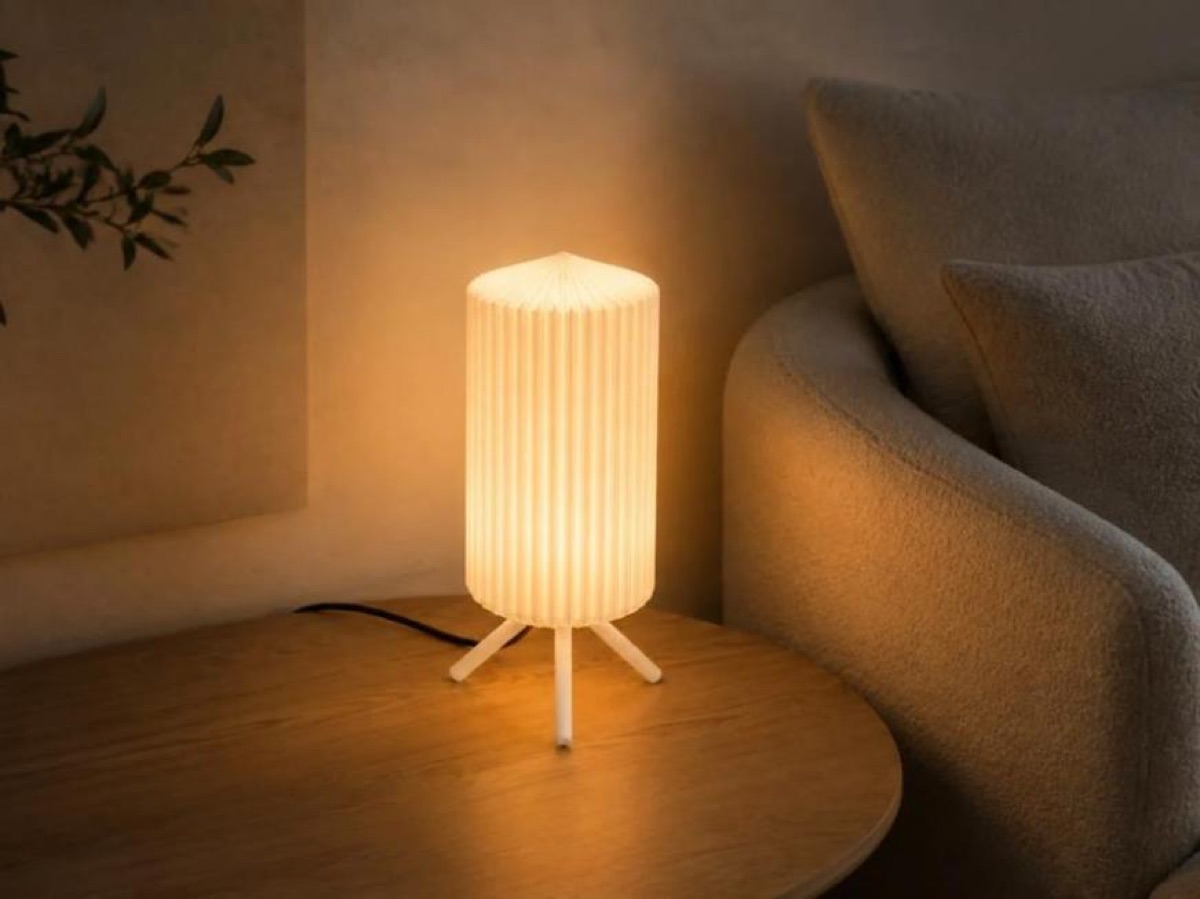
Walk through the seller guides and operator interviews published this year, and five working models keep showing up. The monthly ranges below come from Sellvia's March 2026 breakdown of solo operators in their first year:
The honest headline: a part-time operator who picks a niche and prices correctly clears about $500–$3,000 a month; a focused full-time studio can reach $5,000–$10,000. Every guide that states the higher number also states the same caveat — it is a 12-to-24-month outcome, not a week-one outcome.
What's Genuinely New in 2026
Three things separate this year's studios from the Etsy shops of 2022.
AI removed the CAD wall
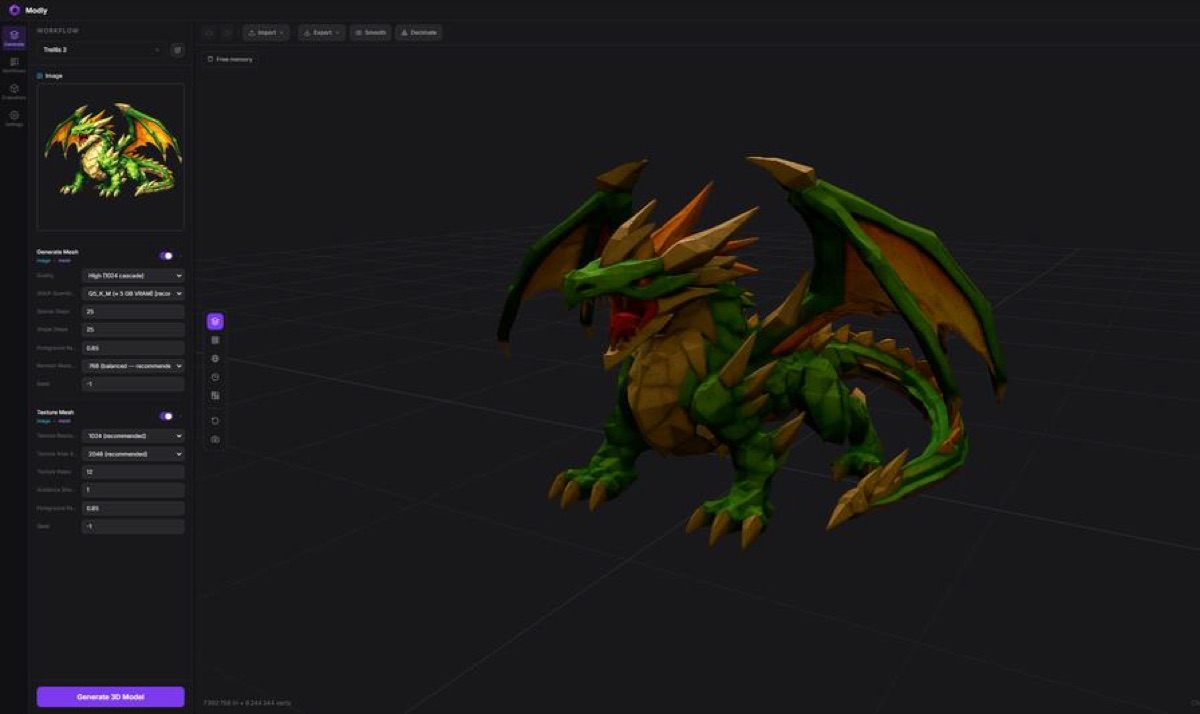
Text- and photo-to-3D tools such as Tripo, and newer options like Modly that run generation locally on a desktop GPU, turn a prompt or a single image into a printable model in minutes. Nobody mistakes the raw output for finished engineering — someone still has to fix mesh errors, wall thickness, and print orientation — but the hours-long modeling step that used to screen out non-designers is mostly gone. The bottleneck moved from software skill to taste, niche choice, and print preparation.
Zero-inventory fulfillment arrived
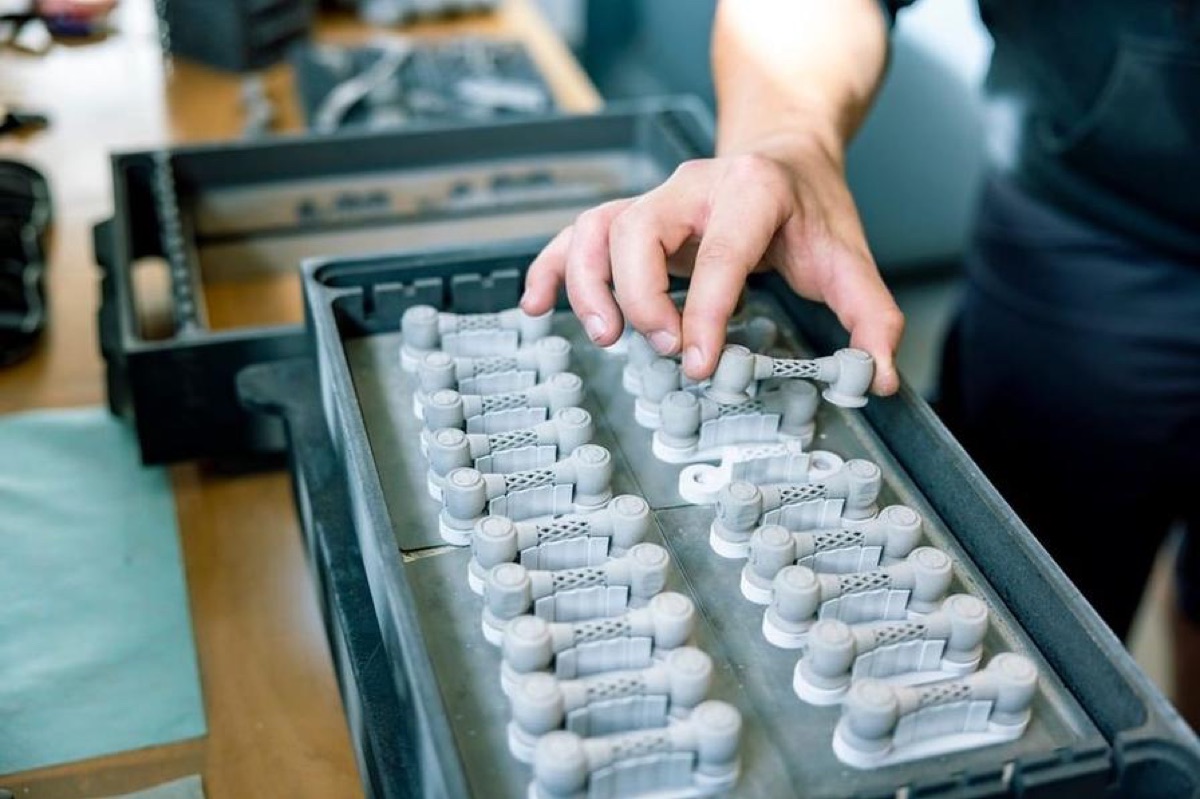
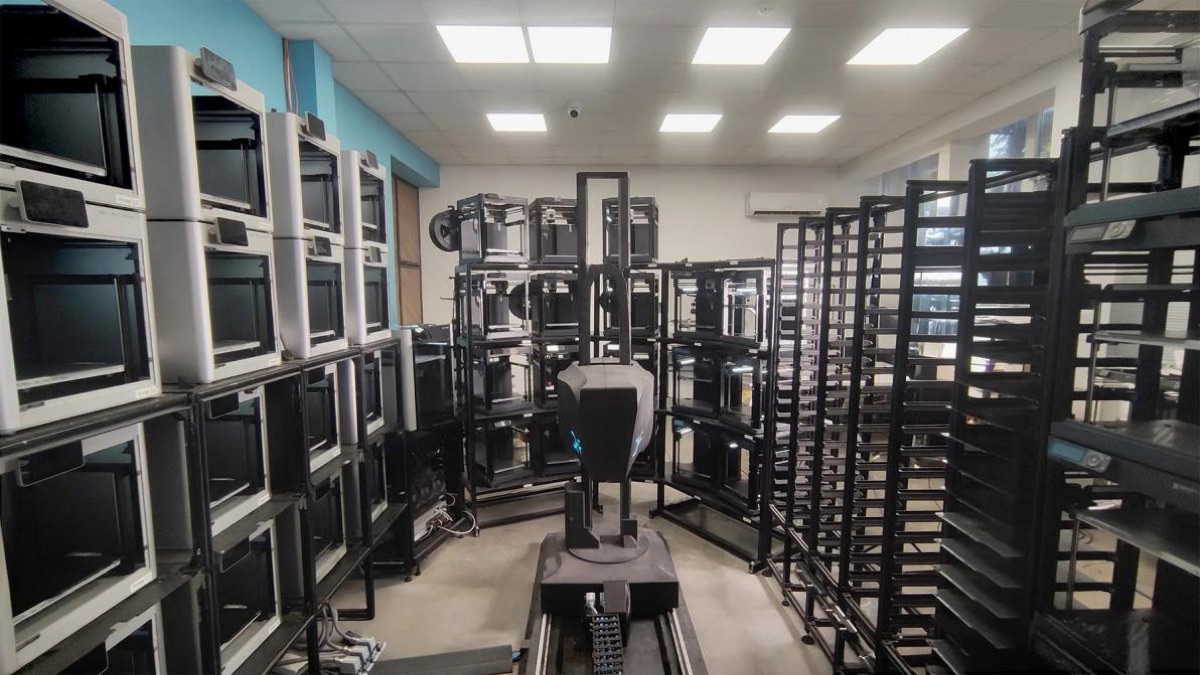
Slant 3D expanded its Teleport service in 2026 with Portals: a designer uploads an STL or 3MF, sets a price, and Slant's farm — on the order of 1,000 printers — prints, packs, and ships. It plugs straight into Etsy, Shopify, and Amazon, so the designer holds no spool and no stock. A V2 update even auto-quotes material, color, and size changes at checkout. Founder Gabe Bentz frames it bluntly: before Portals, a designer spent hours building a store "and then just had the job of buying printers and packing boxes."
Parallel models are sprouting elsewhere — EX3D Prints networks idle home printers as distributed production nodes, and the UK's Makr3D offers white-label fulfillment plus per-unit royalties to designers. The trade-off is a margin split that favors low-volume sellers, not anyone who already owns machines.
Selling the file instead of the object went mainstream
A digital file has no material cost and no capacity ceiling; one good design can sell for years. Combined with hyperspecific niches — terrain for one tabletop game system, replacement clips for one discontinued appliance, scale models for local real-estate agents — specificity became the moat. A shop serving a passionate, underserved community does not compete with AliExpress. A shop selling generic dragons does, every single day.
The Problems Starting to Show
For every studio that cleared the jump to full-time, far more stalled. The 2026 operator literature is unusually candid about why — and the same five problems come up across American, British, and Australian sources.
Who Actually Clears the Bar
The operators still standing after a year share a short, repeatable list of habits. They design original or license-clean products. They own one narrow category instead of printing everything. They price to the full loaded cost from month one, not after their first delisting. They validate on a single machine and buy the second only when the first is the bottleneck. They chase local B2B relationships — an architect who needs models, a machine shop that needs a jig — that an overseas drop-shipper can't touch. And the savviest pair a physical catalog with digital files or a content audience, so income isn't capped by how many hours their hands can work.
The line worth keeping comes straight from the operator community: the machine is the means of production, not the business idea. In 2026, America's one-person 3D-printing studios are neither the passive-income gold rush the short videos promise nor a saturated market not worth entering. They're ordinary small businesses with unusually cheap tools and unusually global reach — and they reward exactly two things, specificity and honest arithmetic, that no printer spec sheet can provide.
Selected Sources
- Shopify — How To Make Money 3D Printing: 9 Ideas (2026), March 26, 2026.
- Sellvia — 3D Printing Business Ideas That Make Real Money in 2026, March 18, 2026.
- LayerMath — How Profitable Is Selling 3D Prints? (Honest 2026 Numbers), May 19, 2026.
- 3DBite — Can You Actually Make Money From a 3D Printing Business?, July 21, 2026.
- SimplyPrint — How to Start and Run a 3D Print Farm, June 29, 2026.
- Fast3DPrinters — Slant 3D Portals Lets Designers Sell 3D Prints Without a Print Farm, August 4, 2026; Modly local AI 3D generation, 2026.
- TopoMeshLab — 3D Printing Side Hustle: Your Complete Garage Startup Guide, March 4, 2026.
- ZenStorefront — Etsy 3D Printing Copyright & Trademark Guide, June 10, 2026; ShieldMyShop — Etsy Commercial License Rules, July 11, 2026.
- DHR Engineering — 3D Print Farm Automation (44-printer farm), 2026.
- Royell — What Are the Benefits and Drawbacks of Owning a 3D Printer? (Figure 1).